

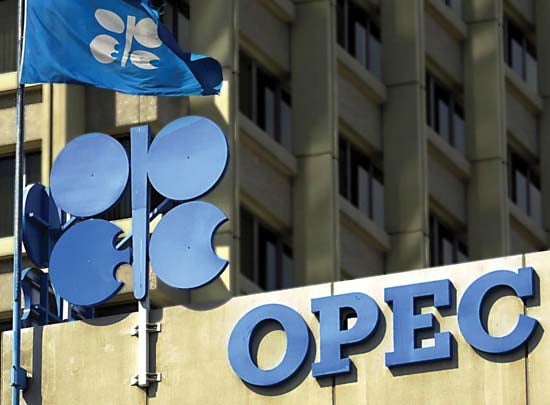
The United Arab Emirates (UAE) yesterday announced its withdrawal from the Organisation of Petroleum Exporting Countries (OPEC) starting May 1. It made the announcement to leave the oil cartel via the state-run WAM news agency, citing “nearterm volatility” in the market and a desire to ramp up investment in domestic energy production.
According to Forbes, the statement referred to the Iran war started by the U.S. and Israel in February, which has choked oil transport through the important Strait of Hormuz, and the government’s desire to meet what it thinks will be the “sustained growth” of energy demand in the medium to long term.
It added that the nation’s decision to leave the group comes after it criticised fellow Arab states for not doing enough to protect the region from attacks during the current Middle East war, and as it increasingly conflicts with Saudi Arabia, OPEC’s de facto leader. The statement read in part: “This decision reflects the UAE’s long-term strategic and economic vision and evolving energy profile.
During our time in the organisation, we made significant contributions and even greater sacrifices for the benefit of all. “However, the time has come to focus our efforts on what our national interest dictates.”
UAE is the third-largest OPEC oil producer, behind Saudi Arabia and Iraq. Its decision to withdraw from the alliance signals internal disputes that could impact the group’s influence over global markets.
According to the statement, the UAE will also leave OPEC and its allies (OPEC+), a broader alliance formed in 2016 that encompasses OPEC’s 12 core members plus 10 other major producers, including Russia, Mexico and Kazakhstan. OPEC+ is an alliance of the 12 Organisation of the Petroleum Exporting Countries (OPEC) members and 11 non-OPEC oil-producing nations, formed in 2016 to manage global oil supply and stabilise prices.
Controlling roughly 59 per cent of global oil production, this group, led by Saudi Arabia and Russia, regularly adjusts production quotas to balance market demand. Reuters reported that Gulf oil shipments are currently being strangled by Iran’s blockade of the Strait of Hormuz, which flows past the UAE and normally carries onefifth of the world’s oil.
It added that the UAE, hard-hit by Iranian attacks, has also faced trouble in its relationship with powerful neighbour Saudi Arabia, the world’s top oil exporter and a dominant force within OPEC. It quoted UAE Energy Minister, Suhail Mohamed al-Mazrouei as having said that the decision was taken after a careful look at the regional power’s energy strategies.
Asked whether the UAE consulted with Saudi Arabia, he said the UAE did not raise the issue with any other country. He said: “This is a policy decision, it has been made after a careful look at current and future policies related to level of production.”