

…Advocates Measured Security Reforms
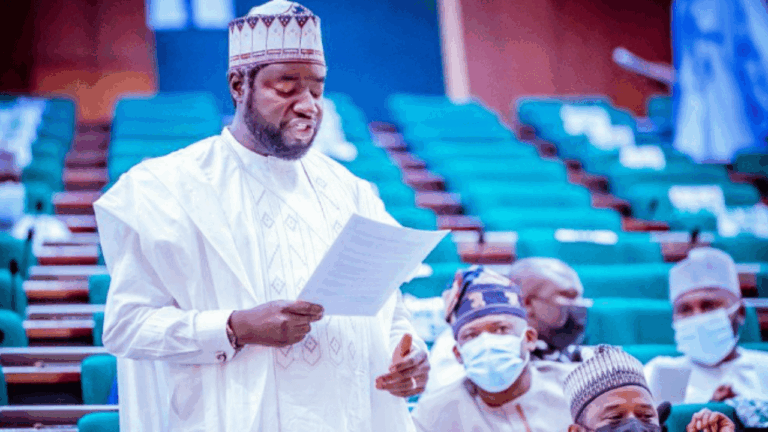
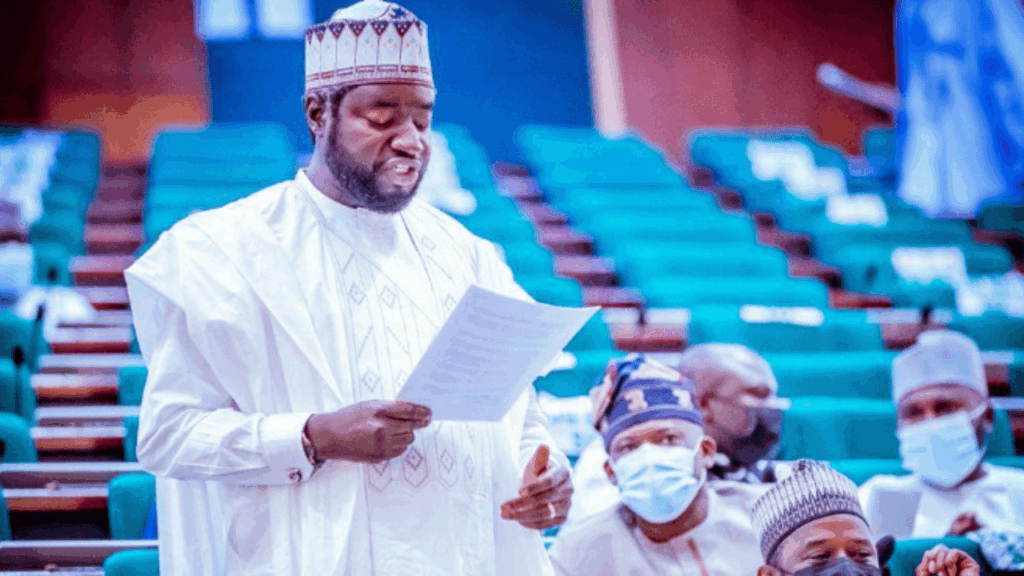
A member representing Pankshin, Kanke and Kanam Federal Constituency in the House of Representatives, Rt. Hon. Yusuf Adamu Gagdi has mounted a robust defence of his legislative record, highlighting key achievements in lawmaking, institutional development and security reforms, while signalling his intention to seek re-election in 2027.
Speaking during a media parley in Jos, the Chairman of the House Committee on Navy dismissed criticisms of underperformance, insisting that his contributions to national legislation and constituency development remain significant and measurable.
Gagdi emphasised that the primary responsibility of a lawmaker is not project execution but the enactment of laws that guarantee peace, order and good governance, alongside effective oversight of government agencies.
“In my first and second terms, I have remained focused on the constitutional mandate of lawmaking and oversight. I have visited over 187 agencies and departments in the course of my oversight duties, particularly within the Nigerian Navy,” he stated.
He disclosed that he has sponsored 58 bills, out of which six have been signed into law, describing the feat as a reflection of both commitment and capacity.
Among his landmark legislative interventions, Gagdi cited the repeal and reenactment of the Police Act, which he said addressed long-standing colonial-era gaps in Nigeria’s policing framework.
The lawmaker noted that the reform introduced community policing structures nationwide, enhanced citizens’ rights, and created employment opportunities across the 774 local government areas.
Drawing from his academic background in intelligence and security studies, Gagdi positioned himself as a key voice in national security discourse, particularly on policing reforms.
While acknowledging widespread calls for state police, he maintained a cautious stance, advocating instead for the full implementation of community policing before transitioning to more decentralised systems.
“My position is based on policy, not politics. Countries that operate state police have evolved gradually. We must strengthen existing frameworks first before creating new ones,” he argued.
He, however, left room for flexibility, stating that he remains open to alternative views if convinced by stronger evidence.
Beyond security reforms, Gagdi highlighted his role in the establishment of critical national institutions, including the Federal University of Education, Pankshin, which evolved from the former Federal College of Education.
According to him, the transition has already generated hundreds of direct jobs, with additional recruitment underway, while also expanding educational opportunities in the region.
He further pointed to his sponsorship of the Admiralty University of Nigeria and the establishment of the National Hydrographic Agency, aimed at strengthening Nigeria’s maritime governance and expanding institutional capacity.
“These are enduring legacies. When laws create institutions, they create opportunities, jobs, development and long-term growth,” he said.
While addressing concerns over zoning and his third-term ambition, Gagdi clarified that Nigeria’s democratic framework allows for both consensus and primary elections as legitimate pathways for candidate emergence.
“Consensus must be mutual, not imposed. Where there is no agreement, primaries provide a democratic alternative,” he explained.
While expressing gratitude to his constituents for electing him twice, he hinted strongly at seeking a third term, citing his growing electoral strength from a narrow victory margin in 2019 to a decisive win of over 31,000 votes in 2023.
“If given the opportunity again, I will serve. If not, I remain grateful. But the decision ultimately lies with the people,” he added.
The lawmaker dismissed claims that the National Assembly operates as a “rubber stamp,” arguing that legislative effectiveness should be measured by outcomes rather than confrontation with the executive.
“Performance is about laws passed, lives impacted, and development achieved—not noise or conflict”.
He noted that he has consistently spoken on critical issues, including insecurity, while maintaining a disciplined approach within party structures.
Speaking his Position on Insecurity and Community Role on insecurity in Plateau State and beyond, Gagdi advocated a multi-layered approach involving both government and community participation.
He stressed the importance of intelligence-driven strategies and local engagement, noting that security cannot be left solely to federal agencies.
“Communities must be part of the solution. Security is everyone’s responsibility,” he said.
Gagdi also addressed his evolving relationship with Plateau State Governor Caleb Mutfwang, stating that his support is now based on visible performance rather than partisan considerations.
He cited ongoing road projects within his constituency, including those in Kanam, Pankshin and Kanke, as evidence of improved governance.
“When I did not see impact, I spoke. Now that I see results, I must also acknowledge them. That is fairness,” he noted.
On the prevailing economic challenges, the lawmaker acknowledged the hardship faced by Nigerians but urged patience, arguing that policy reforms often yield long-term benefits.
“Trust in government comes from visible impact, roads, jobs, and improved services. These are the realities that shape public confidence,” he said.
Also responding to concerns about his political stance within his party, Gagdi dismissed suggestions that he has lost his voice, explaining that his approach has become more strategic and aligned with party leadership.
He also rejected claims that Nigeria is drifting toward a one-party system, insisting that political realignments are driven by individual choice and constitutional freedoms.
“Freedom of association is guaranteed. People join parties based on their convictions”, he said.