


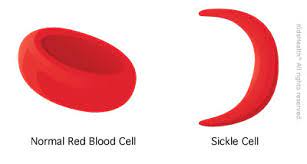
A landmark international study has revealed a sobering public health milestone: Nigeria now carries the highest burden of sickle cell disease globally, with more than 1.5 million children under the age of 15 living with the condition.
The comprehensive analysis, published in The Lancet Child & Adolescent Health, which examined data across 22 African nations, indicates that Nigeria’s figures far exceed those of other high-burden countries like the Democratic Republic of the Congo and Ethiopia. The report highlights that of the nearly nine million children affected across sub-Saharan Africa, a significant portion are infants and children under five who face an elevated risk of early mortality without medical intervention.
A statement signed by the professor of public health at Teesside University, UK, and lead author of the study, Professor Davies Adeloye, warned that the findings represent a critical juncture for the nation’s healthcare system.
He said, “Nigeria now stands at the centre of the global sickle cell crisis. With over 1.5 million children affected, the scale is enormous, but so is the opportunity to act.”
The study emphasises that while the disease is a life-threatening inherited blood disorder, the complications are largely preventable through low-cost, existing medical protocols. These include newborn screening, routine vaccinations, malaria prevention, and the use of hydroxyurea.
However, the researchers noted that in Nigeria, many children are only diagnosed after suffering severe, avoidable complications due to limited access to essential services in primary healthcare centres.
“We already know what works. Newborn screening and early treatment are effective and affordable and can be delivered through existing health systems,” he added.
The report calls for a radical integration of sickle cell care into routine maternal and child health services. Professor Adeloye noted that such a shift could transform the survival rates for hundreds of thousands of young Nigerians.
He said, “If Nigeria prioritises sickle cell disease within its national health agenda and integrates care into routine maternal and child health services, we could save hundreds of thousands of young lives and significantly reduce avoidable deaths.”
The researchers further urged the Nigerian government and international development partners to strengthen data systems and surveillance. They argued that even modest improvements in early-life screening could significantly reduce the domestic burden of the disease.
The authors concluded that, as the global epicentre of the condition, Nigeria has a unique opportunity to lead the continent in developing a scalable model for sickle cell management.
“The findings highlight both the scale of the challenge in Nigeria and the opportunity for the country to lead Africa in tackling one of the most preventable causes of childhood illness and death,” he concluded.