

The Lagos State Government has issued a strong call to action to health stakeholders, urging immediate collaboration to rebuild and strengthen Primary Health Centres (PHCs) as the backbone of healthcare delivery across the state.
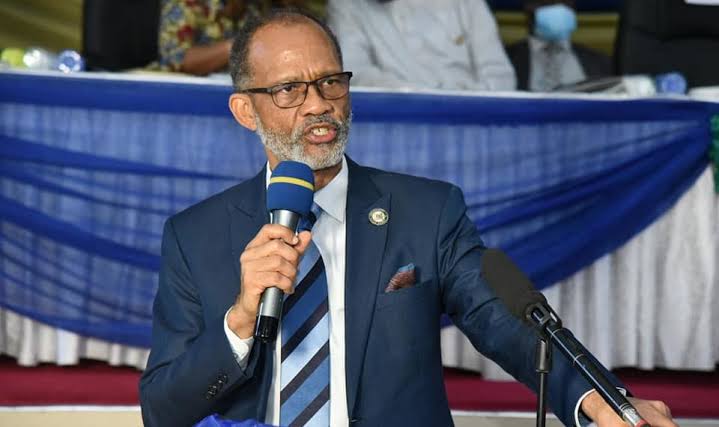
Delivering the keynote address at the Lagos State Primary Health Care Board’s Conference 57, held in collaboration with EngenderHealth, Nigeria Health Watch and the Impact Project, the Commissioner for Health, Prof. Akin Abayomi, stressed that the time to act is now.
“We must ramp up,” he declared. “This is a defining moment to transform primary healthcare infrastructure, improve financing, and ensure that every Lagosian has access to quality care.”
The two-day conference, held at Lakowe Lakes Golf Country Estate from May 5–6, focused on developing a comprehensive 10-year Primary Health Care (PHC) Financing Plan (2026–2036), aimed at revitalising healthcare at the grassroots level.
At the heart of the plan is a bold ambition: to expand Lagos’ PHCs from about 340 to 600 fully equipped and functional facilities over time, while addressing critical gaps in workforce, infrastructure and funding.
According to Abayomi, nearly half of existing PHCs require significant upgrades, while the state faces a severe shortage of medical personnel.
“We are supposed to have 30,000 doctors, but we only have about 7,000. The gap is huge, and we must act strategically to close it,” he said.
The government’s strategy includes improving working conditions to retain health professionals, attracting diaspora talent back home, and scaling up training. Equally central is the enforcement of mandatory health insurance under the state’s Executive Order, designed to reduce out-of-pocket spending and expand financial protection.
“If 20 million Lagosians enrol in basic insurance, we could unlock up to N400 billion annually for healthcare,” Abayomi explained.
“That is transformative.”
Permanent Secretary of the Lagos State Primary Health Care Board, Dr Ibrahim Akinwunmi Mustafa, in his welcome remarks, emphasised the importance of transparency and accountability in managing healthcare funds.
“We must strengthen the financing framework to ensure funds are not only adequate but effectively managed and transparently deployed,” he said. “This is how we deepen access and protect the most vulnerable.”
The conference also highlighted the role of local governments in driving PHC improvements. Permanent Secretary, Health District IV, Dr Abimbola Bowale, noted that strong grassroots leadership is critical.
“Health is wealth, and it is our responsibility to ensure Lagosians are healthy enough to contribute to socio-economic development,” Bowale said.
Key objectives of the conference, outlined by Dr Veronica Iwayemi, include developing a unified programme for PHC infrastructure, workforce, technology and service delivery, as well as creating a shared accountability framework across all 57 local government and local council development areas.
“We are co-creating a strategic roadmap that covers human resources, renovation, equipment, digitalisation and demand generation,” Iwayemi explained
“But beyond planning, execution is key. If we don’t implement, we gain nothing.”
The 10-year plan will align funding projections, set enrollment targets, and integrate PHC priorities into broader local government development plans already approved by Governor Babajide Sanwo-Olu.
Beyond infrastructure, the initiative aims to improve key health indicators such as maternal and infant mortality, malnutrition and immunisation coverage.
Current statistics remain troubling, with maternal mortality estimated at over 400 deaths per 100,000 live births and widespread child malnutrition.
Stakeholders also addressed systemic challenges including fragmentation, underfunding and weak accountability structures. Public health expert Dr Adebimpe Sangoleye stressed the need for a robust financing framework to drive sustainable change, while Dr Ibiwunmi Olokun highlighted plans to introduce a PHC Leadership Challenge across all 57 LGAs to boost performance and accountability.
The initiative will rank local governments based on governance, service delivery, funding utilisation and data quality, with top performers recognised and rewarded.
For citizens, the benefits of the reforms are far-reaching: improved access to quality healthcare close to home, reduced financial burden through insurance, better-equipped facilities, and a stronger, more responsive health system.
According to Abayomi, “There should not be two standards of healthcare—one for the rich and one for the poor. Every Lagosian deserves the same global standard of care.”
The Lagos State Commissioner for Health, said Lagos is not just planning for better healthcare; it is laying the foundation for a system that works for everyone, starting from the grassroots.








