
As Nigeria’s political parties prepare for the 2027 elections, SOLA ADEYEMO, in this analysis looks at the Ibadan Summit held recently and their moves to form a formidable front for the elections.
Since the present democratic experiment started in 1979, after a long period of military incursion in the Nigerian politics, many opposition parties have never swallowed their pride, coalesced in principle to do all their best possible to oust a ruling party as Nigerians witnessed last week in Ibadan, the Oyo State capital.
Though the era of political parties having ideologies and distinct manifesto for the electorate appears to have gone into oblivion, with politicians defecting from one party to the other, at will, without any effective sanctions, many old stalwarts of popular political parties in Nigeria, on Saturday, 25th April, 2025, converged on Ibadan, the political headquarters of the SouthWest, to do the unusual.
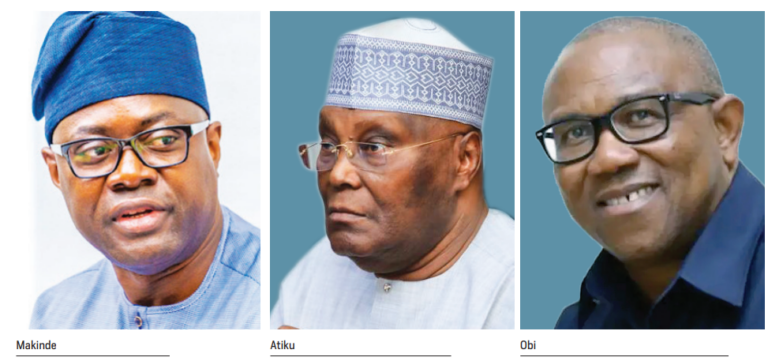
The unprecedented Opposition Summit was hosted by Governor Seyi Makinde of Oyo State. It was themed: “That We May Work together for a United Opposition to Sustain our Democracy”. Though, the objective might not be intrinsically wholesome, the stakeholders exemplified the Yoruba axiomatic dictum of collective strategy as a very potent panacea to defeating a known enemy.
If snakes of different sizes and species could move in an intimidating convoy, hunters would find it herculean to overpower and kill them. A broomstick cannot work effectively to kill mosquitoes unlike a bunch of it. Any political party has for ages not been able to unseat the ruling party, just as it was experienced in Oyo State in 2015 when a coalition of many parties and their candidates swallowed their pride and presented Seyi Makinde as their consensus candidate.
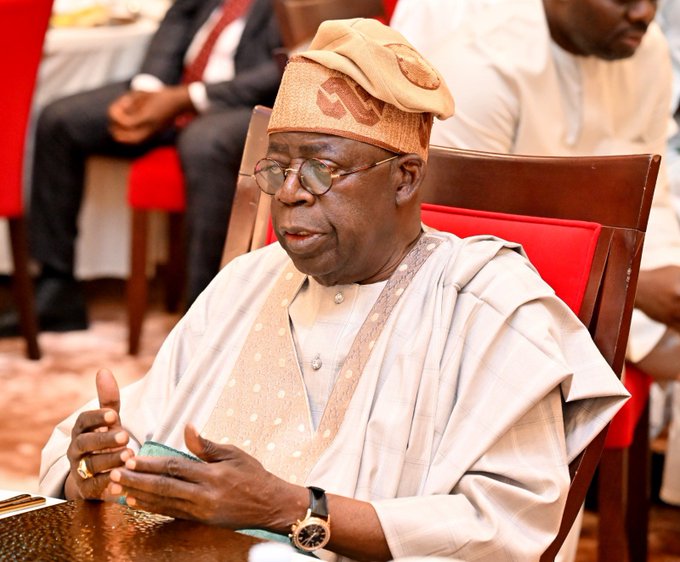
The strategy and formula worked with the Peoples Democratic Party (PDP), defeating the late Gov. Isiaka Abiola Ajimobi’s APC after its eight years hold on the government. The intendment of the summit was to frustrate President Bola Tinubu’s second term ambition. The strategy was most necessary with the defection of almost all the opposition parties and their state governors to the ruling APC.
Makinde appears to be the only voice of the PDP that is crying in the wilderness of Nigeria. With the effemination of the PDP by the Federal Capital Territory Minister, Nyesom Wike, who claims to be its leader, but working with the Federal Government to ensure that PDP does not present a presidential candidate to slug it out with Tinubu, the opposition leaders put on their thinking cap to demonstrate the axiom that clapping is not done with a single hand.
The heavyweight leaders who though had contributed to the deplorable state that the country is now, felt like a fish out of water, stand poised to get employed again in the veritable political industry, while blaming Tinubu’s administration of not making good his Renewed Hope Agenda, almost three years on.
They want to rescue the Nation’s ship from sea-wreck by jointly presenting a sole candidate to stand against Tinubu during the 2027 presidential and general elections. Among the major political parties that converged on Ibadan last week are: the PDP, the African Democratic Congress (ADC); the Labour Party (LP), the New National Peoples Party (NNPP).
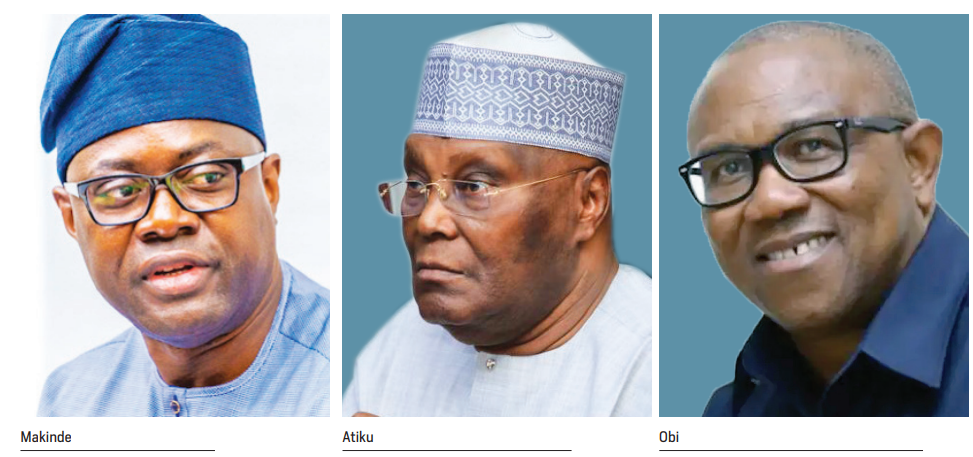
The two leading party leaders in the ADC: Atiku Abubakar and Peter Obi, however failed to talk during the summit. The apprehension that the coalition might not zero in on either of them might be responsible for their keeping mum.
The maverick human rights activist, Omoyele Sowore’s political party, the African Action Congress (AAC), and the Social Democratic Party (SDP), however pointedly dissociated themselves from the coalition summit which held at the newly refurbished Banquet Hall of the Agodi Government House, Ibadan.
To Sowore, the politicians invited him to the gathering, but he declined to attend, insisting that Nigerians deserve a genuine alternative rather than what he called a “charade.”
In his words, “There is no need to pretend that the same men (and a few women) who held Nigeria to ransom for years, presiding over stagnation, corruption, and systemic decay, can suddenly reinvent themselves as champions of progress or defenders of the people”.
Political heavyweights
Among the bigwigs that attended the Ibadan opposition summit were also: former Senate President David Mark; former Minister of Transportation, Rotimi Amaechi; former Kano State Governor, Rabiu Musa Kwankwaso; Prof. Pat Utomi, Prince Olagunsoye Oyinlola and Rauf Aregbesola (former Osun State Governors), former Governor Liyel Imoke, Prof. Chidi Odinkalu. Others included: Professor Jerry Gana, factional chairman of the PDP, Saminu Turaki (SAN), Dr. Usman Bugaji, Dr. John Oyegun (former Edo State governor), Mike Igini, Dr. Kabir Adam, among many others.
The stakeholders frowned on what they described as a creeping attempt by the APC to entrench a one-party state and impose President Bola Tinubu as the sole viable candidate in the next election cycle. They criticised the worrisome insecurity situation in the country where many innocent people are being kidnapped, maimed, killed, with ransoms running into millions of naira being forcefully collected.
Also condemned was the excruciating economic downturn resulting in skyrocketing inflation; rising poverty and abysmally- low standard of living among the masses, in a situation where those in the corridors of power feed fat and live in luxury.
To stop the APC and President Bola Tinubu from continuing in office beyond 2027, the coalition came up with a Nine-point communique, chief among which was the call for removal of the Chairman of the Independent National Electoral Commission (INEC), Prof. Joash Ojo Amupitan, whom they alleged of partiality and unholy agreement with the APC to ensure that the 2027 election is manipulated against other candidates of other political parties.
The summit said: “The survival of multiparty democracy in Nigeria is under threat,” while pledging collective resistance against any political manoeuvres capable of undermining democratic plurality. X-raying the electoral governance in the country, the summit demanded immediate reforms to the Electoral Act 2026, urging the National Assembly to expunge provisions they claimed could compromise the integrity of the electoral process.
The parties also rejected recent electoral guidelines issued by the Independent National Electoral Commission (INEC), describing them as deliberate obstacles targeted at weakening opposition parties.
They demanded an extension of the deadline for party primaries to the end of July 2026. Alleging that the ruling party was stifling and suppressing the opposition, the summit said that opposition was being harassed while detaining opposition figures on bailable offences.
It called for the immediate release of the detained opposition elements like former Governor of Kaduna State, Mallam el-Rufai, to ensure inclusive political participation.
The ‘wetie’ warning
Governor Makinde, who hosted the summit, raised fresh concerns over the future of Nigeria’s democracy, warning that the country risked a gradual slide into a one-party state if opposition politics continued to weaken.
The governor said that recent political developments across the country point to a troubling concentration of power that could erode democratic competition. He noted that a growing number of state governments are now aligned under a single political party, alongside what he described as “open efforts” to consolidate legislative dominance.
At the same time, he observed that opposition parties are increasingly mired in internal crises and legal disputes, raising doubts about their effectiveness. His words, “Taken together, they point to a pattern where the space for real political competition is disappearing”. He cautioned that democracy is rarely destroyed abruptly but rather weakened incrementally until citizens lose confidence in it.
While stressing that democracy cannot be defined by the dominance or success of one party, but by the presence of credible alternatives that give citizens meaningful choices, Makinde said, “Once that disappears, what we have may still be called democracy, but it will no longer function as one”.
While describing Ibadan as “the political capital of the South West”, Makinde however disclosed that the intent of the summit was not targeted at any individual or advancing personal political ambitions. Instead, he described it as a collective effort to preserve Nigeria’s democratic system.
To him, “This is not a gang-up against one man. It is also not about the individual ambition of individuals to be president. Rather, it is about the collective ambition of the Nigerian people to have a democracy properly defined”. He warned that democracy without a strong opposition is inherently fragile, describing it as “a slow drift toward a oneparty state,” a trajectory he insisted Nigeria must avoid.
Makinde called on political actors across party lines to rise above fragmentation and disengagement, urging them to confront the current challenges with honesty and a shared sense of national responsibility. “This is not a moment for silence. Nigeria has come too far to pretend that this does not matter,” he said.
His reference to the 1950 political crisis that threw the South-West zone into a civil war termed: “Operation Wetie”, which he said the APC should not allow to be repeated, however drew a barrage of criticisms from the APC and many stakeholders. They saw the reference as an incitement capable of igniting political fire in the country.
While his Special Adviser on Media, Dr. Sulaimon Olanrewaju, justified the assertion, the PDP as a party also saw nothing wrong in the reference, which they considered as a reasonable warning. In their criticism, the APC through its National Publicity Secretary, Felix Morka, said reference to Operation Wetie was intended “to stir unrest”, warning that such rhetoric poses a threat to national peace and stability.
According to the party, it was “deeply disturbing” that a sitting governor and chief security officer of his state would reference one of Nigeria’s darkest episodes of political violence, describing Makinde’s remarks as reckless and dangerous. The party said the comments went beyond mere political opposition and could fuel “anarchy, murderous rage and widespread lawlessness.”
It urged security and intelligence agencies to take the matter seriously and act proactively to safeguard lives, property, and the country’s democratic order.
However, the PDP justified the comments through its National Publicity Secretary, Ini Emembong, saying, “the speech is a caution and advisory to the All Progressives Congress (APC) led Federal Government, and other national institutions, of the crisis that their actions and inactions could result in.
To him, “only a guilty aggressor can interpret it to mean a threat or call to violence”. “It is common knowledge that those who do not learn from history are doomed by it. Governor Makinde offered a reminder that when insatiable political greed and avarice replace patriotism and good governance, they are compounded by the accumulated anger and frustrations of the citizenry”.