

The Executive Secretary of the Tertiary Education Trust Fund (TETFUND), Arch Sonny Echono, has disclosed that four out of the six proposed multi-purpose zonal laboratories across the country would be equipped and become operational before 2027.
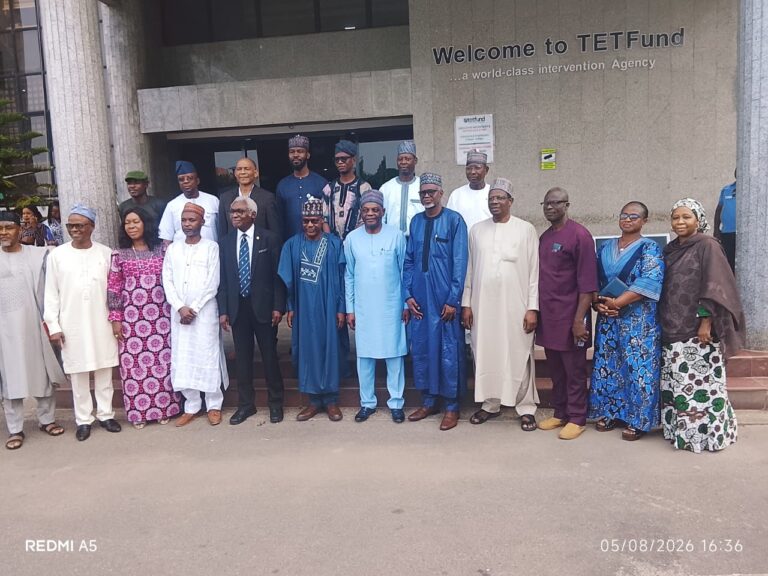
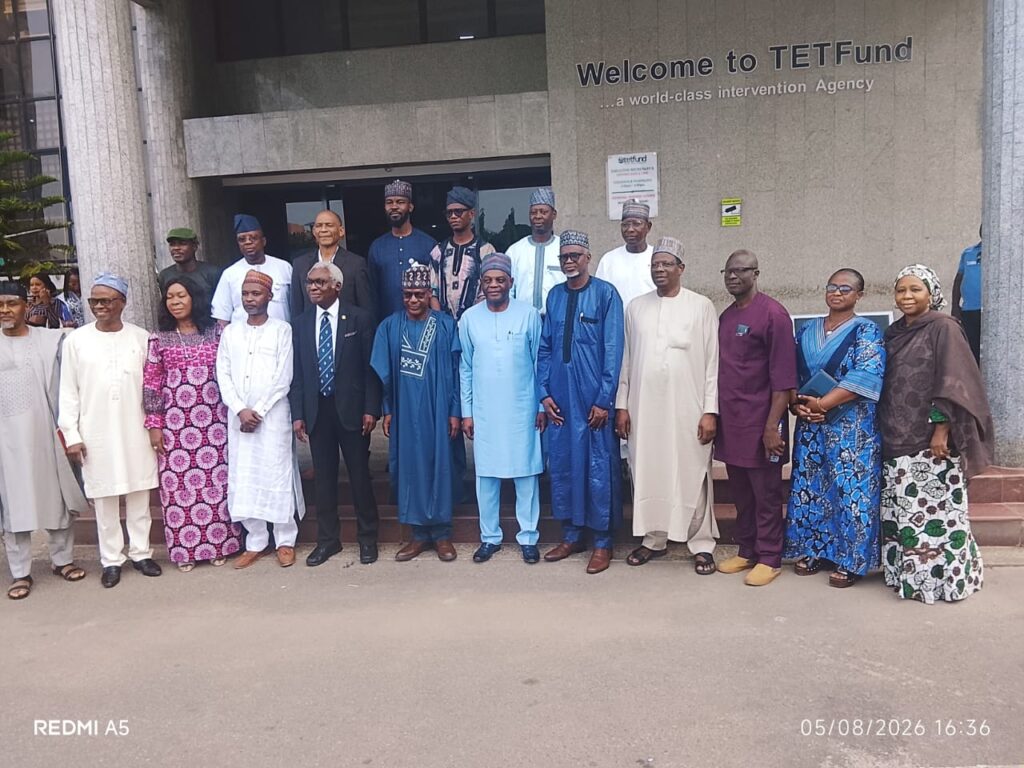
Echono made this known in Abuja while receiving the report of the Advisory Committee on the Equipping of TETFund Multipurpose Zonal Laboratories, chaired by former Acting Executive Secretary of the National Universities Commission (NUC), Chris Maiyaki.
The committee, inaugurated on February 17, 2026, was mandated to advise TETFund on the most effective equipment for the six central multi-purpose laboratories located across Nigeria’s geopolitical zones.
Speaking during the presentation of the report, Echono said the establishment of the laboratories had been a long-standing national aspiration that was delayed for over a decade after the government at the time prioritised the establishment of new universities instead of the proposed regional research facilities.
According to him, recent developments in science, technology and public health had further underscored the urgent need for world-class laboratories capable of supporting Nigeria’s industrial transformation and research ecosystem.
He said, “Our country is in dear need of these facilities as the engines of growth to stimulate our industrial transformation and research.
“The flagship of these efforts are these multi-purpose laboratories. They will wipe away our sense of shame and restore our national pride.
The TETFund boss explained that the projects were being implemented in phases due to funding constraints, noting that Bayero University Kano was among the first batch of institutions and would be ready to receive equipment before August this year.
He added that three other laboratories were expected to reach completion stages by February next year, bringing the number of operational facilities to four before 2027.
According to him, TETFund decided to synchronise the procurement and installation of equipment with the completion of the buildings to avoid commissioning empty structures.
“We thought it wise rather than wait and commission empty buildings, it was good to synchronise also the equipment phase so we will start the equipment procurement and installation from Kano that is ready to receive them.”
Echono further disclosed that members of the advisory committee would continue to participate in the implementation process by verifying that supplied equipment met approved specifications and quality standards.
“We want to ensure that the right equipment and the right quality are what we get, even if we need to send some committee members for pre-shipment inspection,” he added.
Earlier, Maiyaki said the committee reviewed key policy documents, including earlier reports on the proposed laboratories, and conducted verification visits to the six host institutions.
He identified the institutions as Bayero University Kano, Yakubu Gowon University, University of Lagos, University of Maiduguri, University of Nigeria, Enugu Campus and University of Port Harcourt.
Maiyaki noted that construction levels differed significantly across the sites, with Bayero University Kano recording the highest level of progress at about 80 per cent completion, while the University of Maiduguri and University of Nigeria facilities remained at early construction stages.
He warned against installing sophisticated scientific equipment in incomplete structures, saying such assets could suffer irreversible damage.
“The committee believes strongly that the equipment procurement and installation must be synchronised with the readiness of the buildings,” he stated.
Maiyaki added that the facilities would significantly improve research output, postgraduate studies, innovation and technological development in the country.
According to him, the committee developed a comprehensive multidisciplinary equipment list covering physical sciences, engineering, life sciences, computing, information technology and specialised laboratory systems.