


Public health experts have warned the Federal Government that its growing reliance on ultra-processed foods as vehicles for food fortification could worsen Nigeria’s already alarming burden of hypertension and other Non-Communicable Diseases (NCDs).
The caution came on Wednesday in Abuja from the Coalition for Healthy Food Advocacy and the National Sugar-Sweetened Beverages Tax Coalition (NSSBTC), which urged a full rethink of the country’s fortification strategy amid rising diet-related health challenges.
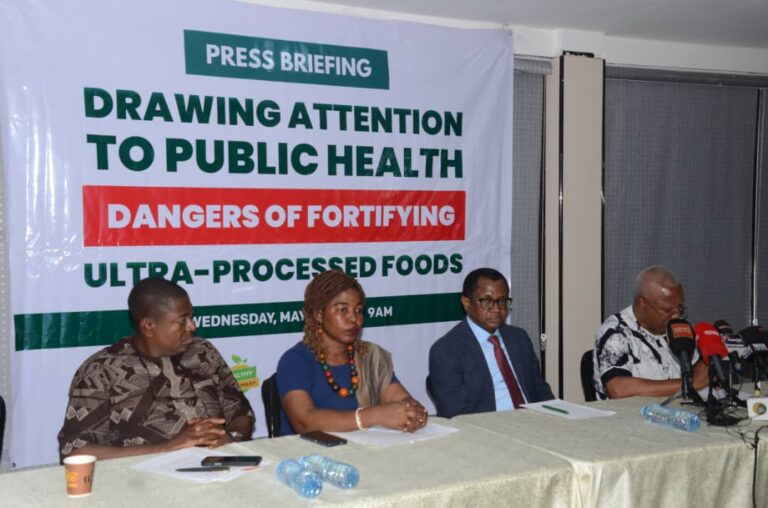
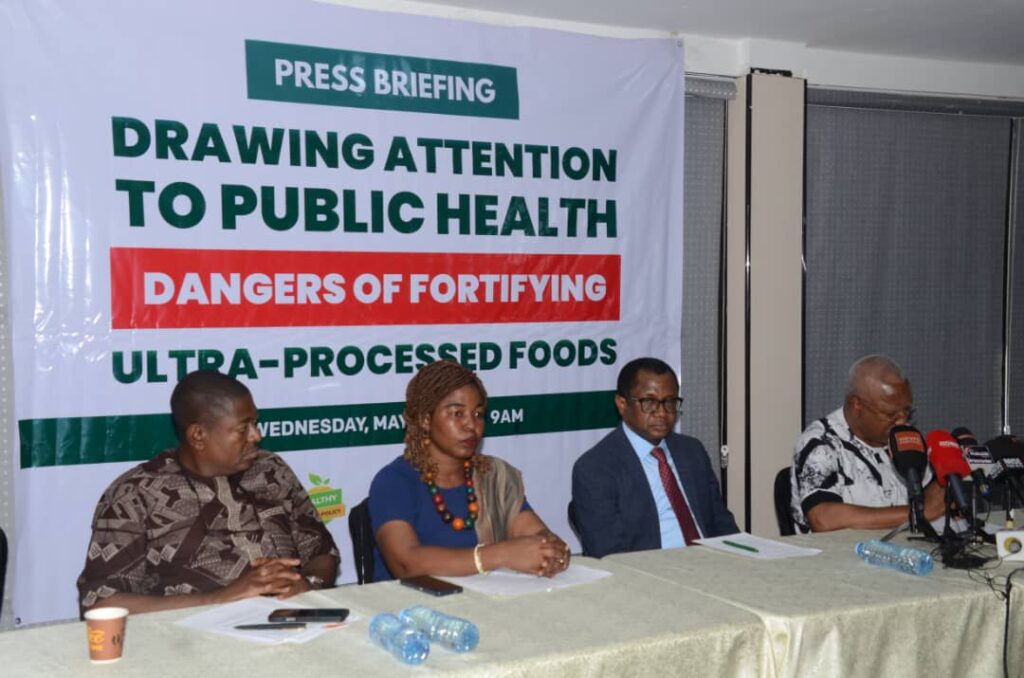
Speaking at a press conference themed “Drawing Attention to Public Health Dangers of Fortifying Ultra-Processed Foods,” the coalition said Nigeria risks deepening its health crisis if current food policies continue to normalise high-salt, high-sugar industrial products.
Technical Advisor of the Network for Health Equity and Development (NHED), Dr Jerome Mafeni, warned that fortifying commonly consumed high-sodium products such as bouillon cubes undermines efforts to reduce salt intake in the population.
“Nigeria is already consuming nearly double the recommended daily sodium intake. We are taking a product that contributes significantly to excess salt intake and beginning to position it as part of the nutrition solution. That is a fundamental contradiction.”
He stressed that fortification does not neutralise the inherent health risks of such products, saying, “A fortified cube is still a high-sodium risk; adding micronutrients does not remove its core health danger.”
The coalition linked these concerns to Nigeria’s worsening burden of non-communicable diseases, particularly hypertension, cardiovascular disease, diabetes and stroke, which they say are being fuelled by dietary shifts.
Lead Researcher at the Cardiovascular Research Unit, University of Abuja, Prof. Dike Ojji, said the impact was already evident in mortality data.
“Cardiovascular diseases now account for about 10 to 11 per cent of all deaths in Nigeria. Hypertension alone affects between 25 and 30 per cent of Nigerians, and much of this is linked to diet, particularly high salt intake and the growing consumption of ultra-processed foods.”
Ojji warned that the health system may struggle under the long-term cost of treating chronic conditions linked to poor diets.
While acknowledging that food fortification was a valid public health tool, the coalition argued that its effectiveness depends on the type of food being fortified.
Executive Director of Corporate Accountability and Public Participation Africa (CAPPA), Akinbode Oluwafemi, said the issue was not fortification itself but its misuse.
“We support food fortification. When properly designed, it is a useful tool for addressing micronutrient deficiencies. What is in dispute, however, is how Nigeria is choosing to implement this strategy.”
Oluwafemi warned that fortifying ultra-processed foods risks misleading consumers, saying, “Fortifying ultra-processed foods creates what experts call a health halo. It gives the impression that these products are healthy, even when they are high in salt, sugar and unhealthy fats. The result is that people are lured into consuming more of them.”
Mafeni described this as a dangerous policy contradiction, warning that it could undermine national efforts to reduce sodium consumption.
“We cannot promote sodium reduction on one hand and normalise high-sodium products on the other. Public health policy must reduce risk, not repackage it.”
He further warned that industrial food fortification strategies could weaken local food systems and marginalise traditional nutrient-rich diets.
“This approach risks weakening our food sovereignty and pushing nutrient-rich indigenous foods out of reach.”
Executive Director of Keen & Care Initiative, Josephine Alabi, said the social impact was often overlooked.
“When a family member suffers a catastrophic health event, such as a stroke, heart disease, or diabetes complications, the weight of long-term care falls on women and girls. As the traditional anchors of unpaid caregiving rest on their shoulders, their time is drained, robbing them of opportunities for education, leisure, and income,” she said.
The coalition urged regulatory agencies, including the Federal Ministry of Health and Social Welfare, NAFDAC and SON, to urgently review current policies, particularly in light of Nigeria’s target to reduce sodium intake by 30 per cent by 2030.
The coalition also highlighted the gendered burden of non-communicable diseases, noting that women in low-income households bear the greatest caregiving responsibilities.
Among its recommendations, the coalition called for ultra-processed foods to be excluded from fortification programmes, the introduction of front-of-pack warning labels, and restrictions on misleading “fortified with” claims on unhealthy products.
It also urged stronger taxation of sugar-sweetened beverages, support for smallholder farmers, and greater investment in local food systems.
The group insisted that Nigeria must adopt a coherent public health strategy that prioritises prevention over contradiction.
“Fortifying poison does not make it medicine,” the coalition warned, urging the government to focus on sustainable dietary solutions rooted in local foods and healthier consumption patterns.