
The Federal Government has spotted structural defects with respect to remittances and improper deduction of Value Added Tax (VAT) and Withholding Tax by several state governments and Government-Owned Enterprises (GOEs).
It raised this concern on Tuesday in Abuja during the national workshop on strengthening tax compliance under the new tax regime, organised by the Government Business Group, Government and Large Taxpayers’ Directorate of the Nigeria Revenue Service (NRS).
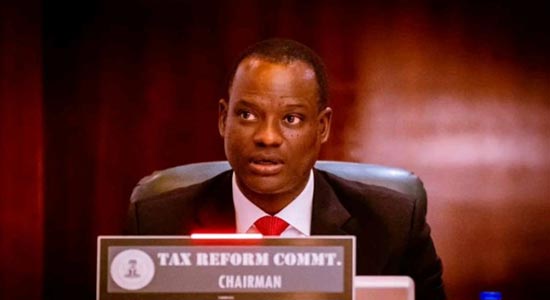
Minister of Finance and Coordinating Minister of the Economy, Mr Taiwo Oyedele, represented by his Chief of Staff, Mr Tolu Adegbile, identified the gaps.
However, he assured that the current administration is prepared to confront the systemic flaws head-on to ensure economic stability.
“True fiscal federalism cannot be a one-way street, for it can only flourish on the basis of shared commitment and mutual accountability,” Oyedele stated. “We have to be honest about the structural imbalances affecting voluntary tax compliance within our system.
“Going forward, we must create an environment where every taxpayer contributes fairly to the seed, and everyone can expect to share in the harvest.”
The Minister explained that the newly introduced fiscal framework is anchored on a dual mandate of unlocking economic opportunities while simultaneously managing shared structural responsibilities across all tiers of government.
“The opportunity is to reform our tax space, expand the tax net without increasing the tax burden and encourage voluntary compliance and use technology to plug leakages,” the Minister said.
“On the other hand, it is our duty to ensure that those national policies are sensitive and responsive to the unique economic realities of our states and local government areas, where a lot of the economic activity we seek to capture is happening.
“To foster an efficient tax ecosystem, it is essential to reinforce cooperation through information exchange, harmonised processes and mutual accountability.”
Oyedele further described the new tax regime as a vital component of a broader structural reform agenda aimed at pivoting the nation away from volatile revenue sources toward a predictable and equitable tax-based platform.
He maintained that a nation’s fiscal health directly dictates its capacity to protect and provide for its citizens.
“Taxes are the social contract in action, turning contributions by citizens into vital public goods like roads, health care, education, and national security,” the Finance Minister added. “But for this to work, our tax system has to be transparent, open and deeply ingrained at all levels of government.”
Addressing the operational mandates of the revenue authority, Oyedele stated that the NRS is legally tasked with managing the federation’s tax administration, which spans the collection of taxes from transactions executed by all Ministries, Departments, and Agencies (MDAs) as well as GOEs.
He noted that the workshop serves as a vehicle to foster deeper institutional collaboration and ensure absolute compliance with tax laws.
In his address, the Executive Chairman of the NRS, Dr Zacch Adedeji, who was represented by the Executive Director of Finance and Corporate Services, Mr Muhammad Abubakar Lawal, expressed concern over the compliance disparities among sub-national entities.
Adedeji stated that the service has received formal reports regarding the imbalance in compliance between states and GOEs, noting that the trend inflicts severe damage on institutional fairness, erodes the broader compliance culture, and unfairly burdens compliant states.
“There must be a change in this story going forward as every level of government has to do its part responsibly to contribute to the national revenue pool that we all draw from,” Adedeji declared.
To incentivise institutional compliance, the NRS boss announced a new merit-based strategy scheduled for full implementation this year. “Starting this year, 2026, the Service will launch an initiative to identify the most tax-compliant States across multiple dimensions,” Adedeji announced. “Excellence deserves recognition, and we look forward to honouring our top performers at the end of the year.”
The revenue chief added that the stakes are remarkably high for the institution this year, given its mandate to generate approximately ₦40 trillion in tax revenue for the Federation.
He admitted that meeting this ambitious target demands a laser-like focus on capacity building and seamless collaboration between internal tax teams and state actors.
“There is no compromise on our ability to perform at the highest level because our mission is inextricably linked to the stability of the nation and economic sovereignty,” Adedeji said.
“But a fair look at our financial situation shows that a lasting tax system cannot be created without total fiscal fairness; one that depends only on common dedication and joint responsibility.”
He explained that the principal role of the NRS is to sustainably fund the Federation Account Allocation Committee (FAAC), which serves as the financial lifeblood for the three tiers of government to execute critical developmental projects.
Consequently, the service is redirecting its operational focus toward tightening collection efficiencies across all government businesses.
According to Adedeji, the workshop functions as a tactical intervention to address lingering bottlenecks and sensitise stakeholders on the provisions of the New Tax Laws, thereby reducing transitional anxiety. The ultimate objective is to transition from an enforcement-dependent model to a collaborative, voluntary compliance framework.
Corroborating these observations, the Executive Director of the Large Taxpayer and Government Directorate at the NRS, Madam Amina Ado, revealed that recent field monitoring and audit exercises exposed deep structural flaws in remittance timelines.
“Our field monitoring and audit activities have revealed that while many sub-national entities are exemplary in their civic duties, there are still some significant structural leakages, especially in the prompt deduction and delay in remittance of Value Added Tax and Withholding Tax,” Ado said.
“Whereas some jurisdictions work hard to fill the national revenue pool, others participate in the distribution without making their fair contribution. This compliance gap distorts and creates an imbalance in our fiscal federalism.”
Ado stated that enhanced cooperation and robust information sharing are no longer optional, but are now the primary pillars of sustainable revenue growth. She pledged that her directorate is fully committed to shifting its relationship with government entities away from friction and toward a seamless partnership.
While noting that the new tax reforms equip the NRS with adequate legal provisions to enforce the recovery of unremitted taxes, Ado stated that the primary objective remains simplification and technological integration.
“At NRS, our mission is to make the new tax laws easier to understand, reduce transition bottlenecks, build technologically driven and transparent remittance platforms that embed compliance into your daily work,” Ado concluded.
“We thereafter wish to have constructive engagements with the respective State actors, heads of MDAs and GOEs in a manner that will promote voluntary and collaborative compliance in tax remittance, cooperation with the NRS audit team and seamless and timely payment of tax debts.
“This is a Win-Win approach that will improve tax collection and make more revenue available at the FAAC meeting for distribution.”