

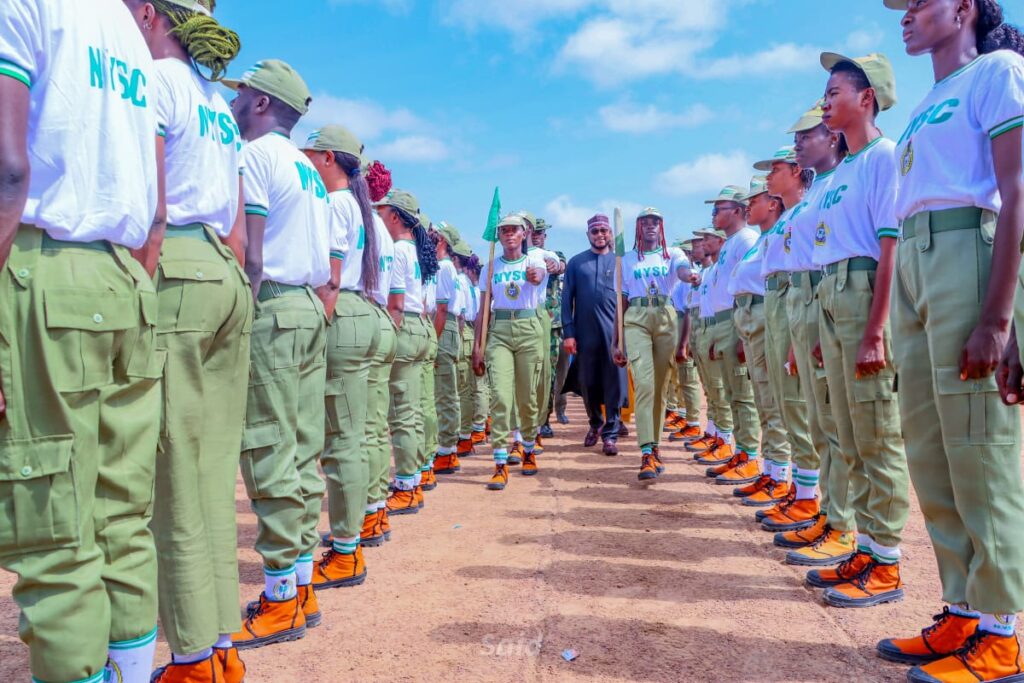
The Federal Government has taken a step toward strengthening youth employment and advancing Nigeria’s clean energy transition with the signing of a Memorandum of Understanding to integrate Compressed Natural Gas retrofitting training into the National Youth Service Corps Skill Acquisition and Entrepreneurship Development programme.
The MoU signing ceremony, held at the Federal Ministry of Youth Development, Federal Secretariat, Abuja, brought together stakeholders from the youth, automotive, and energy sectors.
The initiative is being driven by the Office of the Special Assistant to the President on Youth Initiatives (Monitoring & Delivery), in collaboration with the National Automotive Design and Development Council, National Youth Service Corps, Federal Ministry of Youth Development, and the Presidential Compressed Natural Gas Initiative.
These disclosures were conveyed in a statement on Friday issued by the Special Assistant to the President on Youth Initiatives (Monitoring & Delivery), Dr Titilope Gbadamosi, made available to The PUNCH.
Speaking at the event, Gbadamosi described the initiative as a strategic intervention aimed at positioning Nigerian youth within the country’s emerging green economy.
According to her, the programme will equip corps members with practical skills in CNG vehicle conversion, maintenance, and safety, while creating employment and entrepreneurship opportunities in the expanding alternative energy ecosystem.
She said the programme aligns with the Renewed Hope Agenda of President Bola Ahmed Tinubu, particularly in youth empowerment, economic diversification, innovation, and sustainable energy transition.
Gbadamosi noted that the adoption of CNG as an alternative fuel source has become increasingly important following the removal of fuel subsidy, stressing that the initiative would help address the shortage of certified CNG technicians across the country.
“The integration of this training into the NYSC SAED programme creates a structured national platform for empowering young Nigerians with relevant technical competencies that are both future-focused and economically viable,” she said.
Under the agreement, selected corps members, particularly those with backgrounds in mechanical engineering, electrical/electronic engineering, and auto mechanics, will undergo structured technical training in CNG retrofitting during their service year.
The programme will also provide certification pathways, internship opportunities, and post-service industry linkages through partnerships with accredited CNG conversion centres and automotive stakeholders.
Speaking during the ceremony, the Director-General of the National Automotive Design and Development Council, Otunba Joseph Osanipin, reaffirmed the agency’s commitment to providing technical leadership, curriculum development, certification standards, and funding support for the initiative.
The Director-General of the National Youth Service Corps, Brigadier-General Olakunle Nafiu, also commended the initiative, describing it as a timely and innovative addition to the SAED programme.
According to him, NYSC’s nationwide structure and orientation camp network would provide an effective platform for implementation and nationwide impact.
The Minister of Youth Development, in his remarks, praised the collaboration between the agencies and emphasised the importance of aligning youth development programmes with national economic realities and emerging industry opportunities.
He noted that the initiative represents a practical example of inter-agency collaboration aimed at creating sustainable opportunities for Nigerian youth while supporting national development priorities.
The MoU outlines the responsibilities of participating institutions, implementation timelines, curriculum framework, pilot rollout strategy, monitoring mechanisms, and certification structure for the programme.
As part of the implementation framework, a Joint Implementation Committee will oversee programme delivery, pilot deployment, training standards, and national scale-up.
The event concluded with the formal signing of the MoU, exchange of documents, group photographs, and a media briefing attended by government officials, technical experts, youth stakeholders, and representatives of participating institutions.