
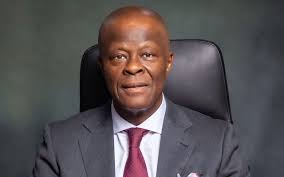
The Minister of Finance and Coordinating Minister of the Economy, Wale Edun, has warned against policy reversals such as a return to broad-based subsidies, even as global economic pressures intensify.
Edun, who chairs the Intergovernmental Group of 24 (G24), said emerging economies must resist the temptation to unwind recent reform gains, stressing that fiscal responses should remain targeted and temporary rather than distortive.
He also added that central banks faced a delicate balancing act in navigating inflation risks without undermining fragile recoveries across developing economies. Speaking at the G24 press briefing at the ongoing IMF/World Bank spring meetings in Washington DC yesterday, Edun said: “For the oil producing countries, Ecuador, Nigeria, you may say, there is the transmission of higher oil prices into higher revenues.
All of that is meaningful for the governments at this time, which is totally different from oil importing countries which clearly face escalated costs. But I must say that it’s also not a one-way street, in the sense that even an oil producing country does have transmission of the higher costs, which feed through from gas prices to fertilizer to food prices and so forth. So it is on both sides that this current energy crisis is affecting countries.”
Specifically, he said the idea was to be able to have the resilience to weather the current shocks, and that means the buffers that have been built on have to be used. “But I think that it is a question of using targeted and temporary relief, particularly for the poor and the most vulnerable, to help them through the cost of living spike, as opposed to rolling back the transformations which economies have taken,” he explained.
“As you know, in the case of Nigeria, that moved very rapidly under the president who came in 2023 to remove subsidies on petroleum products, and to also remove subsidies that were related to the foreign exchange markets. And so those gains, which, if we look at it, were moving at pace and have now been negatively affected by an external shock, which had nothing to do with Nigeria or developing countries as a whole.”
Having made so much progress, he said it was important that “we don’t have a return to generalised subsidies, a sort of relapse into policies that have not proven successful in the past.” He reiterated that central banks faced a delicate balancing act in navigating inflation risks without undermining fragile recoveries across developing economies.
He added: “Central banks and monetary policy at this time, and I think the overall, the overriding message is that there’s a critical balancing role here, where if interest rates are raised too early and too high in an effort to curtail or see potentially rising inflation, that too can do damage to the transformations which are taking place in economies, whereas, on the other hand, if in fact, interest rates are not moved in time that too can do damage in terms of allowing too lax monetary policy or too lax expansion of the economy at the wrong time. So, the central banks have a balancing act.
They have a really important role to play in calibrating and helping to steer economies safely through this current energy crisis and geopolitical tensions.” The Finance minister noted that the transmission of global shocks differed across economies, particularly between oil exporters and import-dependent countries, but stressed that even oil-producing nations were not insulated from inflationary spillovers.