

President Bola Tinubu’s push for cheaper, gas-powered transportation has struggled to gain the expected momentum, as private sector stakeholders identify infrastructure deficiencies slowing expansion, ARINZE NWAFOR reports
Nigeria’s adoption of compressed natural gas remains far below expectations, despite aggressive government promotion of the initiative following the removal of the fuel subsidy, private sector leaders have warned.
Speaking with The PUNCH, business leaders, mainly under the platform of the Lagos Chamber of Commerce and Industry, said poor infrastructure, weak supply networks, inadequate sensitisation and limited refuelling facilities have prevented the transition from scaling beyond major cities such as Lagos and Abuja.
Their concerns come amid renewed assurances by the Executive Chairman of the Presidential Compressed Natural Gas Initiative, Ismaeel Ahmed, who recently defended the Federal Government’s CNG push during a televised interview, insisting that the programme was already reducing transportation costs, attracting investments and laying the foundation for a nationwide clean mobility ecosystem.
Ahmed described the initiative as one of President Tinubu’s signature economic reforms following the removal of the petrol subsidy.
“The mandate of Pi-CNG and EV is basically to catalyse the adoption of compressed natural gas as an alternative fuel and electric mobility as a sustainable way of moving cheaper, cleaner and more affordably in the whole of the country as an ecosystem and as an alternative to fossil fuels,” Ahmed said.
He explained that the programme was designed to cushion the impact of higher petrol prices while helping Nigeria transition towards cheaper and cleaner transportation, adding that President Tinubu viewed the initiative as a long-term national project aimed at reducing dependence on volatile global oil prices and strengthening energy security.
“He said to me something that was very profound. He said I would be remembered as the president that removed the fuel subsidy, but I also want to be remembered as the president that brought an alternative sustainable alternative, which is CNG and electric mobility, and how Nigerians move in a productive way as opposed to giving handouts,” Ahmed stated.
Government progress
The Pi-CNG chairman argued that significant progress had already been made within a short period.
“Looking back at where we started from, we had fewer than 10 refuelling stations across the country. As of today, we have close to about 75 refuelling stations across the country, and the numbers are growing. We have about 115 different stages of development… from a few conversion centres to today, we have about 350 conversion centres. The demand is growing,” Ahmed said.
He added that the country had witnessed one of the fastest rates of CNG adoption globally, despite the enormous infrastructure challenge involved in building an entirely new transportation energy ecosystem.
“People didn’t even know what CNG is… even elite people… to where we are today, where it has become a dominant conversation. A lot of people are using it; people are curious about what it is. People are trying to invest in it,” Ahmed added.
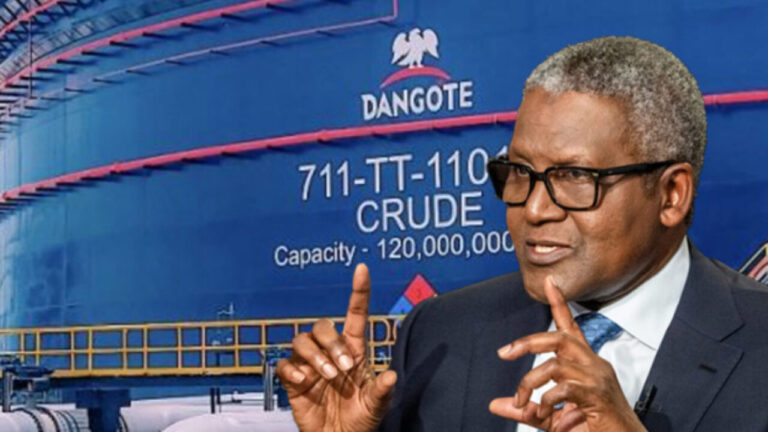
He also highlighted increasing private sector interest in gas-powered logistics and transportation, stating, “For example, Dangote has bought thousands of trucks on CNG… and that’s a refinery owner who sells diesel. So that shows you where his mind is… absolutely the cost savings.”
However, private sector stakeholders say the momentum remains far from sufficient to deliver the scale required for a country with more than 200 million people and millions of vehicles.
Weak adoption
Responding to a PUNCH inquiry, the Director-General of the LCCI, Chinyere Almona, said the transition to gas-powered transportation had suffered from inadequate planning and limited infrastructure rollout.
“On the CNG issue, it’s not catching up as quickly as we expected to. Relative to the government’s plan for it, it’s clear, really, that when there’s a change from fuel to CNG, there has to be sufficient sensitisation, and that hasn’t been done enough from the government level,” Almona said.
She noted that the lack of refuelling stations outside major cities had significantly slowed adoption.
“In terms of the infrastructure that this needs to take on, in most places you can’t find refuelling stations because they haven’t been set up. And even the usage or the application is only perhaps more prevalent in Lagos and Abuja. So other parts of the country haven’t even been introduced to it at all,” Almona stated.
The LCCI DG observed that the absence of adequate regulations, awareness campaigns and support infrastructure has made migration to CNG difficult for many Nigerians.
“Migration will be difficult without platforms, infrastructure, and regulations. These things must be consistently put in place for proper migration. So that’s why it hasn’t caught on as much as we expected to,” she said.
Almona admitted that it remained difficult to predict when adoption would spread meaningfully beyond Lagos and Abuja into commercial hubs such as Kano and other parts of the country.
“The government will need to make certain investments in education, usage, and all of those and infrastructure for it to happen. So, it’s difficult to tell the timeline here, unfortunately,” she added.
Supply shortages
The Vice President of the LCCI, Akinbo Akin-Olugbade, identified gas supply constraints as one of the most critical barriers to nationwide adoption.
Akin-Olugbade, a logistics and supply chain businessman, noted that infrastructure expansion alone will not solve the problem unless Nigeria also increases gas availability and distribution capacity.
“One of the additional points is that supply is one of the most critical aspects in terms of CNG adoption in transportation, the supply of the CNG,” he said.
He revealed that even major industrial operators were struggling with insufficient gas supply despite ongoing investments, stating, “Even if I go to the (Dangote) refinery with 4,000 trucks… there’s not enough CNG there. So, they’re investing in CNG production, but even with that, there is not enough CNG supply,” he stated.
The LCCI vice president urged investors to view the supply gap as a major business opportunity to speed up CNG adoption nationwide.
“One of the areas that we feel people should be encouraged to invest in is CNG. It’s one of the areas where there are opportunities,” Akin-Olugbade said.
Additionally, he stressed that greater private investment in gas distribution infrastructure would help drive nationwide acceptance.
“As people invest in the distribution of CNG, you will get more adoption. And this is not just about Lagos or Abuja, but nationally,” he added.
Opportunity in CNG
Despite the challenges, private sector leaders insist that CNG still holds significant long-term potential for Nigeria’s transport and logistics sectors.
Industry stakeholders argue that the economics of gas-powered transportation remain attractive because of lower fuel costs and operational savings.
Akin-Olugbade noted that logistics operators using gas-powered vehicles were already witnessing reduced operational leakages and theft losses.
“One of the unintended side effects of CNG adoption for transportation is reduced theft. Because for fuel and diesel-powered trucks and delivery vehicles, there’s no more fuel syphoning. And that is something the companies that already have CNG distribution are seeing,” he explained.
“Theft and losses have gone to almost zero. So, it is something we should encourage,” he added.
Analysts say the reduced risk of fuel diversion and theft could become a major attraction for manufacturers, transport operators and logistics companies struggling with high operating costs.
The push for gas-powered transportation has also gained support because Nigeria possesses some of the world’s largest natural gas reserves, creating expectations that domestic gas utilisation could reduce pressure on foreign exchange demand linked to fuel imports.
Pi-CNG chairman Ahmed argued during the interview that the initiative would eventually stimulate industrialisation, local manufacturing and job creation.
He disclosed that the government was already encouraging the local assembly of conversion kits, buses, and tricycles to reduce the country’s import dependence.
He said the next phase of the programme, “Pi-CNG 2.0”, will focus on scaling infrastructure deployment, expanding electric vehicle adoption, and deepening local manufacturing capacity.
Encouraging wider adoption
On his part, the President of the LCCI, Leye Kupoluyi, urged the Federal Government to make vehicle conversion more affordable for Nigerians.
He assessed that cost remains a major obstacle for vehicle owners willing to migrate from petrol-powered engines to gas-powered alternatives.
“What we can just advise the government is for us to, number one, encourage… many people want to do it. Because of converting a present petrol-driven car, we need to make it attractive to Nigerians,” Kupoluyi said.
He called for deliberate investment in refuelling stations and public education campaigns to accelerate adoption.
“We’re calling on many of our stations so that there can be easy conversion to CNG. We need to be very deliberate and educate the people and also make it affordable for people,” he added.
Industry players believe that widespread deployment of refuelling stations across interstate transport corridors will be critical to building public confidence in the initiative.
For many transport operators, concerns over where to refuel outside Lagos and Abuja continue to discourage conversion despite rising petrol costs.