


The Central Bank of Nigeria retained interest rates, warning that global tensions and rising oil prices could derail disinflation efforts despite reforms. While the apex bank maintains inflationary pressures are temporary and the naira stable, analysts fear sustained shocks and elevated borrowing costs may hinder growth, writes SAMI TUNJI
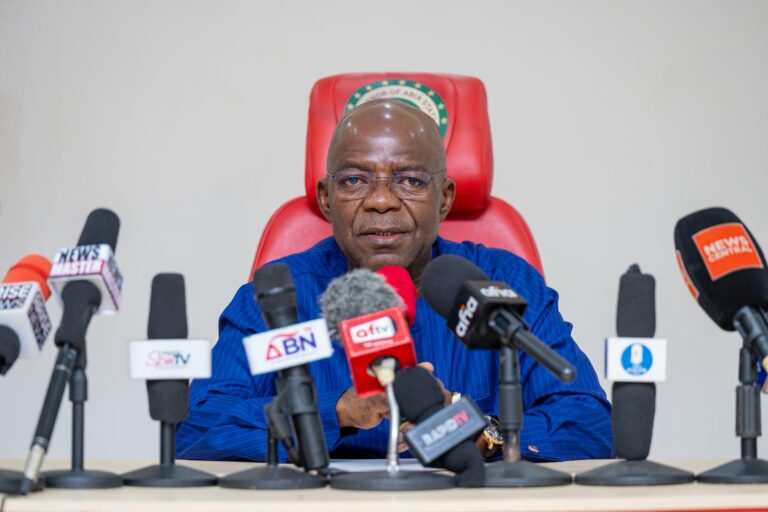
when the Monetary Policy Committee of the CBN rose from its 305th meeting in Abuja on Wednesday, the decision was not merely to leave interest rates unchanged. It was a signal that the apex bank was no longer willing to treat Nigeria’s recent disinflation path as safe enough to justify another rate cut.
The CBN Governor, Olayemi Cardoso, announced that the committee retained the Monetary Policy Rate at 26.5 per cent; kept the standing facilities corridor at +50/-450 basis points; and retained the Cash Reserve Requirement for deposit money banks at 45 per cent, merchant banks at 16 per cent, and non-TSA public sector deposits at 75 per cent. The decision followed the MPC’s review of rising risks to the global and domestic economies.
The hold marked a pause in the easing cycle, which resumed in February 2026 when the MPC reduced the MPR by 50 basis points to 26.5 per cent, following 10 straight months of falling inflation and January headline inflation of 15.10 per cent.
But by May, the policy room had narrowed. Headline inflation had risen for two consecutive months, reaching 15.69 per cent in April from 15.38 per cent in March. Food inflation climbed more sharply to 16.06 per cent from 14.31 per cent, while core inflation eased to 15.86 per cent from 16.21 per cent. Cardoso, speaking after the meeting, said the rise was largely due to external shocks but argued that the inflation pressure was temporary.
“We’ve got to remember that we’ve been coming from 11 straight months of disinflation,” Cardoso said. “We believe that what we have now is something that has resulted from external shocks. But that notwithstanding, we have been able to create buffers that have protected us during this period.”
That explanation captured the main tension in the MPC’s decision. On the one hand, the CBN believes that its earlier tightening, exchange rate reforms, and reserve accumulation have reduced Nigeria’s vulnerability. On the other hand, it knows that cutting rates too early could weaken the naira, worsen imported inflation and unsettle market expectations.
The global backdrop supports the CBN’s caution. The International Energy Agency, in its May 2026 oil market report, said global oil supply fell further in April, with total losses since February at 12.8 million barrels per day. Also, the IEA expected supply losses linked to the Iran war and Strait of Hormuz disruptions to keep the market undersupplied through the third quarter of 2026.
For Nigeria, that creates a mixed picture. Higher oil prices can lift export earnings and strengthen external reserves. However, increases in global fuel, shipping and food prices could also raise domestic inflation through higher transport and logistics expenses. This explains why the MPC attributed the recent inflation rise to the Middle East crisis, noting that the conflict had intensified pressure on energy, transportation and logistics costs.
Analysts at the Financial Markets Dealers Association said the MPC’s decision reflected a cautious monetary stance shaped by rising geopolitical tensions and growing uncertainty in global fixed-income markets. They further argued that the MPC’s decision suggested monetary easing in Nigeria would likely proceed more gradually than previously anticipated, as central banks globally increasingly adopt a cautious wait-and-see approach amid inflation risks, volatile energy prices and persistent geopolitical tensions.
Exchange rate stability
The strongest part of Cardoso’s defence was the foreign exchange market. He repeatedly framed exchange rate stability as the central tool for preventing a temporary shock from becoming a broader inflation crisis.
“In addition to that, of course, it is key that the centrepiece of our toolkit is ensuring that our foreign exchange rate remains stable,” he said. “That is something that we are committed to ensuring happens.”
This matters because Nigeria’s inflation problem is not only about money supply. It is also about the price of imported fuel, machinery, raw materials, food inputs and shipping. When the naira weakens sharply, global price shocks enter the domestic economy faster. When the currency is stable, the pass-through is lower.
The MPC argued that the impact of the Middle East crisis on Nigeria had been “largely muted” due to reforms, including exchange rate stability, stronger reserve buffers, improved monetary policy transmission, a better-capitalised banking system, and fiscal consolidation. It said the pass-through from global commodity and energy prices would have been more severe without those reforms.
Cardoso also rejected claims that the CBN was aggressively defending the naira with heavy intervention. He said the FX market had changed considerably, with daily turnover rising from about $100m when the current management took office to about $550m and occasionally touching $1bn.
“In actual fact, relative to turnover in 2025, the CBN intervened in about 1.2 to 1.3 per cent. It was so small relative to turnover,” he said.
That claim is central to the CBN’s credibility argument. If the naira is stable only because the apex bank is burning reserves, the stability may not last. But if liquidity has deepened and market participants are supplying dollars under a willing-buyer, willing-seller structure, the stability becomes more defensible.
Nigeria’s reserves position gives the CBN some cover. The communique put gross external reserves at $49.49bn as of 15 May 2026, compared with $48.35bn at the end of March, enough to cover 9.04 months of imports.
The planned rollout of the revised FX Manual on 1 June also aligns with this strategy. Cardoso said the manual was meant to deepen transparency, improve consistency and make it easier for exporters to bring proceeds into the official system.
The risk, however, is that confidence can change quickly. If oil disruptions worsen, import bills rise, or portfolio inflows slow, the market may again test the CBN’s resolve. That is why the MPC’s decision to hold rates was less about celebrating stability and more about protecting it.
Growth under pressure
The hold decision also exposed a policy trade-off. High interest rates help the CBN defend the naira and contain inflation expectations, but they also raise borrowing costs for businesses, households and small firms.
Nigeria’s economy entered the meeting with stronger growth numbers. The NBS reported real GDP growth of 4.07 per cent in the fourth quarter of 2025, up from 3.98 per cent in the third quarter. The CBN said growth was supported by industry and agriculture, while the non-oil sector expanded 3.99 per cent and the oil sector by 6.79 per cent.
However, the growth picture is uneven. Businesses still face expensive credit, high energy costs, weak purchasing power and insecurity in parts of the country. For small and medium enterprises, the question is whether monetary tightening has gone too far.
Cardoso acknowledged the concern but said credit to SMEs had begun to improve. According to him, new credit to the SME sector rose to about N199bn in April 2026 from N153bn in March, particularly at the retail end of the market. He said the general category accounted for 94.73 per cent of new credit facilities, while general commerce accounted for 2.46 per cent.
He added that SME credit was not the sole responsibility of the CBN, noting that the Ministry of Industry, Trade and Investment, the Bank of Industry and fiscal authorities also had roles to play. The apex bank, he said, would act more as a catalyst by improving the lending ecosystem.
That position is practical, but it does not fully remove the pressure. At 26.5 per cent, the benchmark rate remains highly restrictive. Even as banks increase lending to smaller-ticket borrowers, many productive firms still face double-digit borrowing costs that can weaken investment and hiring.
The banking recapitalisation exercise is expected to help. The MPC noted that 33 banks had improved their financial soundness indicators following the exercise. Cardoso said the outcome showed investor confidence in Nigeria, adding that domestic investors accounted for about 74 per cent of the recapitalisation interest while foreign investors accounted for about 26 per cent.
Still, stronger bank capital does not automatically translate into cheaper credit. Banks may remain cautious if inflation risks persist, the government continues to borrow heavily domestically, or economic uncertainty heightens default risk. The CBN’s task, therefore, is to keep inflation expectations anchored without choking the real economy.
Analysts at United Capital Plc said the MPC faced a difficult balancing act between containing inflation and supporting growth, especially as the latest price pressures were largely supply-driven rather than demand-led. In its recent Monetary Policy Watch report, the firm noted that Nigeria’s Composite Purchasing Managers’ Index fell into contraction territory at 49.4 points in April from 53.2 points in March, signalling weakening demand, softer production activities and declining business confidence amid the US-Iran crisis.
The analysts argued that while rising inflation will ordinarily justify a tighter monetary policy, the external and transitory nature of the current shocks made an aggressive rate increase less effective. They warned that if the PMI contraction persists, the economy could face weaker investment activity and slower GDP growth, increasing pressure on policymakers to eventually consider a more growth-supportive stance.
The disinflation test
The MPC’s central bet is that the current inflation increase is temporary. That is plausible, but not guaranteed.
The argument in favour of the CBN is clear. Month-on-month headline inflation slowed to 2.13 per cent in April from 4.18 per cent in March, suggesting that the monthly inflation momentum moderated even though the year-on-year rate rose. The 12-month average inflation also slowed to 19.16 per cent from 20.05 per cent, marking the sixth consecutive month of decline.
S&P Global Ratings also upgraded Nigeria’s long-term sovereign rating to “B” from “B-” on 15 May 2026, with a stable outlook, citing improving macroeconomic conditions. That upgrade gave the CBN another basis for arguing that reforms are gaining external validation.
However, the inflation outlook remains exposed to shocks outside the CBN’s direct control. The IEA’s assessment of oil supply disruptions indicates that global energy markets remain vulnerable. If freight, fuel and agricultural commodity prices remain elevated, Nigeria’s food and transport inflation may stay sticky.
The Chief Executive Officer of the Centre for the Promotion of Private Enterprise, Dr Muda Yusuf, said the MPC’s decision reflected a growing recognition that Nigeria’s inflation pressures were largely structural and externally induced, rather than driven by excessive domestic demand. According to him, geopolitical tensions involving Iran, Israel, and the United States had triggered fresh volatility in global energy markets, worsening transportation, logistics, and manufacturing costs in Nigeria.
The CPPE boss maintained that the broader goal of macroeconomic management should not be limited to lowering inflation figures alone but should also include supporting productivity, competitiveness, industrialisation and sustainable job creation. He therefore urged sustained fiscal discipline, stronger policy coordination, and continued measures to preserve investor confidence amid mounting global uncertainty.
That is why Cardoso’s repeated emphasis on fiscal collaboration is important. Monetary policy can slow demand and stabilise expectations, but it cannot fix bad roads, insecurity, food supply bottlenecks, port delays or power shortages. If those structural problems persist, the CBN may be forced to keep rates high for longer than businesses want.