
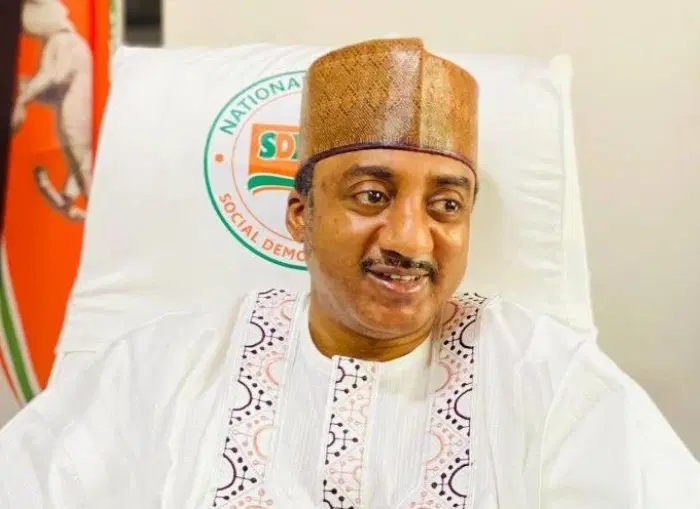
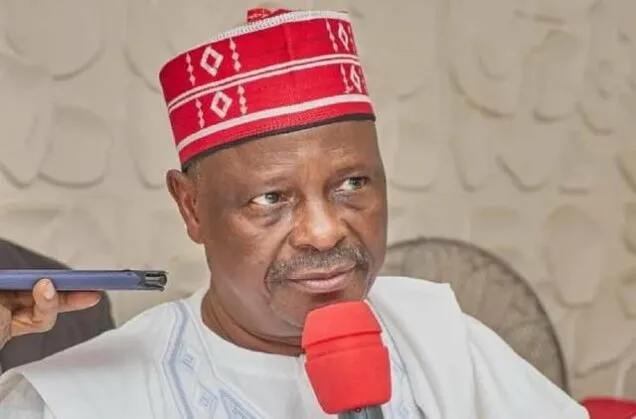
Former Chairman of the Kano Municipal Council, Faizu Alfindiki, on Tuesday, cast doubt on the electoral strength of the ex-Kano State Governor, Rabiu Musa Kwankwaso, insisting that past election results in Kano do not support claims that the NDC leader can decisively influence presidential outcomes.
Alfindiki spoke in Kano while addressing APC social media influencers amid growing political discussions around the alliance between Kwankwaso and Peter Obi.
According to him, the ruling All Progressives Congress (APC) has no reason to be worried about the emerging opposition alignment because Kano’s voting history has consistently shown that presidential elections in the state are driven more by personalities than political structures.
He argued that former President Muhammadu Buhari remained the dominant electoral force in Kano for years, regardless of which party controlled the state government.
“In 2003, Buhari secured about 1.6 million votes in Kano while Kwankwaso was governor under the PDP, yet the state was not delivered to Obasanjo,” Alfindiki said.
“The same pattern repeated itself in 2007 despite PDP being in power.”
He further noted that in 2011, Buhari again polled massive votes in Kano even when then Governor Ibrahim Shekarau was contesting for reelection, adding that Kwankwaso also failed to deliver the state to former President Goodluck Jonathan.
“Kwankwaso himself benefited from Buhari’s popularity in the North to reclaim the Kano Government House in 2011,” he stated.
“Without Buhari’s support base, that political comeback would have been difficult.”
The APC chieftain also referred to the 2019 elections where Buhari reportedly won more than 1.4 million votes in Kano while Kwankwaso-backed PDP candidates lost all senatorial seats and failed to secure any House of Representatives seat in the state.
Alfindiki said Kwankwaso’s performance in the 2023 presidential election further weakened claims about his electoral dominance in Kano.
“As a presidential candidate, he could not even cross one million votes in his home state. That says a lot about his actual voting strength,” he said.
He maintained that APC remains confident ahead of 2027, stressing that the party’s grassroots structure across Kano and the North is stronger than what he described as “Temporary alliances and exaggerated political narratives.”