
The Senate, yesterday, vehemently condemned the ongoing xenophobic attacks, persecution and intimidation of Nigerians in South Africa and Ghana, describing the incidents as “barbaric, unlawful and inconsistent with African brotherhood.”
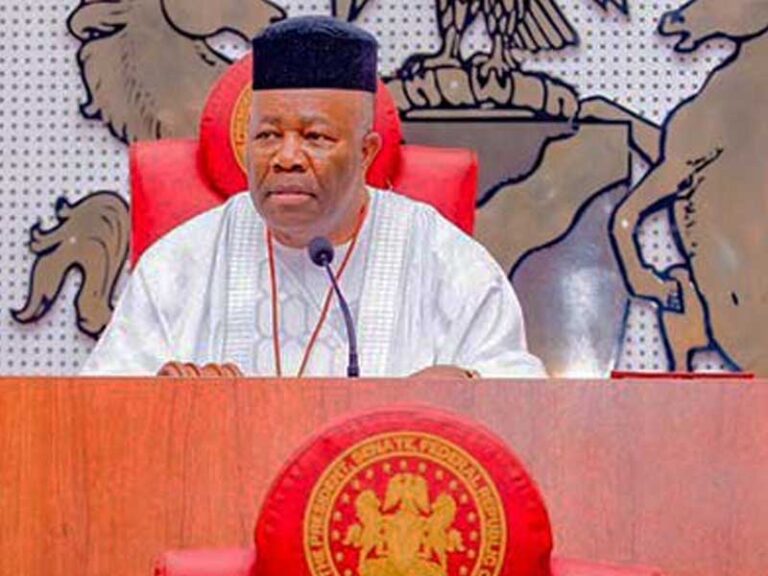
Consequently, the Red Chamber mandated the Senate President, Godswill Akpabio, to lead a delegation of National Assembly leadership to meet with the South African parliament on how to resolve the issue.
It passed the resolutions following a motion sponsored by Senator Osita Izunaso, (Imo West), who came under matters of urgent public importance during the day’s plenary session. Presenting the motion for debate, Izunaso expressed serious concerns about what he described as “advocacy of fear, humiliation and psychological trauma,” where Nigerians are “increasingly profiled and treated as though being a Nigerian national alone constitutes an offence.”
Contributing to the motion, some Lawmakers noted that the South African government had publicly acknowledged the situation and promised to restore order; a move the Senate said “confirms the seriousness and contemporary nature of the incidents.”
Recalling Nigeria’s role in the liberation struggle against apartheid regime in South Africa, Senator Victor Umeh, (Anambra Central) said: “Nigerian workers, students, civil servants and market women stood at the forefront from the 1960s to the 1990s, sacrificing financial resources and diplomatic goodwill for the liberation and dignity of South Africans.”
Senator Adams Oshiomhole argued that Nigerian lives “cannot be predated” and declared, “We do not condone any one life being lost. If a crime has been committed under South African law, they have the right to bring any subversive element to justice, but not to kill our people as if we are helpless; we are not.” Warning of economic consequences, the lawmaker said: “By the time we turn in the economic hardship; we withdraw MTN license; we revoke DStv license, those workers from South Africa will have good jobs to do. Let South Africa continue with their jobs.
Then when we have this balance of madness, I believe there will be sanity.” The senator urged a review of bilateral relations, stating: “I will re-kick our bilateral relationship in a manner that is a win-win. Right now, Nigeria’s trade deficits with South Africa. South Africa is the one benefiting.” Calling for decisive action, the lawmaker added: “My colleagues, let’s not turn this place to a place of mourning, crying and lamenting. Let us bite in a manner that they will be the one begging.”
The Senator proposed, saying: “I so hold and I persuade my colleagues that when we come to prayers, we should include these two prayers: that MTN license will be withdrawn, that DStv license will be withdrawn.
There are Nigerians who can provide those services and they will employ those who are coming back home from South Africa. You bite me once, I bite you twice.” However, Senator Adamu Aliero intervened with a caution saying: “I rise to contribute to this. First and foremost, in international relations there is what we call the rule of reciprocity.
Nigeria has done a lot for South Africa and we demand a lot also from South Africa by making sure that Nigerians living in South Africa and conducting their businesses do so freely and fairly without any intimidation, provided they are doing the business legally according to the rules of that country.” The lawmaker disclosed that diplomatic channels were already active.
“Mr President, I’m aware that the Federal Government of Nigeria has already stepped into this matter. Currently the Minister of Foreign Affairs is already in South Africa to discuss with the authorities there.” He cautioned against preemptive legislative action, noting: “Our discussion will certainly pre-empt whatever the Federal Government is going to do in South Africa.
I will rather suggest that in view of the seriousness of the matter, we step down discussions on this matter and allow diplomacy to take its full course.” The Chamber maintained that the attacks violated international human rights principles and breach of ECOWAS protocols on free movement, the African Union Charter and other regional instruments guaranteeing dignity and protection of persons.