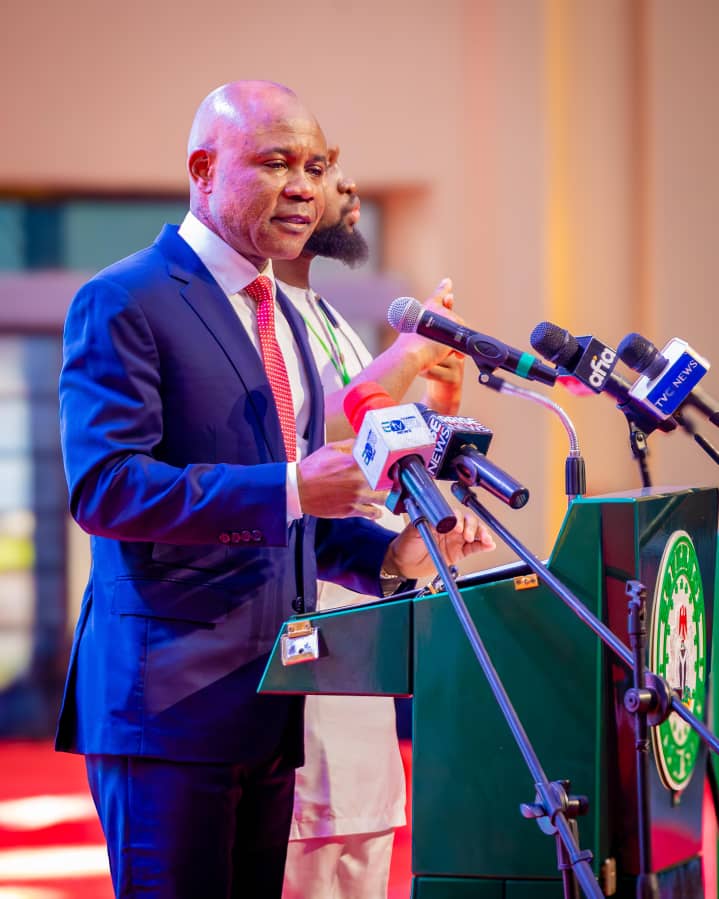




Leading voices within Nigeria’s advertising and marketing communications industry have backed the Federal Government’s directive mandating the settlement of media debts within 45 days, describing it as a long-overdue step toward restoring financial discipline and stability in the sector.
The directive, championed by the Minister of Information and National Orientation, Mohammed Idris, has continued to draw reactions from practitioners and stakeholders who say persistent payment delays have weakened agencies, destabilised media organisations, and contributed to job losses across the communications value chain.
In a statement on Sunday, Industry operators said the policy goes beyond regulation, describing it as an attempt to address long-standing structural indebtedness that has undermined confidence and strained business operations across the sector.
Former APCON Chairman, Udeme Ufot, said the directive is both timely and necessary, noting that the industry has long operated in a structure that places service providers at a disadvantage.
“The structure of the industry tends to put advertisers at a dictatorial advantage,” he said, warning that persistent weak payment discipline has contributed to the decline and collapse of several media organisations.
He added that agencies and media owners are often forced to absorb financial strain to preserve client relationships, a practice that has weakened the industry’s long-term sustainability.
Former President of the Association of Advertising Agencies of Nigeria, Bunmi Oke, described the directive as a positive reform step, but stressed that enforcement would determine its effectiveness.
According to her, policy statements alone will not change entrenched industry behaviour without strong regulatory backing and measurable compliance mechanisms.
She noted that sustained governance and accountability structures would be required to ensure consistent implementation across the advertising ecosystem.
Group Chief Executive Officer of X3M Ideas and President of the International Advertising Association, Nigeria Chapter, Steve Babaeko, said the directive represents a long-awaited breakthrough for the industry.
He said delayed payments have remained a structural challenge for years, creating cash flow pressures that weaken agencies and media organisations.
Babaeko warned that the sustainability of the media ecosystem depends on disciplined payment practices, noting that financially distressed media houses cannot effectively support broader economic, democratic, and cultural development roles.
Managing Director and Chief Executive Officer of Vert Ideé, Olamide Blessing-Kayode, also supported the directive, describing it as an effort to dismantle a long-standing debt culture in the industry.
She said media houses and agencies often fund campaigns from internal resources while waiting months for payment, creating significant financial strain across the value chain.
“This directive is more than a policy statement; it is an attempt to reset the culture of debt that has weakened agencies and media houses for years. The era where advertisers use the media industry as free credit must come to an end. If properly enforced, this will protect jobs, strengthen cash flow across the value chain, and create a healthier, more sustainable advertising ecosystem,” she said.
She added that the introduction of a 45-day payment window, interest on delayed payments, and restrictions on switching agencies without settling outstanding debts reflect a stronger push toward financial accountability.
The Advertising Regulatory Council of Nigeria has acknowledged the directive and pledged institutional compliance, while stakeholders say attention is now shifting to enforcement as the key test of the policy’s impact across the advertising and media industry.