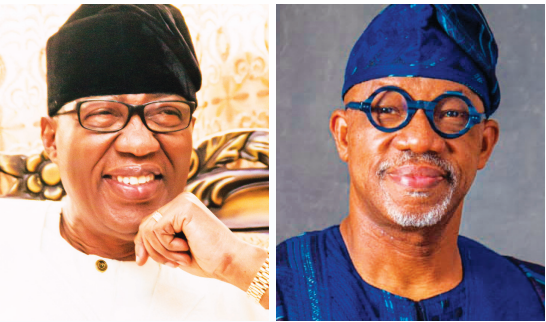

The political atmosphere in Ogun State is gradually heating up ahead of the 2027 general elections, with an emerging battle between Governor Dapo Abiodun and former governor and serving senator, Gbenga Daniel, over the Ogun East Senatorial seat threatening to reshape the power dynamics within the All Progressives Congress (APC) in the state.
What initially appeared to be a routine political succession arrangement has now developed into a major intra-party confrontation involving two of the most influential political figures in Ogun politics.
The struggle is not merely about a Senate seat; it is a contest for political relevance, succession control, and dominance of the APC structure in Ogun East and beyond. The crisis became public when APC leaders and stakeholders in Ogun East endorsed Governor Abiodun as the party’s consensus candidate for the Ogun East Senatorial seat ahead of the 2027 elections.
The endorsement reportedly took place at a stakeholders’ meeting in Ijebu-Ode attended by party leaders, councillors, local government executives, lawmakers, and members of the Governor’s Advisory Council. However, the endorsement immediately generated controversy because Senator Daniel, who currently represents Ogun East in the Senate, was allegedly prevented from attending the meeting. Reports of his exclusion deepened speculations that the APC in Ogun State was heading towards a major internal crisis.
The development marked a dramatic shift in the relationship between the two politicians, who were once considered political allies. Daniel, a former governor between 2003 and 2011, played a significant role in the political realignments that strengthened the APC in Ogun State before the 2019 elections. For Governor Abiodun, the Senate seat is widely seen as a strategic political destination after completing his tenure as governor in 2027.
Like many outgoing governors in Nigeria, moving to the Senate offers continued political relevance, influence within national politics, and protection of political structures built during years in office. But for Gbenga Daniel, relinquishing the seat may amount to surrendering his political stronghold in Ogun East. Daniel remains one of the most influential politicians in the Ijebu axis and still commands loyal supporters across the district.
His decision to obtain nomination forms for re-election despite Abiodun’s endorsement suggests he is unwilling to step aside quietly. Observers believe the confrontation reflects deeper issues within the APC over control of Ogun politics after Abiodun leaves office.
Following the endorsement of Abiodun, loyalists of Daniel rejected the process, describing it as a “kangaroo arrangement” lacking proper consultation and due process within the APC structure. Groups sympathetic to Daniel also accused forces loyal to the governor of attempting to impose a candidate on Ogun East without democratic consultation.
Some supporters alleged intimidation and misuse of political influence after reports emerged that security presence disrupted meetings organised by Daniel’s loyalists. The disagreement has now polarised sections of the APC in Ogun East, with party members divided between loyalty to the sitting governor and allegiance to the former governor. The Ogun East Senatorial District remains one of the most politically strategic zones in Ogun State.
Dominated largely by the Ijebu and Remo areas, the district has historically produced powerful political figures and has often influenced the direction of state politics. Daniel’s political roots in Ogun East remain deep, particularly in Sagamu and the Ijebu axis. On the other hand, Abiodun has strengthened his political network across the district during his years as governor.
This reality makes the battle particularly sensitive because both men command strong grassroots support and substantial political structures. The face-off poses a serious challenge to the unity of the APC in Ogun State ahead of the 2027 elections. Political analysts warn that if the crisis is not carefully managed, it could weaken the party’s cohesion and create opportunities for opposition parties.
The situation also raises questions about succession arrangements within the APC and the influence of powerful political blocs in determining candidates before party primaries. Some observers believe intervention from national APC leaders and influential political stakeholders may eventually become necessary to prevent the conflict from escalating further.
Gbenga Daniel fights back
Daniel’s camp moved swiftly after APC stakeholders in Ogun East endorsed Governor Abiodun for the senatorial seat reportedly without the participation of the serving senator. Loyalists of the former governor immediately rejected the endorsement, describing it as unconstitutional and lacking internal democratic process.
Supporters of Daniel accused forces loyal to the governor of attempting to impose a candidate on the district while ignoring existing party structures and political realities on the ground. Political associates of the senator argued that Ogun East was not any- one’s political estate and insisted that party primaries — not endorsements — should determine who emerges as the APC candidate.
In response to the growing pressure, Daniel has reportedly intensified consultations across Ogun East, particularly within the Ijebu and Remo areas where he still commands significant influence. The former governor is believed to be relying heavily on his long-standing political network built during his eight years as governor between 2003 and 2011, as well as his influence among party elders, traditional rulers, business associates, and grassroots mobilisers.
Observers say Daniel’s greatest strength remains his deep political roots in Ogun East and the loyalty of supporters who view him as one of the region’s strongest political voices. One of the clearest indications that Daniel was prepared for a political showdown emerged after reports that he obtained APC nomination forms for re-election to the Senate despite pressure from forces backing Abiodun.
The move was interpreted by analysts as a direct signal that the senator was unwilling to surrender the seat without a fight. For Daniel, political observers believe the battle goes beyond retaining a Senate position. It is also about preserving his political relevance and protecting his structure from gradual dismantling ahead of the post-Abiodun political era in Ogun State.
The confrontation between both camps has further exposed cracks within the Ogun State chapter of the APC. Party members and stakeholders are increasingly divided between loyalty to the sitting governor and support for the former governor. Some APC members fear the crisis could weaken party unity ahead of the general elections if reconciliation efforts fail.
The situation has also sparked debates over internal democracy within the party, with critics questioning whether powerful incumbents should determine candidates before party primaries. The clash between Abiodun and Daniel represents more than an ordinary senatorial contest. It is gradually becoming a battle for political supremacy in Ogun East and, by extension, influence over the future leadership structure of Ogun State politics.
While Governor Abiodun controls the machinery of government and enjoys the advantages of incumbency, Daniel remains a formidable grassroots politician with years of political experience and strong connections across the state. Analysts believe the outcome of the battle could redefine political alliances within Ogun APC and determine which bloc controls the political future of Ogun East after 2027.
As tensions continue to rise, many party stakeholders are calling for intervention from the national leadership of the APC and respected political elders to prevent the disagreement from escalating into a wider party crisis. y
Whether reconciliation efforts succeed or the two politicians eventually face off during party primaries, the Ogun East Senate battle is already shaping up as one of the most closely watched political contests ahead of the 2027 elections.
Abiodun defends action
Abiodun has defended the endorsement of his candidacy for the Ogun East Senatorial seat ahead of the 2027 elections, insisting that the process was carried out by party stakeholders and not imposed by him. The governor’s response followed growing criticism from loyalists of Daniel who rejected the endorsement and accused forces within the APC of attempting to sideline the incumbent senator from the race.
Supporters of Abiodun argued that the endorsement reflected the genuine wishes of party leaders, grassroots members, and stakeholders across Ogun East who believe the governor deserves the opportunity to represent the district in the Senate after completing his tenure in office. Allies of the governor maintained that the endorsement meeting held in Ijebu-Ode was legitimate and attended by elected officials, party executives, councillors, and influential APC leaders from across the senatorial district.
According to them, the decision was reached through consensus after extensive consultations among party stakeholders. They dismissed allegations that the process was manipulated to favour the governor, insisting that APC members merely exercised their democratic right to support a preferred aspirant. The Abiodun camp also denied allegations that Senator Daniel was deliberately excluded from party activities or politically targeted.
Supporters of the governor argued that no individual could claim ownership of the Ogun East Senatorial seat, stressing that every qualified APC member had the constitutional right to contest. They further insisted that endorsements remain part of normal political activities within Nigerian parties and do not automatically prevent other aspirants from participating in primary elections.
Political associates of the governor argued that the controversy surrounding the endorsement was being exaggerated unnecessarily because the final decision would still rest with party delegates during APC primaries. According to them, the endorsement was simply an expression of political support and not a substitute for the democratic process.
Some loyalists also pointed out that Governor Abiodun had worked extensively across Ogun East during his administration and deserved recognition for infrastructure projects, economic initiatives, and political stability in the district. Observers believe the governor’s defence of the endorsement reflects the wider struggle for political influence in Ogun State ahead of the post-2027 era. For Abiodun, moving to the Senate is seen as a strategic step toward retaining political relevance after leaving office as governor.
However, the resistance from Daniel’s camp has transformed the succession plan into a major internal APC confrontation capable of reshaping political alliances within the state. Amid rising tensions, party elders and stakeholders have continued to call for reconciliation between both camps to prevent a deeper crisis within the Ogun APC.
Analysts warn that prolonged division between supporters of Abiodun and Daniel could weaken the party’s cohesion ahead of the 2027 general elections and create opportunities for opposition parties to gain political ground. Despite the controversy, Governor Abiodun’s camp remains confident that the endorsement demonstrates the growing support he enjoys within Ogun East and the wider APC structure in the state.
The unfolding battle between Abiodun and Daniel is shaping up as one of the biggest political contests in Ogun State ahead of 2027. Beyond the Senate ticket itself, the struggle is gradually becoming a referendum on political influence, loyalty, and control of Ogun East politics.
While Abiodun enjoys the advantage of incumbency as governor, Daniel possesses years of political experience and an established grassroots network built over decades.
Whichever way the contest eventually goes, the outcome will significantly influence the future political direction of Ogun State and determine which political bloc emerges dominant in the post-Abiodun era.