…Nigeria suffering from prolonged military rule, militarisation of politics
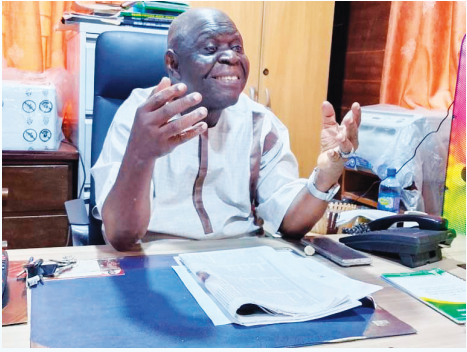
He was a central figure during the heady days of civil advocacy for the return of the country to civil and democratic rule, Chief Ayo Opadokun utilised his positions as the Secretary and spokesman of the National Democratic Coalition (NADECO) to engage the already entrenched soldiers in government who showed little or no enthusiasm to allow for popular democratic rule. The Kwara State- born legal practitioner turned activist has been quiet for some time until recently when he launched book NADECO Story. In this interview with VINCENT EBOIGBE and OLAOLU OLADIPO, he talked about a wide range of issues including his motivation for writing the book, his appraisal of the current democratic journey since 1999 and much more. Excerpts:
At your recent book launch, there was something Professor Wole Soyinka said suggesting that it appears we are now a republic of liars but that your book has redeemed that unflattering description. Did yo u consciously set out to correct some of the lies flying around about the activities of NADECO?
NADECO was presented to the Nigerian public on May 16, 1994, 32 years ago. The current demographic statistics of Nigerian population today, by the last time I took a look, suggested to me that the ages of 0 to 25 constitute about 60 per cent of the population.
If you stretch it back to 32 years ago, it’s up to 78 per cent. If between 75 and 78 per cent of your population were not born when NADECO was established and it was the instrument God used to restore some modicum of democracy to the country; I say so (modicum of democracy) because mostly, significantly, we have a civilian government in Nigeria, which the current generations are enjoying, there’s a need to tell the actual story of the reason behind the establishment of that organisation, who were its promoters, what was the structure, and what were the main objectives of that organisation at its founding, and how, by providence, and the consciousness of the activities, the Fourth Republic became possible.
So, NADECO’s story had to be written to provide information, education for these generations who are the predominant majority parts of our population.
That’s one reason. Second reason, there have been a lot of revisionism going on by a large pool of charlatans, I dare say, 95 to 98 per cent of the current political operators, who now claim to know what they do not.
There are sufficient evidence I can point to of many of them, who have been holding high offices since 1998, that before then, were hands in glove with the military oligarchy, as surrogates, as acolytes, as confederates, as loyalists, as sympathisers to the military strongmen who were in political offices, who made them rich by thievery, contracts that were not executed.
When those military juggernauts needed money, they would give these contracts out, N100m and they’d give pittance of N5m to these guys who would sign for the money, who had not done anything and he would become a millionaire instantly, without doing anything.
They are the ones dictating the political tone now, they are the products of the military oligarchy, and they are the ones now in political offices, dictating terms, and then revising the correct historical events that happened during those years.
So, I needed to write this book to correct this revisionism that is going on. Thirdly, any given society that fails to have proper historical trajectory, consciously, is denying itself the opportunity of having a better future.
If the current generation, the younger ones and the ones to come, are not given the privilege of knowing that at a critical moment of Nigerian political trajectory, some people of conscience, who saw that the popular will of Nigerian people, as expressed on June 12, 1993, to elect M.K.O Abiola was ignored, contempted by the military jackboots for their selfish and ignominious reasons, and this men of popular goodwill and conscience decided that it (military regime) had to be confronted,
they had to organise themselves into a body that is pan-Nigeria, broad-based, credible, resilient, willing to sacrifice anything to restore Nigeria back to the path of sanity. You needed to write a book to put all these three major things into perspective, and that’s what ‘NADECO Story’ has done.
What do you think the motives of these elements you described as revisionist are? Why are they engaging in it?
They are doing so for selfish reasons. For them to be accommodated and to be seen as something, as persons who perhaps stood to be counted when the country needed a direction. They want to be seen as consequential at that time.
Do you think they have succeeded in their endeavour?
Look, in 1998, when (late Head of State, Sani) Abacha died, it was not accidental. It was not accidental that Abiola had to die about a month thereafter.
We members of NADECO at home bore the brunt of the violence unleashed on us by Abacha and his group, and for NADECO abroad, it took a painfully long time to agree as to whether or not we should participate in the (former Head of State, General Abdusalami) Abubakar transition programme because some of us insisted that we shouldn’t be involved in the programme having just passed through a eight-year transition programme of (former Military President Ibrahim) Babangida as well as the five years of Abacha’s transition charade, who was then scheming to transmute into a civilian.
For us, we felt that Nigerians must sit down to answer a basic national question, which is, one, if we are Nigerians? I mean to ascertain if we all want to be Nigerians? That question has not been asked.
The second one that followed; perhaps because of the prolonged years of military incursion into governance, the answer may be yes, perhaps the majority then we must answer the second question, which was if you we want to be Nigerian, on what terms?
What is the modus operandi? What will be the rules of engagement? It is on that basis that we will now write an homegrown constitution, a law called the autochonous Constitution, that would be subscribed to by most Nigerians. That was what we thought was the first thing to be done.
We felt that after those were clearly sorted out and agreed upon that we could move forward but quite a number of our people reminded us at the end of the day, after prolonged discussion, debates, very fierce debates, that particularly those of us from Yoruba land, that if we did not participate, the Abacha elements in Yoruba land will take the space and claim to be the majority. These Abacha elements will now claim that they are the ones now representing our people.
So, we now thought it over, to show our face, hold our own territory as a bargaining chip, while we will continue our political struggle for national restructuring, and bringing about a return to federal constitutional governance.
Looking back and pointedly, who do we blame for the underachiever status of the country in the comity of nations?
This country is so richly blessed but has been so shortchanged, oppressed by the military; I call them politicians in military uniform and what did they bring about?
The most fundamental is the fact that they substituted the federal constitutional arrangement upon which we secured our Independence with military decrees that have centralised and unitarised Nigeria, and upon which we have been governed since then.
So much that public policy is centralised and unitarised, to the extent that it has scanty regard for rule of law, for equity, for justice, and it remains to this day.
So far what kind of vibes have you been getting since you launched your book from those elements you consider as revisionists?
Honestly, I confess to you, there have been none from them so far.
I am asking because in the book you mentioned names…
Yes, of course, because I mentioned people like (General) Aliyu Gusau, (the late Admiral Augustus) Aikhomu, (Major-General Musa) Yar’adua.
What you saw there (in the book) are well documented. I mentioned (Senator) David Mark too. The evidence is there, the number upon which they signed the register when they signed their names.
Interestingly, David Mark is now showing up as a democrat…
That’s part of the reason why this book has to be written. To expose the falsehood of their claims because David Mark was one of the arrowheads who said Abiola will never govern Nigeria unless they are dead and for that character to have been the president of the Nigerian senate for almost 12 years, it was a shame.
Like I said, there has been none from them (who has come out to challenge my assertions). I expect them to say something but they can’t because the facts are sacred.
You spoke about a certain register; can you tell us more about it?
You see, they opened the register, General Abacha opened the register and I’m sure he knew what he was doing by that and they all signed it.
It was after they signed that many of them were given cabinet appointments, chairmen of boards and parliaments, and the likes but Mark, because of what he thought he was going to get and he saw the possibility that he was not going to get it and he could be taken up as anti-Abacha, he went away and he lived big abroad for some time.
We have sufficient evidence of that and he himself granted an interview, a long interview, to The News Magazine. I still have a copy of that edition.
You said the circumstances that led to participation of your members in this Fourth Republic, were long drawn and that the decision to take part was fiercely debated. Looking back after almost 28 years of unbroken democratic rule, do you think the decision has justified whatever reservations you had about taking part in it?
If you ask me, in all honesty and humility, I would say no. Yes, some of them (NADECO) have become whatever they have become, politically but for all these elections that have taken place, how positively have they affected the Nigerian people? Election is not the end goal.
Election is supposed to elect people who will provide service, to make life better for the ordinary man.
Would you say that the series of elections we have held have brought positive dividends to our people? Would you attribute the failures so far to the quality of the leaders we’ve been throwing up since then? What, in particular, do you think has ensured that the kind of democratic governance that we have is not people-oriented?
Prolonged military dictatorship! I say so because any country that is unlucky to have been overrun by the military, not just for too long, even for whatever time, that country is done for.
This is so because in capturing a geographical space by the military, everything within that geographical space becomes spoils of war. You and I know that all the given resources that God had put in this country, became part of the spoils of war of the Nigerian military.
After 27 years, shouldn’t the civilian governments have at least been able to undo the damage done by the military and put Nigeria on firm footing?
My dear, let me say, you have not read me, and you have not listened to me. My argument is to put a falsehood to this kind of suggestion that we’ve had a so-called democratic government for 27 years.
That’s false. That premise is false. Come to think of it, Lieutenant General Aliyu Gusau and Babangida, who are the promoters of (former President Olusegun) Obasanjo, they put strong pressure on General Abdulsalami to release him from prison.
They put damn good, effective pressure on Abdulsalami to pardon him so that he could contest the presidential election. We, the civilians, who bore the brunt of their hegemony, they could not trust us to take over governance from them. They trusted their past commander-in-chief.
What did Obasanjo do for those eight years? Did he do anything to encourage democracy or democratic practice in the country? He never did for eight years. He took strong measures many times to disregard and even destroy the vestiges of democracy. He went outside the rule of law to remove governors.
I mean how he removed (Governor Diepreye) Alamieyesegha (of Bayelsa), the guy in Plateau State, Joshua Dariye and Ayodele Fayose of Ekiti. Very undemocratic ally. About six months after he came to power, members of the Oodua People’s Congress who were demonstrating over certain matters where shot at by security agents for demonstrating.
I had to issue a powerful statement against him, against the government. Used on front pages of newspapers, asking him to explain in what environment or civil governance do you give such an order? Which crooked investor will bring his money to an environment where you say they should shoot people for protesting?
He knew that Governor Umaru Yar’adua was medically unfit or had health challenges, yet, he brought him because he thought with such a situation, he could be could continue to govern Nigeria again by proxy. Obasanjo again brought in (former President Goodluck) Jonathan who was just trying to find himself after he (former President Obasanjo) had removed his boss from office.
Just as he wanted to contest for governorship, Obasanjo brought him to be the running mate to Yar’adua. To stop further military rule by proxy, we campaigned vigorously again for a change; who then became the president of Nigeria again? Another former military commander-in-chief.
So, when you look at that trajectory, it should suggest to you that because of the prolonged military dictatorship in Nigeria, and the militarisation of the polity, they have so entrenched themselves, it becomes difficult to move forward. All the basic institutions that could make for democracy to thrive, to be resilient, have been under their control, under their imprimatur.
Where do we go from here for us to achieve a truly democratic environment?
(Cuts in) No, no. It goes deeper than that, I am talking about the consequences of that. Again, it’s seen in the manner of the political environment that Babangida led government established.
Remember that Head of State Buhari came in December 31, 1983, all politicians were discredited. Buhari himself was removed and Babangida, who equally said most Nigerian politicians were discredited went ahead to create a two-party system, which he knew himself that he didn’t want to leave. He was only making the civilian populace to engage in wild goose chase. He was clear about that.
I say so because he commissioned members of his kitchen cabinet to understudy military rule in Latin American states and the Middle East, to find out how the military juggernauts in those countries perpetuated themselves in office?
The military rulers in those countries were choreographing some kind of a funny charade of election to elect so-called prime ministers who will be their surrogates and then the military rulers will remain in office. When we submitted our documentation, he said, we didn’t meet up the criteria.
Which criteria? Set by whom? The military had undermined every effort to popularise democracy, democratisation, and its features. They didn’t allow Nigerians of consequence, people with credibility to participate in politics. They removed them at will for their selfish and miserable reasons.
Which business, which job, which profession does not need tutelage? Does not need learning? Will a military commander or the military authorities ever ask a carpenter to go and drive an armoured car? Is it allowed for a tailor to go and perform surgery on a patient? Every profession needs some measure of training and expertise. You make your mistake, you learn from it. I use this to expose the hypocrisy, the charade of the argument.
The greatest rogue ruler, Abacha, was saying on 31 December 31, 1983, that the Nigerian hospitals had become ‘mere consulting clinics.’ On January 15, 1966, what (Major Kaduna) Nzeogwu said in Kaduna, was that they staged a coup to prevent 10 percenters and swindlers from perpetrating themselves in power.
The question to ask now is that, what’s the percentage being taken by government officials today? It’s everything, practically. It’s practically everything. What’s the status of Nigerian hospitals today?
What that tells you is that these guys, these politicians in military uniform, don’t have any regard for the good of the nation. They are just interested in public office, and they planted their people in offices and then when we forced them to go back to the barracks, they went with their loot.
And also only their own surrogates that I’ve spoken about, their confederates, their loyalists, their sympathisers, the conduit pipes they use siphon money are the ones who have money to play their politics, which has been commercialised and monetised.
Have we not accomplished anything positive in our democratic journey since 1999?
After 27, 28 years, which democracy? Actually, it’s not the first time I’m hearing this kind of suggestion. This is an argument that you cannot defeat. It’s valid. It’s a valid argument I’ve put forward earlier.
This is a grim picture you have painted, sir…
Whatever picture you have, the facts remain sacred. And I have stated them. That’s why I rarely grant interviews on the state of the nation. How do we move forward from here, sir because in the end, we desire true democracy and true federalism?
The culture is deeply entrenched; you know that the military had planted it so deeply in our psyche, in our systems and in the various institutions of state. Oh, we are doomed. That’s the truth of the matter unless and until this generation is ready to confront the battle of their lives.
Political activism is not for pleasure lovers and fun seekers because the characters in power now will never surrender. They won’t commit suicide but the day when two or three people, four people disagree with what the government is doing and they can mobilise themselves, convince other people, and they can bring out 5,000, 10,000 people and they go on the streets.
If Nigerians are determined to take their destiny in their hands, they can gather more people and come out… yes they will kill some people but another set of people will come out the next day and continue the protest. They can’t do it, suppress it, for more than one week because the world is now a global community.
Organisations and interested countries in the world, who are conscious of the fact that anything that makes Nigeria volatile will have overbearing consequences on the African continent, will eventually intervene to restore order So, not until that consciousness is put into action, we cannot be out of the woods.
Currently, one of your members in NADECO is the President of the country and I want to believe that he understands why the struggle took place. Appraising him as the president of the country, do you think he is disposed to causing some of these changes that you have highlighted? Do you see him in a vantage position to right the wrongs of the past?
What you are asking me to do is to do is a sentimental job for which I am not prepared to and the reason is not because of what Walter Rodney said in his book, ‘How Europe Underdeveloped Africa’. It is not because of any personal gain. God has brought me to be an active witness to the state of the nation in the last 60 years plus.
I knew that the predecessors of President Bola Tinubu in office, most of them have never seen the walls of the universities while they were governing us. Most of them had no business being in government except that they misused the gunpowder, used taxpayers money to unleash terror on us and overrun democratically elected governments. Their economic policies in succession had been misdirected ones.
That is why a country which for almost a quarter of a century was the 8th largest exporter of crude oil, selling crude oil at an average price of $100 per barrel and averagely 2 million barrels per day for at least a quarter of a century has nothing to show for it.
You know the humongous amount that brought to us. This prolonged military rulership of the country and a misdirected economic policy had totally brought about economic misery, untold poverty on our country. President Tinubu is the first person not sponsored by the military into governance.
He has both financial and economic expertise. But what the man could have met when he got into that office in 2023, I know would be so overwhelmingly difficult to displace or to change things within that space of time.
I don’t know whether or not the measures he has taken thus far in the last three years will lead to positive changes, I don’t know. They (government officials) are claiming that the policies, though very punishing to the ordinary people, will yield better results.
I wish I knew what will come hereafter. So that’s why I cannot talk. I’m not in government. I’ve never been. So I do not know. I do not know whether or not what they’re telling us are the real facts. That’s also part of the problem.
What would you say about the growing insecurity in the country?The situation seems to be getting serious and then it’s creeping down South, sir. Does it not scare you?
As I understand it, most commentators, including you guys in journalism, you are not exhibiting sufficient understanding of the situation, I mean how we arrived at where we are today on Nigerian security.
The Nigerian security situation today has two legs. There is an international dimension to it. There is the local dimension to it too but you read in the newspapers, what (former Kaduna State Governor, Nasir) El Rufai said when he was in office.
He said for the purposes of making governance impossible for former President Jonathan, they went out to places such as Mauritania, Senegal, Chad, Niger, Mali, and the likes where there is no greens to come over to Nigeria.
So they are looking for water and our politicians, for the purposes of their political advantages, went ahead to encourage the influx of these people into our territory and after using them to achieve their purposes, they now wanted to discard them. So those ones refused and they went into this business of kidnapping, ravaging our communities displacing the traditional owners of the land and taking them over.
You blame Bola Tinubu for that? And then remind yourself, just a year after or two years after former President Obasanjo started to run government, a character who was governor of the Zamfara State declared that he was establishing Sharia Law in Zamfara. We campaigned vigorously that Obasanjo should see that as an affront against the so-called 1999 Constitution. I do not know of any country that operates on two different constitutions and he (Obasanjo) said it’s a political Sharia which is to fade away.
As soon as he said that, 11 additional states joined Zamfara. What is the springboard for the emergence of Boko Haram? Those guys who were abused by the Borno State government during the elections and were discarded they fought back and when they started attacking government agencies, including police, they were arrested.
Their leadership was arrested three times by the security services but because Obasanjo would sacrifice anybody for himself, they put pressure on him that those who arrested them were Christians and he released them.
Today, you don’t just have Boko Haram, they successfully linked up with elements of ISIS These people are well embedded in government as we speak, Jonathan said as much during his time that even in his own cabinet, there were members of Boko Haram. So, how do you seriously blame Bola Tinubu for the current situation? It’s a terrible situation, scary situation, unacceptable situation. It’s alarming.
Do you think state police can be of any use?
No, I don’t think so. Nigeria’s security architecture needs to be completely overhauled.