As political activities gradually gather momentum ahead of the 2027 general elections, Nigeria is once again witnessing the re-emergence of one of the country’s oldest political fault lines – the North versus South dichotomy.
From the days preceding Independence to the First Republic, through military rule and into the current democratic dispensation, the struggle for political balance between the Northern and Southern parts of the country has remained a recurring feature of Nigeria’s political evolution.
Today, with permutations for the 2027 elections already dominating public discourse, politicians, party leaders, socio-cultural groups, and political analysts are once again divided along regional lines over who should occupy the nation’s highest office after the next election cycle.
At the centre of the conversation is the debate over power rotation, equity, and the continued relevance of the informal zoning arrangement that has shaped presidential politics since the return to democracy in 1999.
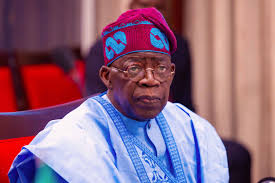
The emergence of Bola Ahmed Tinubu, a Southerner, as President in 2023 was seen by many political stakeholders as a continuation of the North-South rotational arrangement after the eight-year administration of former President Muhammadu Buhari from the North West.
However, with economic hardship, insecurity, unemployment, and inflation dominating national discussions, some politicians and groups have started questioning whether regional balancing should continue to outweigh competence and performance in choosing national leaders.
Across Northern states, several influential political voices believe the North still possesses the numerical strength and political influence required to determine the direction of the 2027 election.
Some Northern political actors insist that despite President Tinubu being eligible for a second term, Nigerians should focus more on governance outcomes rather than regional sentiment. Others, however, argue that fairness demands that the South should complete what many describe as its “eight-year turn” before power returns to the North.
This argument has become more pronounced within the All Progressives Congress (APC), where supporters of President Tinubu believe the ruling party must maintain the existing zoning arrangement to avoid internal crisis. Within opposition circles, especially in the Peoples Democratic Party (PDP), the issue is even more complicated.
The PDP entered the 2023 elections deeply divided after the emergence of Atiku Abubakar, a Northerner, as its presidential candidate despite calls by many Southern stakeholders for power to shift southward after Buhari’s tenure.
The crisis weakened the party and contributed significantly to internal rebellions that affected its electoral performance. Now, with fresh realignments taking shape ahead of 2027, the same debate appears to be resurfacing. Already, conversations surrounding possible presidential aspirants from both regions have heightened political tension.
In the South, names such as Governor Seyi Makinde of Oyo State, former Anambra State Governor, Peter Obi, and other influential politicians continue to dominate speculations about possible presidential ambitions.
In the North, political heavyweights including Atiku Abubakar, former Kano State Governor, Rabiu Kwankwaso, and several governors are believed to still harbour presidential aspirations. Political analysts believe the increasing regional rhetoric may shape alliances, party primaries, and coalition talks in the coming months.
The challenge, however, is that Nigeria’s political structure remains deeply intertwined with ethnic, religious, and regional considerations, making it difficult for elections to revolve purely around ideology or policy debates.
For decades, many Nigerians have complained that elections are often reduced to a contest between regions rather than a competition of ideas. This situation has repeatedly fuelled distrust among ethnic nationalities and reinforced perceptions of marginalisation in different parts of the country.
The South East, for instance, continues to argue that the region has been largely excluded from the presidency since the return to democracy in 1999, while some Northern groups insist that political power should not be monopolised by any section of the country.
Beyond the politicians themselves, socio-cultural organisations have also entered the debate. Groups such as Afenifere, Ohanaeze Ndigbo, and the Arewa Consultative Forum continue to play influential roles in shaping public opinion and mobilising regional sentiments ahead of elections.
Observers say the danger in the growing North-South divide is that it could further deepen national polarisation at a time when the country is already battling eco- nomic and security challenges. Nigeria is currently grappling with inflation, rising cost of living, insecurity, youth unemployment, and declining public confidence in governance.
Many citizens therefore believe that the focus ahead of 2027 should shift from regional calculations to competence, economic recovery, national unity, and institutional reforms. Yet, despite repeated calls for issue-based politics, the reality remains that regional identity continues to be one of the strongest forces in Nigerian elections.
Political parties themselves often structure their leadership and ticket-sharing arrangements around the need to balance North and South, Christians and Muslims, as well as major ethnic blocs. For younger Nigerians especially, there is growing frustration over what many describe as the recycling of old political divisions.
A significant number of youths argue that the next election should focus on employment, education, security, technological advancement, and economic opportunities rather than geographical origin.
Nevertheless, as consultations, alignments, and behindthe-scenes negotiations intensify ahead of 2027, the North-South dichotomy appears set to remain a major factor in determining Nigeria’s political direction.
Whether the country eventually rises above regional politics or once again embraces ethnic and sectional calculations may largely define not only the outcome of the 2027 elections but also the future stability of Africa’s most populous nation.
Prominent Nigerians speak
As political activities intensify ahead of the 2027 general elections, several prominent Nigerians have continued to express divergent views on the persistent North-South dichotomy shaping the country’s political landscape.
While some political leaders and elder statesmen insist that power rotation remains necessary for national unity and stability others argue that competence and capacity should take precedence over regional considerations.
President Tinubu had, during the build-up to the 2023 elections, strongly canvassed for the return of power to the South after the eight-year administration of former President Buhari from the North West.
Supporters of the President maintain that the South should be allowed to complete eight years in office in line with the country’s unwritten power-sharing arrangement.
On the other hand, former Vice President Atiku Abubakar and his allies have repeatedly maintained that leadership should not be determined strictly by geography, but by competence, experience, and the ability to solve Nigeria’s numerous challenges.
Former governor Peter Obi has also consistently advocated issue-based politics, urging Nigerians to move beyond ethnic and regional sentiments in choosing leaders. Obi has argued on several occasions that the country’s economic realities require capable leadership regardless of region, religion, or ethnicity.
Similarly, Rabiu Kwankwaso has maintained that Nigerians should focus more on leadership qualities and developmental ideas rather than sectional politics. However, many socio-cultural groups across the country continue to insist that power balancing remains critical in managing Nigeria’s diversity.
The pan-Yoruba socio-political organisation, Afenifere, has repeatedly supported the principle of power rotation between the North and South, arguing that it promotes inclusiveness and national cohesion.
Likewise, Ohanaeze Ndigbo has consistently advocated greater political inclusion for the South East, insisting that equity demands that the region should also produce a Nigerian president.
In the North, the Arewa Consultative Forum has at different times stated that every Nigerian has the constitutional right to contest for the presidency irrespective of region, while also calling for fairness and national unity.
Former President Olusegun Obasanjo has, over the years, warned against excessive ethnic politics, stressing the need for Nigerians to prioritise competence and patriotism above sectional interests. Similarly, elder statesman Edwin Clark, before his death, consistently argued that fairness, justice, and equity should guide political power sharing in Nigeria.
Political analysts believe that the debate over North-South power rotation will remain central to coalition building, party primaries, and political negotiations ahead of the 2027 elections.
They also warn that while zoning may help maintain political stability, overdependence on regional calculations could weaken issue-based politics and distract attention from governance, economic reforms, and national development.
For many Nigerians, the challenge remains how to balance national unity, equity, and competence in a deeply diverse country where regional identity continues to influence political decisions