


The Initiative for Research, Innovation, and Advocacy in Development (IRIAD)-The Electoral Hub has called on the Federal Government and states to deepen transparency, accountability, and citizen participation in governance.
A statement signed by the Director of IRIAD-The Electoral Hub, Princess Hamman-Obels, at the end of the week-long commemoration of the Open Government Partnership (OGP) urged the Federal Government to immediately sign and implement the OGP National Action Plan IV (NAP IV), warning that commitments must move beyond rhetoric to concrete action.
Hamman-Obels noted that although Nigeria has recorded major milestones under the OGP framework over the past decade, significant gaps still remain at the state and grassroots levels.
She said this year’s theme, “Reflect, Rethink, and Redouble Collective Efforts,” underscored the need for stronger collaboration among government, civil society organisations (CSOs), and citizens to sustain reforms promoting openness and accountability.
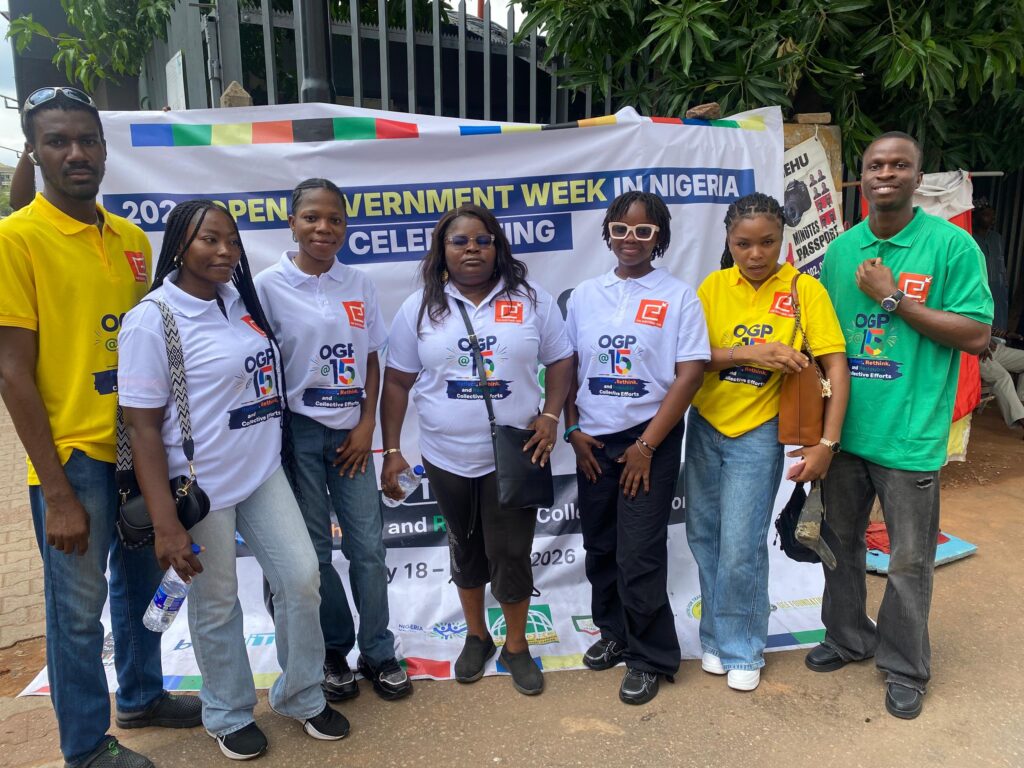
According to her, activities held during the week included press conferences, awareness walks, podcasts, virtual policy dialogues, and social media advocacy aimed at deepening public understanding of open governance.
Highlighting achievements recorded under the OGP framework, she listed the launch of the Citizens’ Delivery Tracker (CDT), the Beneficial Ownership Register (BOR), the Nigeria Open Contracting Portal (NOCOPO), the Eyemark platform, participatory budgeting initiatives, and increased compliance with the Freedom of Information Act (FOIA).
Hamman-Obels added that the reforms had improved citizen engagement and strengthened trust between government and civil society.
At the subnational level, she disclosed that 28 states, four area councils in the Federal Capital Territory (FCT), and two local government areas had joined the OGP initiative.
However, IRIAD-The Electoral Hub expressed concern that eight states, namely Borno, Kwara, Benue, Ogun, Lagos, Bayelsa, Rivers, and Akwa Ibom, were yet to sign onto the initiative.
Hamman-Obels also lamented the poor participation of local governments, noting that only six out of Nigeria’s 774 LGAs are currently part of the OGP subnational framework.
“As Open Government Week 2026 concludes today, we emphasise that this is not the end of the conversation, but a call to action.”
She urged state governments that had yet to join the initiative to do so without delay, while calling on participating states to develop and fund State Action Plans (SAPs) capable of delivering measurable impact for citizens.
Hamman-Obels further charged CSOs to continue holding the government accountable and amplifying citizens’ voices, while encouraging Nigerians to actively engage in governance processes through platforms such as the Citizens’ Delivery Portal.
“Open governance is not a slogan; it is a promise of democracy that works for everyone,” she added.