



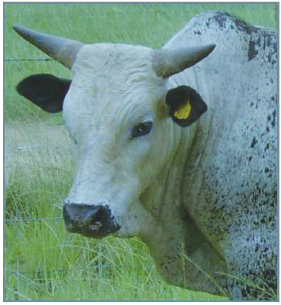
- The cows recognised their real owners
A recent incident at a rural livestock market in Kwara State has once again given credence to the saying that cows identify their owners or herders, even after being separated for a long period of time.
This incident also led to the arrest of a bandit by the operatives of the Special Task Force set up by the Inspector General of Police, Olatunji Disu, to fight violent crimes in Kwara State . For years, herders across Northern Nigeria have held firmly to one belief: cows know their owners.
It is not a theory to them, but a lived reality shaped by years of daily contact, grazing journeys, feeding routines and constant interaction. Outside those communities, however, that belief is sometimes questioned or treated as an exaggeration.
What happened at Ajapo-Ipo market in Ifelodun Local Government Area of Kwara State has now provided a clear and practical answer to that question. The incident occurred on January 11, 2026, about 9pm, when what began as a routine market day took an unexpected turn.
On that day, the market opened like any other. Traders arrived early with livestock, tying them in rows and preparing for buyers. The usual activities followed as people moved from one section to another, checking animals, negotiating prices and making decisions.
There was no sign that anything unusual would happen. Everything moved in the steady, familiar pattern of a normal market day. Among those who came to the market was a man who would later be identified as Mohammed Jabi, also known as Mohammed Ali.
He did not arrive as a known trader, and he was not part of the regular livestock sellers in the market. He came with five cows, quietly positioning them among other animals as if he was there for a legitimate transaction. Mohammed Jabi is a 30-year-old man from Buju village in Wushishi Local Government Area of Niger State.
He currently resides in Waji village, Patigi Local Government Area of Kwara State. According to security sources, he is not an independent operator but a member of a bandit group working under a commander identified as Bachujo.
Investigations revealed that this commander is believed to control a large net- work of armed members, reportedly numbering close to 200, operating across forest areas spanning parts of Kwara State, Niger State and Kogi State. The group has been linked to cattle rustling, kidnapping and other criminal activities affecting communities in these regions.
In recent weeks, joint operations by police and military forces have intensified within these forest areas. These operations have placed significant pressure on such groups, restricting their movement and limiting their access to food and supplies. As a result, many of them have been forced into survival strategies.
It was under these circumstances that Mohammed Jabi was sent to Ajapo-Ipo market. According to findings by security operatives, the cows he brought to the market had been stolen by the group during earlier operations. His mission was simple and direct.
He was to sell the cows and return with foodstuffs that would sustain members of the group who were unable to move freely due to ongoing security pressure. He entered the market with that assignment. He tied the cows and began to act like someone ready to sell livestock.
There was no immediate suspicion because markets like Ajapo-Ipo are open and active, with many people coming in and out. At the same time, another group of people had arrived at the market for a completely different reason.
These were Fulani herders who had earlier lost their cattle to rustlers. They had been searching for their animals for days, moving from one market to another, hoping to find any trace of them.
Their search brought them to Ajapo-Ipo market. Like others before them, they entered quietly and began to look around. They did not make noise or draw attention to themselves. Instead, they relied on observation, memory and familiarity.
As they moved through the market, they eventually approached the section where Jabi had tied the five cows. What happened next became the turning point of the entire incident. Before the herders could say anything, the cows reacted. The animals suddenly became alert and began to move.
They turned toward the direction of the approaching herders and started pulling against the ropes that held them. One stepped forward forcefully, followed by the others. Their behavior changed from calm to restlessness within a short time.
This reaction immediately drew attention from people nearby. Traders and buyers who were close to the scene paused to observe what was happening. It was not normal for cattle that were simply being displayed for sale to react that way.
The herders had not yet made any claim. They had not pointed out the cows or called attention to themselves. Yet, the cows appeared to have recognised them first. As the herders moved closer, the reaction of the animals became stronger.
The cows leaned toward them, made low sounds and attempted to move in their direction. It became increasingly clear that the animals were responding to something familiar. At that point, the herders stepped forward and spoke.
They identified the cows as theirs. They pointed out specific features such as markings on the body, horn shapes and other physical details that matched the animals they had lost. Their claims were clear and consistent. The behavior of the cows supported their identification. Each time the herders moved, the cows responded.
The connection between them was visible and difficult to dismiss. Attention then shifted to the man who had brought the cows to the market. When questioned, Jabi attempted to explain how he came in possession of the animals.
However, his responses were not clear. According to witnesses, his answers were inconsistent and lacked the details expected from a legitimate owner or trader. As questions continued, the situation became more serious.
What had started as a quiet observation turned into a clear case of suspicion. Market authorities stepped in to handle the situation. Their role was to maintain order and assess disputes. They listened to both sides, examined the animals and observed the interaction between the herders and the cows. The evidence before them was difficult to ignore.
The herders were confident in their identification, and the cows continued to respond to them. At the same time, the suspect could not provide a convincing explanation. Security personnel were then alerted. Operatives, who were already active in the area as part of ongoing operations, arrived at the market and took control of the situation.
They questioned the suspect further and reviewed the claims made by the herders. Under closer scrutiny, Jabi’s explanation did not hold. He was unable to provide verifiable information about the origin of the cows. Further investigation confirmed that the cows had indeed been stolen and that the suspect was acting under instructions from his commander, Bachujo.
The arrest is now part of a wider effort by security agencies to dismantle bandit networks operating across forest regions in Kwara State, Niger State and Kogi State. For the herders, the recovery of their cows marked the end of a difficult search. The animals represented their livelihood, and losing them would have had serious consequences.
Their recovery brought relief and restored what had been taken from them. For security agencies, the arrest provided a valuable lead. It not only removed a suspect from circulation but also created an opportunity to gather information about the larger group he belongs to. However, what stood out most in the incident was the role played by the cows.
In many rural communities, the belief that cattle recognise their owners is widely accepted. Herders spend years with their animals, building familiarity through daily interaction. They call them, feed them and move with them across long distances.
Over time, the animals become accustomed to their owners. Scientific studies support this reality. Cows are known to recognise human faces and voices. They can remember individuals and respond differently to familiar and unfamiliar people.
At Ajapo-Ipo market, this ability was clearly demonstrated. The cows did not remain passive. They reacted in a way that drew attention, supported the claims of their owners and influenced the outcome of the situation.
Their behavior became a key factor in exposing the suspect. Without that reaction, the situation might have been different. The suspect might have completed the sale and left the market unnoticed. Instead, the recognition shown by the cows triggered suspicion, led to questioning and ultimately resulted in an arrest.
As the market gradually returned to normal, the recovered cows were handed back to their rightful owners. The process was calm and straightforward.
The animals were untied and led away by the herders they had recognised earlier. Mohammed Jabi, who hails from Buju village in Wushishi Local Government Area of Niger State and resides in Waji village, Patigi Local Government Area of Kwara State, remains in custody as investigations continue.
Security agencies are expected to use information obtained from him to track other members of the group, including his commander, Bachujo, whose network is believed to be extensive and active across multiple locations. The incident at Ajapo-Ipo highlights both the challenges of cattle rustling and the realities of rural life.
It shows how criminal groups adapt under pressure and how communities respond using the knowledge available to them. It also reinforces a long-held belief.
At Ajap-Ipo market in Kwara State, the idea that cows recognise their owners was not just discussed. It was proven in a way that led directly to the arrest of a suspected bandit.