

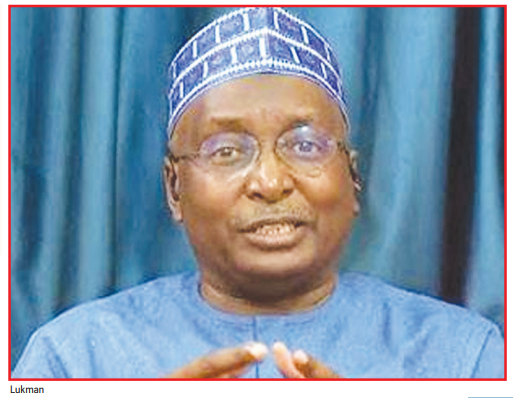
Salihu Lukman is a former National Vice Chairman (North-West) of the All Progressives Congress (APC). In this interview monitored on Arise Television, he speaks on the Ibadan opposition summit and plans for a collegiate system of governance ahead of the 2027 general elections, among other issues, EVINCE UHUREBOR reports
Let’s start with the Ibadan declaration. With 14 political leaders coming together, saying that they reject the idea of a one-party state, and that they will come together, front with one presidential candidate to challenge the ruling APC party. They also want Joash Amupitan to be removed as the chairman of the Independent National Electoral Commission (INEC). They also want the Electoral Act 2026 amended. They allege that there is insecurity in the country, there is economic insecurity in the country, and they say that the scorecard of the Bola Tinubu administration is very poor. How fundamental is this objection to the ruling dispensation in your view?
I think it’s quite heartwarming to see that we are able to make progress to get to where we are now. If you recall, about two years ago, when the whole advocacy for opposition to come together started, many of you were quite pessimistic that it may not be possible that the problem of bringing up a candidate will divide the opposition. And subsequently, the argument has been who will be the candidate?
And we keep saying we have not yet gotten there. All along, all we have been trying to do is to ensure that we come up with a new framework in terms of engaging politics, in terms of party politics, and in terms of the process of producing candidates.
All that has happened so far, and I think the Ibadan summit demonstrated that. Everybody in the opposition has now agreed and acknowledged that we are faced with a present danger. And the danger is simply that we may face the 2027 election with one candidate and one party, you know, and that to get that removed is to ensure that all the opposition come together and commit themselves to produce a candidate.
That was the agreement that was produced in Ibadan. Now, how are we going to achieve that? It’s a function of how we proceed with the confidence that everything is possible. And I tell you, the new framework we are trying to put together is a framework of collegiate.
It’s not a framework where one person will be the winner of everything. Our leaders are committed to ensure that if we produce the next government, it’s not going to be like an emperor presiding over an empire which he controls. There will be a collegiate team spirit whereby all decisions will be taken jointly. And that is what we are working together.
Now, I tell you, part of the thing that we also want to do, which now all the court cases are slowing us down, is to ensure that we put in place a process whereby the screening of candidates follows a particular framework that will ensure that the best and the most acceptable to the citizens will emerge. I believe we will still achieve that. And sincerely speaking, Nigerians are all waiting for us, you know, and we give Nigerians the best.
Do you think that the opposition parties who are coming together have a plan that is different from that of the current administration and do you think the candidate that will emerge from the opposition parties will present that stronger alternative?
If you recall, not too long ago, the African Democratic Congress (ADC) put up a 50-man committee to work out its policies and manifesto. And as we are today, the manifesto has been adopted by the last convention that took place. In fact, if not for all the distraction that has been created, by now we will have unveiled the manifesto to the Nigerian public.
It will have formed part of what will be mainstream within the opposition parties to ensure that the manifesto becomes the guide to the new government. I mean, look, I can give you an idea.
The manifesto is all about ensuring citizen-centred governance, you know, whereby all the issues in terms that is confronting Nigerians we have answers to them. And by the time we unveil the manifesto, you will see them. We are not just having a manifesto; we also have a policy framework. That policy framework is what will now guide governments and all elected representatives in terms of their conduct when elected.
So, sincerely speaking, I think we must move forward with confidence. When one of the media aides to the President talked about gathering of individuals; yes, it is a gathering of individuals, but individuals who are from political parties recognised by the law. If he failed to recognise that, he’s just deceiving himself.
And frankly speaking, where we are today as a nation, I feel disappointed having been part of the founding members of the APC and knowing the vision that pushed us to form the APC. To see where APC is today is quite disappointing. I mean, for instance, the talk of consensus, if you do a check, you will find out that all the consensus they have done across the states have collapsed.
So, when you talk about the crisis in the opposition party, the ruling party is also faced with its own internal contradictions, which is producing the kind of discomfort that will lead to a crisis that they may not have foreseen. My view is the politics is about contestation. So, we are ready to confront the situation as it is, and we believe Nigerian people will make the right choice at the end of the day.
The contentious issue is who will emerge. We’re seeing the supporters of Peter Obi and Atiku going at each other. In a case where one of these two men emerge; there’s going to be a problem. Who is going to accept, who is going to concede? Are people going to look at the bigger picture?
I think when you have politics without contestation, then it’s no longer politics. And what makes it beautiful is also the internal dynamics within the opposition. Today, we have at least five presidential aspirants who are going about it in a way that demonstrates their commitment to win the ticket.
And all we are going to do, which is the point I started with, we are going to put off a new framework. And that almost everybody has agreed to it by now, that that new framework is about having a collegiate system. When one person wins, it does not mean the other people are already out.
Take the case of APC, you know very well, I was in APC and I was in the forefront of advocacy that led to the emergence of Asiwaju Bola Tinubu as the presidential candidate of APC. Out of all the 13 people that contested with him in that primary, who among them is in the current government?
Who among the 13 people is even having access to him? This is what needs to be corrected. And sincerely speaking, I think we have made progress. So, like I said, we are moving forward with confidence. We believe at the end of the day, one person will emerge and will emerge as part of a team. Not that you will defeat the others and shove them out of the race. That is the new framework that we are going to put in place.
You said everybody was in Ibadan, but not everybody was there. Omoyele Sowore of the African Action Alliance (AAC) objected and said he would not join a group of recycled field politicians. The All Progressives Grand Alliance (APGA) was also not there, but there were quite a number of political parties that were there. You also talked about a collegiate system; I don’t see a collegiate system working. Only one person will emerge as a presidential candidate. Who, in your estimation, would that person be?
Starting with the point you made about Sowore not being there and APGA not being there; they are entitled not to be thereand we respect that. I’m not going to say more than that.
Now, in terms of the last point you made about somebody saying that he’s not going to step down for anybody, that may be the context of the statement but it may not convey exactly the point you are trying to project that he’s going to disagree when another person wins the ticket.
On collegiate, it is about having one person who is part of a team, and he respects the fact that it is the team that will drive the process, and that is what has been lost. For all of us, we always make reference to the first and second republics, whereby the president or the prime minister is part of a collegiate system. And this is the point why I say I’m disappointed with the APC. The party came with the promise of change.
If you remember, APC popularised the concept of party supremacy but today the party has become a vehicle which anybody can drive. That is why they could claim to have consensus, and in less than two weeks, the consensus is collapsing in all the states. My advocacy in APC, which led to my exit, was about ensuring that the structures of the party function.
Now, frankly speaking, having a collegiate is to ensure that the party functions, the structures, the organs of the party are working and the organs of the party regulate the conduct of elected representatives, which is why we are having a situation where it has been inverted. Instead of the party regulating elected representatives, elected representatives are the regulators of parties.
Now, our commitment in ADC is that we are going to change that. We are going to ensure that the party properly functions, which is why we have somebody of the calibre of Senator David Mark as the national chairman.