

The Manufacturers Association of Nigeria and the Nigeria Revenue Service on Wednesday cautioned that illicit financial flows were weakening investment inflows, putting pressure on exchange rates, raising production costs, and undermining confidence among domestic and foreign investors.
Both institutions also urged corporate entities to strengthen due diligence, improve transparency, and tighten internal controls to prevent fraudulent financial practices from further distorting Nigeria’s economy.
They delivered the warning in Lagos during Day One of a five-day Regional Sensitisation and Engagement Programme on Illicit Financial Flows for Corporate Entities, organised by MAN.
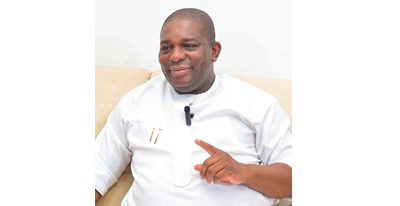
Director-General of the Manufacturers Association of Nigeria, Segun Ajayi-Kadir, represented by MAN Director of Membership Services, Joseph Emoleke, said illicit financial flows had become a direct threat to industrial growth and macroeconomic stability.
He said, “For manufacturers, there is no doubt that illicit financial flows go far beyond legal or technical matters. They are fundamentally a business and economic issue that we must all be aware of because it has to do with our businesses, particularly because their consequences directly or indirectly affect our operations.
“We must understand that whenever resources are diverted through unlawful channels or opaque transactions distort market outcomes, or non-compliant actors gain unfair advantages over responsible enterprises, the effects are felt in the productive sector. They manifest in weaker investment flows, pressure on exchange rates, higher input costs, constrained infrastructure financing, and reduced confidence among domestic and international investors.”
Ajayi-Kadir cited estimates from the United Nations Conference on Trade and Development that Africa loses about $80–90bn annually to illicit financial flows, representing about 3.7 to four per cent of the continent’s GDP, adding that West Africa and Nigeria bear a significant burden of the losses.
He said, “A substantial share of these losses is concentrated in West Africa, with Nigeria alone historically accounting for about 66 per cent. These resources could otherwise be deployed to build infrastructure like roads, ports, power systems, skills development, industrial parks, and enterprise groups. For countries seeking rapid industrialisation like Nigeria, this represents a profound loss.”
He added that manufacturing growth required policy stability and trust in the system, warning that investors would avoid environments where opacity and unfair advantages thrive.
Ajayi-Kadir further stated, “Investors do not build factories on uncertainty. Industrialists do not expand production where opacity is rewarded above discipline. Serious producers cannot compete sustainably where rules are inconsistently applied or where illicit operators enjoy advantages unavailable to compliant businesses.”
He stressed that MAN supported regulation that remained clear, proportionate and predictable, noting that compliance systems must protect legitimate businesses while isolating fraudulent actors.
On his part, Head of Anti-Graft and Law Enforcement Liaison at the Nigeria Revenue Service, Idris Abdullahi, said illicit financial flows continued to drain national revenue and weaken economic integrity.
Abdullahi warned of unfair consequences of IFFs, stating, “Illicit financial flows are not abstract theories reserved for textbooks or international panels; they are real, persistent leakages, quietly draining national revenue, distorting markets, and undermining those who choose to do the right thing. And here is the irony: those who comply often feel the burden. And those who do not adhere sometimes appear to move faster.”
He added that compliance should be seen as a competitive advantage rather than a burden.
Abdullahi said, “We must begin to see compliance not as a regulatory inconvenience, but as a competitive advantage. In a global economy where transparency is currency, businesses that embrace beneficial ownership disclosures and financial accountability will not just survive, they will lead.”
He urged private sector operators to shift from passive compliance to active participation in safeguarding financial integrity.
Delivering a presentation, NRS consultant, Adedayo Kayode, said manufacturers remained highly exposed to illicit financial flows due to their dependence on imports and cross-border transactions.
Kayode explained that illicit financial flows covered illegally earned, transferred or used funds, adding that both illegal sources and illegal transfers constituted violations.
He said, “If you earn the money illegally, then it is IFF. If you transfer the money through illegal means, then it becomes IFF. Illicit transactions are found everywhere, but they have a much heavier impact on developing countries like Nigeria.”
He noted that studies showed commercial activities accounted for about 65 per cent of illicit financial flows, stressing the need for stronger corporate responsibility.
Kayode said regulatory and enforcement agencies, including the Nigeria Revenue Service and the Nigerian Financial Intelligence Unit, were intensifying monitoring efforts to track suspicious transactions and strengthen compliance systems.
He also urged firms to conduct due diligence on partners and clients, maintain accurate records, enhance transparency, implement internal controls and train staff to detect suspicious transactions.
“Leadership must set the tone for ethical conduct. Promote a culture of compliance and accountability,” he concluded.