
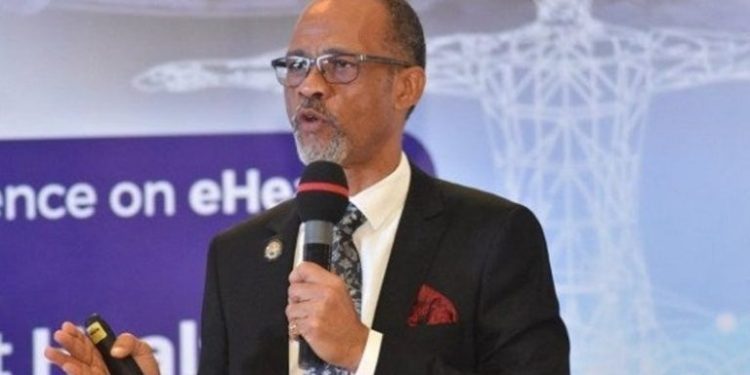
Lagos State Commissioner for Health, Prof Akin Abayomi, has said that the government is putting together policies around One Health and biosecurity to maintain biosphere for human well-being and welfare.
Speaking at the 2026 World Veterinary Day organised by the Nigerian Veterinary Medical Association Lagos State Chapter on Wednesday, Abayomi said those policies are going to be translated into bills, legislative bills, because a policy is only as good as people’s understanding.
He said a legislative instrument is what the government needs to enforce the principles of one health.
“So as we continue the narrative with our colleagues in agriculture, environment, Ministry of Justice, education, civic engagement, and physical planning, we’re coming up with a blueprint for a Lagos biosecurity one health paradigm that we are in the process of implementing in terms of a hard document. But the practices are happening.
“As I just explained to you, we work very closely together whenever there’s a crisis. And even in times of peace, we are always thinking about what is around the corner. We’re doing several things in the Ministry of Health.
“We are setting up an institute, an infectious disease research institute, one of the biggest of its kind in Africa. We’ve completed the design. We’re developing policies.
“We’ve just released the Lagos State Climate Adaptation Plan, which is a domestication of the Federal National Adaptation Plan towards climate change.
“We are about to establish a stand-alone University of Medicine and Health Sciences to ensure that we can produce adequate numbers of healthcare professionals, doctors, nurses, pharmacists, laboratory scientists, and even our colleagues in the veterinary space to see where those overlaps can be and how we can work together.
“Now science is changing dramatically. The medicine of 10 or 15 years ago is not the kind of medicine we practice today. It therefore needs a different calibre of professionals. It’s not all about doctors and nurses. We’re now talking about molecular scientists. We’re talking about strategists.”
In his keynote address, the Chief Executive Officer of Blueblood Vet, Dr Muhammed Abubakar Bala, said veterinarians are guardians of both food and health, yet in Nigeria, their roles remain under-recognised, despite their critical importance. He said this is not just a professional issue but a national concern.
“Veterinary medicine is not just about animals. It is about people, livelihoods, and survival. But it also exposed a deeper issue. Why should such an impact depend on chance? Why should access to veterinary care still be a privilege rather than a system?
“Today, I want us to reflect on three key ideas that define both our values and our challenge as veterinarians in Nigeria. First, we are central to food security and food safety. Every nation that feeds itself sustainably relies on strong veterinary systems.
“From farm to table, we ensure that food is not only available for safe consumption, but across many parts of Nigeria, unregulated slaughter practices, poor inspection systems, and inadequate veterinary presence continue to expose millions to preventable risks.
“The question we must ask is safe food. How can we talk about food security without fully empowering those who protect it? Secondly, veterinarians are critical to public health.
“We learned that over 70% of emerging infectious diseases originate from animals. From rabies to avian influenza, veterinarians stand at the front line of disease prevention.
“We are part of what the world now recognises as one health in approach to a lot of health challenges, where human, animal health and environmental health are interconnected.
“Yet in practice, our inclusion in national health strategies remains limited. We cannot claim to prepare for future health threats if we continue to overlook one of the most important lines of defence. And lastly, and perhaps most depressing, is the issue of disability and recognition.”
In his welcome address, the Chairman of the NVMA Lagos Chapter, Dr Mark Ofua, said the level of food safety in Nigeria is very low. He said: “Food safety in Nigeria, if you have an idea, and I’m sure most veterinarians do, of the level, let’s not say anything negative, but the level of food safety in Nigeria, you sit at the edge of the chair. Let’s not even begin to go into AMR and what have you.
“The world says we are guardians of food and health. Are we? There is a question to be answered, and that’s the Nigerian paradox. And that’s why we’re here. And I believe this would not just be a pat on the back and handshakes among veterinarians, but an establishment of a concrete One Health Partnership. It’s there in people. It’s there in writing. But is it there in practice?”