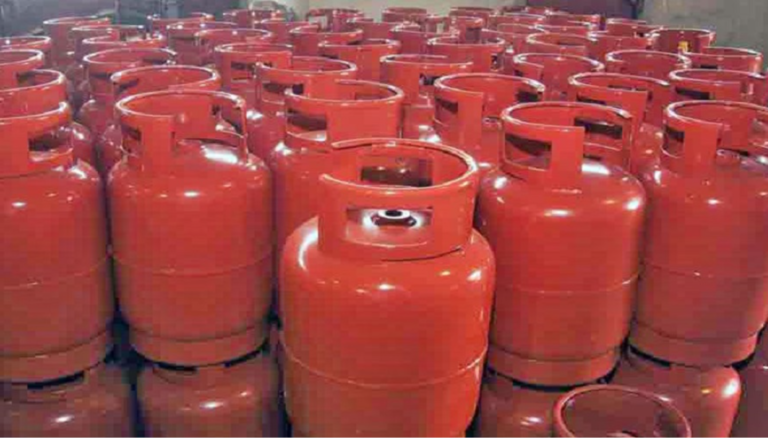



Nigeria’s importation of cooking gas has dropped by 73 per cent over N2.31 trillion strong domestic production of 2.44 million tonnes in the first two months of the year.
In early April, 2026, the price of Liquefied Petroleum Gas (LPG) in Nigeria was N950,000 per tonne at depots, while the average global price per tonne wws $800/tonne. Findings from Nigerian Midstream and Downstream Petroleum Regulatory Authority (NMDPRA), indicated that imported volumes also increased year-on-year, rising to 700 tonnes/day from 200 tonnes/day over the same period.
Between January and February, the country produced 2.44 million tonnes of cooking gas leading to 1.33 million tonnes (62,944.93 mmscf) in January and 1.11 million tonnes (52,300.45 mmscf), February 2026.
The Nigerian Ports Authority (NPA)’s shipping data explained that only two vessels arrived port jetties this month with Alfred berthed at New Oil Jetty (NOJ) with 8,000 tonnes, while another Afred Temile moored to offload 9, 000 tonnes at ASPM in Lagos.
However, month-onmonth data highlights a sharp contraction in imports, which dropped significantly from an average of 2,600 tonnes/ day in January 2026 to 700 tonnes/day in February, reinforcing the growing dominance of domestic supply. Recall that NMDPRA had said that domestic supply on the other hand increased its share from roughly 59 per cent to 85 per cent even as total volumes moderated month-on-month.
Average daily cooking gas (LPG) truck-out declined to 4,194 tonnes/day in February 2026, compared to 4,860 tonnes/day recorded in January, indicating a moderation in downstream offtake. Similarly, average daily consumption dropped to 4,194 tonnes/day in February from 5,050 tonne/ day in January, reflecting a broader slowdown in market activity.
Retail prices remained relatively stable across both months, with LPG selling between N950 and N1,550 per kilogramme in January, compared to a slightly narrower range of N980 to N1,500 per kilogramme in February. On a year-on-year basis, domestic supply strengthened, with local producers delivering an average of 4,000 tonnes/ day in February 2026, up from 3,800 tonnes/day in February 2025.
Meanwhile, the Nigerian Association of Liquefied Petroleum Gas Marketers (NALPGAM) has said the recent rise in Liquefied Petroleum Gas (LPG) prices is being driven by supply constraints and global market pressures. The NALPGAM President, Edu Inyang, explained in Lagos that the increase was caused by higher depot prices, reduced local supply and rising international benchmarks.