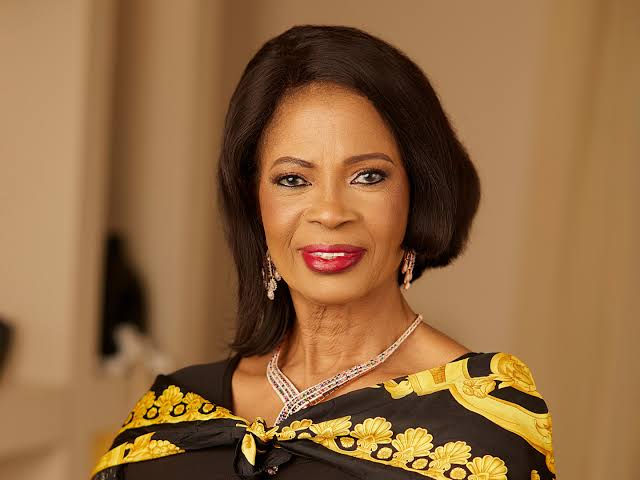
A former member of the House of Representatives and senatorial aspirant for Ondo South Senatorial District, Hon. Engr. Janet Febisola Adeyemi has thrown her weight behind the consensus mode of primary to choose candidates for the All Progressives Congress (APC) in the 2027 elections.
Adeyemi, who represented Ile-Oluji/Okeigbo in the National Assembly between 1999 and 2003, argued that the direct primary system tends to favour individuals whose wealth enables them to buy their way through the electoral process.
Speaking during her declaration for the Ondo South senatorial district, Adeyemi maintained that consensus, if conducted sincerely and without bias, remains the most viable option for the country.
She suggested an interview-style selection panel that would assess aspirants based on defined criteria, free from emotional attachment or personal connections.
Adeyemi, who noted that she passed one of the highest numbers of productive bills during her tenure in the House of Representatives, lamented that the value system in Nigerian politics remains poor.
She disclosed that constituents often measure a legislator’s success by the amount of money they distribute rather than by legislative output or developmental impact.
Adeyemi disclosed that it would be ethically improper for the Senate to produce a candidate from the same zone as the sitting governor, advocating that Ile-Oluji/Oke-Igbo deserves the seat.
She pledged that her role in the Senate would be to advance development priorities while ensuring Ondo South fully benefits from national programmes and investment flows.
She said, “When we have been doing indirect primary, has it brought in the best?’ Because they have excessive money, they just give money and give money.
“So if the leadership of the party is sincere in sitting down and coming up with values and scoring those values, just like you go for an interview, set up a group, and don’t be biased.
“If you have other people who are qualified, fine. I believe if we do it rightly, without being biased and not just picking people emotionally. If we do it with all sincerity, I believe that, for now, in Nigeria, that is still the best consensus.
“What is often missing in our development journey is not vision, but execution. The ability to structure viable, bankable projects; attract credible private and international investment; and translate policy into measurable economic outcomes. This is the gap I seek to fill.
“My work with the Infrastructure Concession Regulatory Commission (ICRC) provided me with hands-on experience in structuring public-private partnership (PPP) projects, understanding why many fail, and how to make them succeed.
“I have represented Nigeria internationally in the mining and development space, engaging with global institutions and investors, including those aligned with the World Bank ecosystem. These relationships are not theoretical; they are channels through which real investment can flow into Ondo State.
“This moment presents APC with a strategic choice: to field a candidate focused on traditional politics or present a candidate who strengthens the party’s image as economically competent, forward-looking, and aligned across state and federal levels.”
In her vision, if elected as a senator, Adeyemi promised to reposition the district as a thriving hub of industrial growth, maritime development, and agricultural prosperity through deliberate policies and strategic leadership, if given the ticket
She said her mission is anchored on unlocking the vast economic potential of Ondo South by promoting investment in agro-processing, small and medium-scale industries, and the blue economy.
She noted that the district’s coastal advantage presents significant opportunities for maritime trade, fisheries, and port development, which, if properly harnessed, could generate employment and boost revenue.
According to her, agriculture remains central to her development agenda, with plans to support farmers through improved access to modern inputs, financing, and value-chain development.
She added that she would encourage the establishment of cottage industries to process local produce, reduce post-harvest losses, and stimulate rural economies.
She emphasised that effective representation at the Senate would focus on attracting federal projects, facilitating public-private partnerships, and advocating policies that promote infrastructure development, particularly in road networks, power supply, and coastal development.