


Miss Nigeria said it is championing gender equality by transforming its platform from traditional pageantry into a leadership incubator for young women.
In a statement, the organisation said women’s progress is not a monolith, noting that for one woman, opportunity is a classroom; for another, it is a boardroom or the diplomatic stage. It said this diversity reflects Sustainable Development Goal 5, the United Nations’ global mandate to achieve gender equality, adding that while policy and legislation are important, cultural institutions are “the heart” of the movement.
Founded in 1957, three years before Nigeria gained independence, Miss Nigeria was created at the intersection of national identity and female aspiration. The pageant has evolved from a showcase of grace into a leadership incubator, proving that cultural platforms are essential to dismantling the structural and social barriers facing the African girl-child.
The Chairperson of the Miss Nigeria Board, Rita Dominic-Anosike, noted, “Miss Nigeria is about far more than the crown. It is about nurturing women who represent the intelligence, strength, and cultural pride of Nigeria while using their voices to architect social change.”
The organisation eliminated the swimwear segment over a decade ago and prioritised intellectual pedigree, turning the crown into a sovereign office for advocacy. “Winners now do not simply wear a sash; they manage a mandate,” it said, adding that they use the crown’s visibility to promote education, leadership, and community development.
The transformation began in 2010, when Folio Holdings’ The Daily Times relaunched Miss Nigeria with a focus on scholarships and social development, introducing the “Queen Ambassador” model that views winners as cultural diplomats.
The first hijab-wearing Miss Nigeria, Shatu Garko, said her victory demonstrated that cultural identity, faith, and leadership can coexist and sent a definitive message: “A girl’s aspirations need not be limited by her background.”
The organisation said that for nearly 70 years, the crown has celebrated culture and Nigerian identity, and today it is a platform for social impact, proving that “beauty may be the hook, but impact is the legacy.”
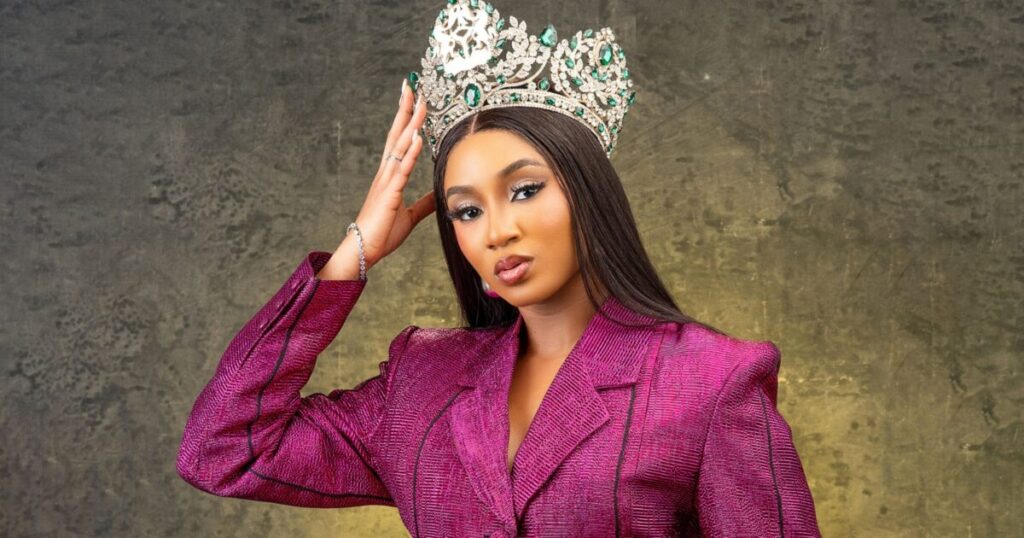
The current 45th Miss Nigeria, Doris Ogah, a lawyer called to the Nigerian Bar, embodies the organisation’s commitment to academic excellence and civic engagement.
A board member, Ego Boyo, said, “Empowering women is not a single action but a continuous commitment. When young women are given visibility, education, and responsibility, they rise not only for themselves but also for their entire communities.”
Miss Nigeria said it also drives measurable outcomes through the flagship “Green-Girl Project”, which intersects SDG 5 with SDG 13 (climate action). The statement said the project has equipped over 6,000 young women with leadership skills in environmental sustainability.
The Group CEO of Folio Holdings, Sandra Iyawa-Somtochukwu, stated, “Culture has always been one of the most powerful vehicles for social change. Through Miss Nigeria, we see how storytelling, representation, and leadership can work together to inspire a new generation of women who will shape Nigeria’s future.”
She added, “Partnerships between the private sector, government, and the Miss Nigeria platform can scale these impact-driven programmes to every corner of the federation.”