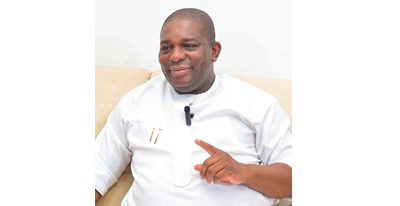



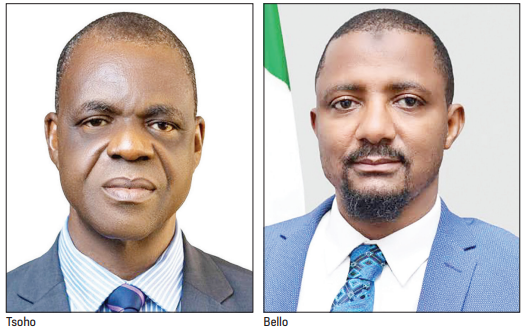
Like the NBA, lawyers have queried the rationale behind the invitation of the Chief Judge of the Federal High Court, Justice John Tsoho, by the Code of Conduct Bureau (CCB) over alleged nondeclaration of bank accounts. AKEEM NAFIU and TUNDE OYESINA report
Some senior lawyers have unanimously spoken against the invitation of the Chief Judge of the Federal High Court, Justice John Tsoho, by the Code of Conduct Bureau (CCB) over alleged non-disclosure of assets. The lawyers, who spoke on the heels of similar concerns raised by the Nigerian Bar Association (NBA), said it is the National Judicial Council (NJC) and not the Code of Conduct Bureau (CCB) that is legally empowered to probe sitting judges of any alleged misconduct.
The Code of Conduct Bureau (CCB) had summoned Justice Tsoho to appear before it following an investigation into an allegation that he operated secret bank accounts. Justice Tsoho was said to have failed to disclose his ownership of several bank accounts (naira and domiciliary) in the asset declaration form he filled and submitted to the CCB on April 29, 2004
.
While three of the accounts were allegedly domiciled with the United Bank for Africa (UBA), another account was reportedly traced to him at Access Bank. Several Civil Society Organizations (CSOs) mounted pressure on the CCB, demanding an immediate investigation of the allegation. Meanwhile, Justice Tsoho had confirmed that the Bureau had summoned him to appear before it, even as he expressed his readiness to submit himself for the probe.
The CJ, in a statement signed by the Director of Information of the High Court, Dr. Catherine Oby Christopher, revealed that he had engaged a former Attorney-General of the Federation and Minister of Justice, Chief Kanu Agabi (SAN), as his legal representative.
Disclosing that he is currently out of the country on health grounds, Justice Tsoho said he had already notified the CCB that he would be available from March 16. The statement reads: “The Federal High Court of Nigeria wishes to clarify that the Honourable Chief Judge, Hon. Justice John Terhemba Tsoho, remains fully committed to cooperating with the Code of Conduct Bureau (CCB) in respect of its invitation.
The appropriate step is for the allegations to be forwarded to the NJC
“In accordance with his constitutional right to consult and be represented by counsel of his choice, his legal representative, Kanu Godwin Agabi, CON, SAN, has indicated his readiness to accompany the Honourable Chief Judge to the Bureau upon his return to Nigeria, he being presently outside the country for medical reasons.
“This position has been duly communicated to the Code of Conduct Bureau, affirming the Chief Judge’s willingness to appear and participate in the process in full compliance with the law and established constitutional safeguards. “For scheduling purposes, the Bureau has been informed that any date within the week commencing Monday, 16th March, 2026, is convenient for the Honourable Chief Judge and his counsel. The Hon. Chief Judge reiterates his commitment to due process, transparency and respect for the rule of law”.
NBA, Benue branches kick
However, the Nigerian Bar Association (NBA) has condemned the reported summons issued to Justice Tsoho by the Code of Conduct Bureau (CCB) over alleged non-declaration of certain bank accounts. In a letter dated March 2, 2026, addressed to the CCB Chairman, Dr. Abdullahi Bello, the NBA emphasized that the constitution grants exclusive authority to the National Judicial Council (NJC) to investigate and discipline serving judicial officers. The association described the CCB’s action as a breach of constitutional provisions safeguarding judicial independence.
According to the NBA, media reports indicated that Justice Tsoho has been invited to appear before the Bureau to respond to allegations that he failed to declare several bank accounts in his asset declaration form, allegedly in breach of the Code of Conduct for Public Officers.
Describing the development as constitutionally troubling, the NBA argued that any investigative or disciplinary process initiated against a serving judge without prior recourse to the NJC would violate the doctrine of separation of powers enshrined in the 1999 Constitution. Citing the Supreme Court’s decision in FRN v. Nganjiwa, the association stated that the apex court had unequivocally held that the NJC must first exercise disciplinary control over a serving judicial officer before any criminal or quasi-criminal proceedings can be commenced.
The NBA further contended that the summons issued to the Chief Judge could not be regarded as a “benign administrative interaction,” as it marked the commencement of a process capable of culminating in sanctions and therefore triggered constitutional safeguards designed to protect judicial independence. “The involvement of the National Judicial Council is a constitutional condition precedent to any investigative or adjudicatory process against a serving judicial officer,” the letter stated.
The association warned that allowing the CCB or the Code of Conduct Tribunal to independently summon or try a serving Chief Judge would amount to an unconstitutional encroachment into the judicial sphere and could render such proceedings null and void. Consequently, the NBA urged the CCB to withdraw the reported summons issued to Justice Tsoho and to forward any findings or concerns to the NJC for appropriate investigation and action.
In a related development, the Benue NBA branches had faulted CCB’s invitation of Justice Tsoho. The Makurdi, Gboko and Otukpo branches of the Nigerian Bar Association in Benue State criticised the invitation of the Chief Judge of the Federal High Court, John Tsoho, by the Code of Conduct Bureau (CCB).
In a joint statement issued under the aegis of the United Benue Bar, the branches said the move was unconstitutional and contrary to settled judicial authorities. The joint statement, which did not indicate a specific date of signing, was endorsed by Yerna J. Yaji, chairperson of the NBA Makurdi Branch; Felix Zahemen Uwar, chairperson of the NBA Gboko Branch; and John Emmanuel Ojoh, chairperson of the NBA Otukpo Branch.
“The Code of Conduct Bureau lacks the constitutional authority to summon a sitting Chief Judge. It is settled law that only the National Judicial Council can investigate or discipline a serving judicial officer. “Any action taken without first recourse to the National Judicial Council (NJC) amounts to a clear violation of established judicial precedent and the rule of law,” the Benue branches said. Justice Tsoho hails from Benue State, where the three NBA branches collectively represent the local umbrella body of lawyers practising in the state.
The lawyers cited the Supreme Court decision in FRN v Nganjiwa and the Court of Appeal ruling in Opene v NJC & Ors, insisting that a judicial officer cannot be subjected to “any form of investigation or prosecution” without first passing through the disciplinary process of the NJC. They described the invitation by the Code of Conduct Bureau as an “aberration” of established authorities.
The branches recalled a similar episode during the tenure of a former Chief Justice of Nigeria, Walter Onnoghen, who was tried by the Code of Conduct Tribunal over alleged false asset declaration. According to the statement, the process adopted in that case led to Onnoghen’s removal from office before his appeal resulted in a settlement with the federal government, after which he was “acquitted of the charges” and paid his entitlements. The Benue NBA branches alleged that the current development appeared aimed at “unlawfully removing” Justice Tsoho and warned against what they called a “predictable outcome.”
They aligned with the position earlier expressed by NBA President, Afam Osigwe, a Senior Advocate of Nigeria (SAN), who had also condemned the invitation. While stating that they did not “hold brief” for the Chief Judge, they maintained that any allegation against him must first be referred to the NJC for investigation and possible recommendation in line with the rule of law.
Onnoghen’s trial
New Telegraph Law recalls a similar trend, when in January 2019, the CCB filed a charge against the then CJN, Justice Walter Onnoghen, at the Code of Conduct Tribunal (CCT) for allegedly failing to properly declare his assets, which is a violation of the Nigerian Code of Conduct Bureau and Tribunal Act and the Constitution of the Federal Republic of Nigeria.
The CCB alleged that Onnoghen maintained several bank accounts in foreign currencies and failed to declare those accounts in his asset declaration forms submitted to the bureau. After the charges were filed, the CCT ordered the suspension of Onnoghen as Chief Justice. Following this order, the then President, Muhammadu Buhari, suspended him from office in January 2019 and appointed Ibrahim Tanko Muhammad as Acting Chief Justice of Nigeria. In April 2019, Onnoghen resigned as Chief Justice. Shortly after his resignation, the CCT convicted him based on a plea bargain arrangement.
The Tribunal ordered his removal from office as Chief Justice, forfeited the undeclared assets to the Federal Government, while also banning him from holding public office for 10 years. Meanwhile, in 2024, the Abuja Division of the Court of Appeal faulted Onnoghen’s trial at the CCT and cleared him of any misconduct. He was consequently discharged and acquitted. Justice Abba Mohammed who presided over the appeal ordered that the former CJN’s four bank accounts be returned to him.
“The Code of Conduct Tribunal (CCT) also lacks jurisdiction to entertain the matter without resorting to the National Judicial Council (NJC). “The bank accounts maintained by the appellant with Standard Chartered Bank (Nig) Limited, Wuse 2, Abuja, that were frozen by the judgement, shall be unfrozen forthwith. “Parties shall take all steps necessary to give positive effect to these terms of settlement. “In consequence, the appellant herein is hereby discharged and acquitted”, the appellate court held.
Lawyers speak
Speaking on the issue, NBA President, , Mazi Afam Osigwe (SAN), said: “the position of the Nigerian Bar Association is anchored firmly on the Constitution and established judicial precedent. A serving judicial officer cannot be subjected to investigation or prosecution by any external agency without the prior involvement of the National Judicial Council.
“The NJC is constitutionally empowered to exercise disciplinary control over judicial officers, and that mandate cannot be bypassed. “The invitation reportedly issued to the Chief Judge of the Federal High Court by the Code of Conduct Bureau (CCB) raises serious constitutional concerns. It is not merely an administrative request; it is the beginning of a process that could lead to sanctions. Once that threshold is crossed, constitutional safeguards must apply.
“The doctrine of separation of powers is one of the pillars of our constitutional democracy. Allowing an executive agency to summon or investigate a serving judge without first going through the NJC risks undermining judicial independence and creating an atmosphere of intimidation within the judiciary “The Supreme Court has already settled this issue in the case of FRN v. Nganjiwa, where it held that disciplinary control over judicial officers rests primarily with the NJC.
Any attempt to initiate criminal or quasicriminal proceedings without first exhausting that disciplinary mechanism would be premature and unconstitutional”. Speaking in the same vein, a senior lawyer, Bright Enado, noted that the controversy surrounding the invitation of Justice John Tsoho by the Code of Conduct Bureau (CCB) had once again highlights the delicate balance between accountability and judicial independence. “While no public official should be above the law, the Constitution provides a clear pathway for dealing with allegations against serving judges.
“In the Nigerian constitutional framework, the National Judicial Council (NJC) serves as the primary disciplinary body for judicial officers. This arrangement is deliberate and designed to shield the judiciary from undue interference by the executive arm of government. “If agencies such as the CCB begin to summon serving judges directly, it will set a dangerous precedent capable of eroding the independence of the judiciary. Judges may feel pressured or intimidated, which could ultimately affect the impartial discharge of their constitutional duties.
Disciplinary control over judicial officers rests primarily with the NJC
“The Supreme Court’s decision in FRN v. Nganjiwa provides authoritative guidance on this issue. The court made it clear that before any criminal prosecution can commence against a serving judicial officer for acts connected with his office, the NJC must first consider and determine the matter. “Therefore, the proper course of action in the present situation is to transmit any allegation against Justice Tsoho to the NJC.
Once the council has examined the matter and taken disciplinary steps where necessary, other legal processes may then follow in accordance with the law”, Enado said. Also aligning with the position of NBA, another senior lawyer, Abiodun Olugbemide, submitted that the invitation to the Chief Judge of the Federal High Court touches on the structural integrity of Nigeria’s justice system.
He said: “The Constitution establishes institutional boundaries that must be respected by all authorities. “The National Judicial Council exists precisely to handle complaints and allegations against judges. It acts as a buffer between the judiciary and other arms of government, ensuring that disciplinary actions are carried out in a manner consistent with judicial independence. “If the CCB proceeds with an investigation without recourse to the NJC, it risks breaching this constitutional arrangement.
Such an approach could also expose any resulting proceedings to legal challenge on grounds of lack of jurisdiction. “At the same time, the public should understand that insisting on NJC involvement does not amount to shielding judges from accountability. Rather, it ensures that allegations are handled through the constitutionally approved mechanism. “In the interest of due process and the rule of law, the appropriate step is for the allegations to be forwarded to the NJC.
That body can investigate the matter thoroughly and determine whether further legal action is warranted. “In Nigeria’s constitutional order, the National Judicial Council plays a central role in preserving the independence of the judiciary. It is the institution empowered to investigate misconduct and recommend disciplinary measures against judges. “If executive agencies are allowed to bypass the NJC and summon judges directly, the judiciary could become vulnerable to political pressure or intimidation. That would undermine the principle of checks and balances embedded in the Constitution.
“For this reason, the most prudent course is for the Code of Conduct Bureau to channel any allegations against Justice Tsoho to the NJC. Doing so will uphold the rule of law and protect the integrity of the judicial institution”. In her comments, Ada Obiechina submitted that; “the independence of the judiciary is a fundamental requirement for any democratic society. Any issue involving serving judges, the Constitution is clear, as it already makes provisions that such issues are handled without external interference. “The National Judicial Council is the body saddled with supervising and disciplining judicial officers.
Part of its functions is to examine allegations against judges and determine whether breach has occurred and what sanctions are appropriate. “The attempt by the Code of Conduct Bureau to directly invite a serving Chief Judge raises serious constitutional questions. Even where allegations relate to asset declaration, the proper procedure must still be followed. “Bypassing the NJC could lead to institutional conflict between the executive and the judiciary. Such conflicts are avoidable if all institutions respect the constitutional boundaries that define their powers.
“Accountability and judicial independence must go hand in hand. Referring the allegations to the NJC first is not only lawful, but also necessary to preserve the credibility and stability of the Nigerian judicial system. “This has happened before to a former CJN, Justice Walter Onnoghen, where this same CCB summoned , investigated and consequently tried him before the Code of Conduct Tribunal.
“A large section of the judiciary then saw it as slap on its hierachy and procedure. Allowing this again will reduce the judiciary to a mere puppet. “The right procedure should be followed . I don’t think any lawyer will say that corruption should be shielded or condoned. Rather, the right and lawful avenue should be used in tackling such issue”.
In his submissions, a rights activist, Kabir Akingbolu, also faulted CCB’s summon on Justice Tsoho, saying it is the National Judicial Council (NJC) that can probe sitting judges over any alleged misconduct. “The Code of Conduct Bureau (CCB) is directly under the presidency. It mandates every public officers, including judges, to declare their assets. However, Justice Tsoho has been in office for close to seven years, why are we just hearing that he did not disclose some of his bank accounts?
“To me, this is being done in bad faith. If the CCB has any complaint against Justice Tsoho, it should be directed to the National Judicial Council (NJC) for investigation. The issue of nondeclaration of assets has been used as a political tool by politicians through the Code of Conduct (CCB) to fight perceived enemies. This should stop. I think the NBA’s stand is in order, NJC should be allowed to play its role in line with the Constitution without any fear or favour”, Akingbolu said. A Lagos-based lawyer, Ige Asemudara, also queried the rationale behind the CCB’s summon on Justice Tsoho.
He said: “First, it is important we all do what is right and follow the law. Just recently, the Nganjiwa’s case was decided and it is clear that only the NJC can discipline judges. Until such is done and exhausted, the CCB or any other body cannot and should not interfere in a sphere that is not theirs. “The idea of playing to the gallery and embarrasing our institutions should not be allowed to fester. CCB cannot lawfully do what it sets out to do. The NBA is therefore right in its position”.