
The Media Rights Agenda (MRA) has called on federal and state governments to address barriers within Nigeria’s information ecosystem that limit women’s access to public information, warning that meaningful progress for women cannot be achieved without transparency and open access to information.
The organisation made the call in a statement issued in Lagos to commemorate the 2026 International Women’s Day (IWD), urging authorities to implement gender-responsive information systems that ensure women can fully exercise their right to information.
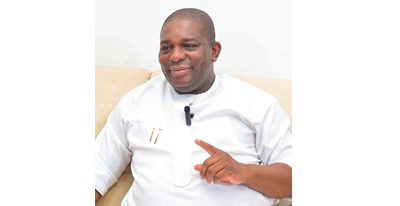
A Programme Officer at MRA, Ayomide Eweje, said access to information is not only a legal entitlement but also a critical tool for empowerment, equality, and survival for women.
According to her, information enables women to make informed decisions, claim their rights, and participate actively in social, economic, and political life.
She explained that access to information plays a significant role in improving the socio-economic status of women by enabling them to leverage digital tools for entrepreneurship, financial growth, and professional networking.
Eweje noted that access to information also allows women to secure credit for small businesses and better manage economic resources, while information networks can help bridge the economic gap faced by rural women who often lack infrastructure and access to knowledge.
She added that access to accurate information is equally critical in the health sector, as it enables women to make informed decisions about reproductive healthcare, safe childbirth, and family planning.
According to her, information on reproductive health services can help reduce maternal mortality, prevent unsafe abortions, and curb the spread of sexually transmitted infections.
Eweje further stressed that women cannot effectively participate in democratic processes without access to information.
She said access to public information allows women to contribute to debates on national development issues, demand accountability for public services such as healthcare and education, and make informed decisions during elections.
The programme officer also raised concerns over the growing threats women face in digital spaces, particularly technology-facilitated gender-based violence.
She noted that cyberbullying, online harassment, and the use of deepfakes have increasingly been deployed to silence female journalists, activists, and civil society actors.
“From technology-facilitated gender-based violence to coordinated mob attacks against female journalists and activists online, the digital world is increasingly being weaponised to silence women’s voices,” she said.
Eweje warned that such hostile environments discourage women from participating in online discussions, thereby limiting their access to information and weakening their ability to hold governments accountable.
To address the challenges, MRA urged the Federal Government, the National Assembly, and state governments to adopt policies that guarantee women’s full access to information.
Eweje reaffirmed the organisation’s commitment to promoting an open society where Nigerian women can freely access information, participate in public discourse, and exercise their rights without fear or institutional barriers.