
The Federal Government has said Nigeria requires at least 500 Sexual Assault Referral Centres (SARCs) nationwide to adequately support survivors of sexual and gender-based violence.
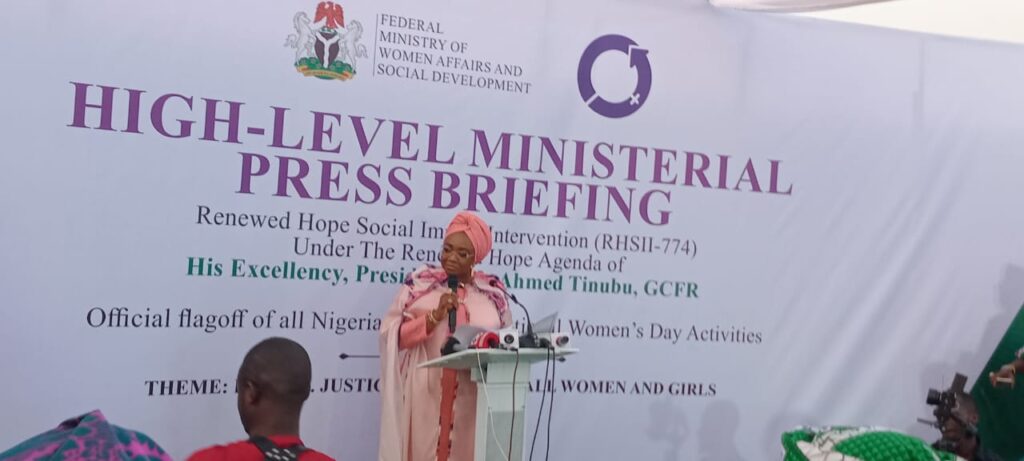
The Minister of Women Affairs and Social Development, Imaan Suleiman-Ibrahim, disclosed this at the High-Level Ministerial Press Briefing on the Renewed Hope Social Impact Intervention and Official Flag-off of Nigeria’s 2026 International Women’s Day (IWD) Activities held in Abuja.
According to the minister, Nigeria currently operates about 50 Sexual Assault Referral Centres across the 36 states and the Federal Capital Territory, a significant improvement from the 28 centres available in 2019.
While describing the development as progress, she noted that the number remains grossly inadequate for a country with a population of over 200 million people.
“By international standards, Nigeria requires a minimum of one SARC per 400,000 people, which translates to the need for at least 500 centres nationwide.”
She noted that expanding access to survivor-centred services remains a priority, stressing that efforts are ongoing to improve support structures and strengthen the response to sexual violence.
Suleiman-Ibrahim also reaffirmed her commitment to women’s economic, political and leadership empowerment, noting that the composition of leadership in Nigeria has gradually changed over the past decade.
“Women now occupy key ministerial portfolios, lead major financial institutions, and hold leadership positions across public service and international organisations.
However, the minister acknowledged that women’s representation in elective positions remains significantly low, describing the proposed Reserved Special Seats Bill as a historic opportunity to accelerate inclusive governance.
“The bill is expected to complement existing economic empowerment programmes while addressing longstanding structural barriers that limit women’s political participation.”
She also stressed the need to deliberately build a pipeline of women and young girls through mentorship, training and institutional support, to ensure that increased representation translates into meaningful influence.
Meanwhile, the Federal Ministry of Women Affairs and Social Development is preparing for Nigeria’s participation in the 70th Session of the Commission on the Status of Women (CSW70).
The ministry will coordinate a broad national delegation to the session in collaboration with the Ministry of Foreign Affairs and Nigeria’s Mission to the United Nations, with the aim of advancing the country’s priorities on gender equality and poverty reduction.