
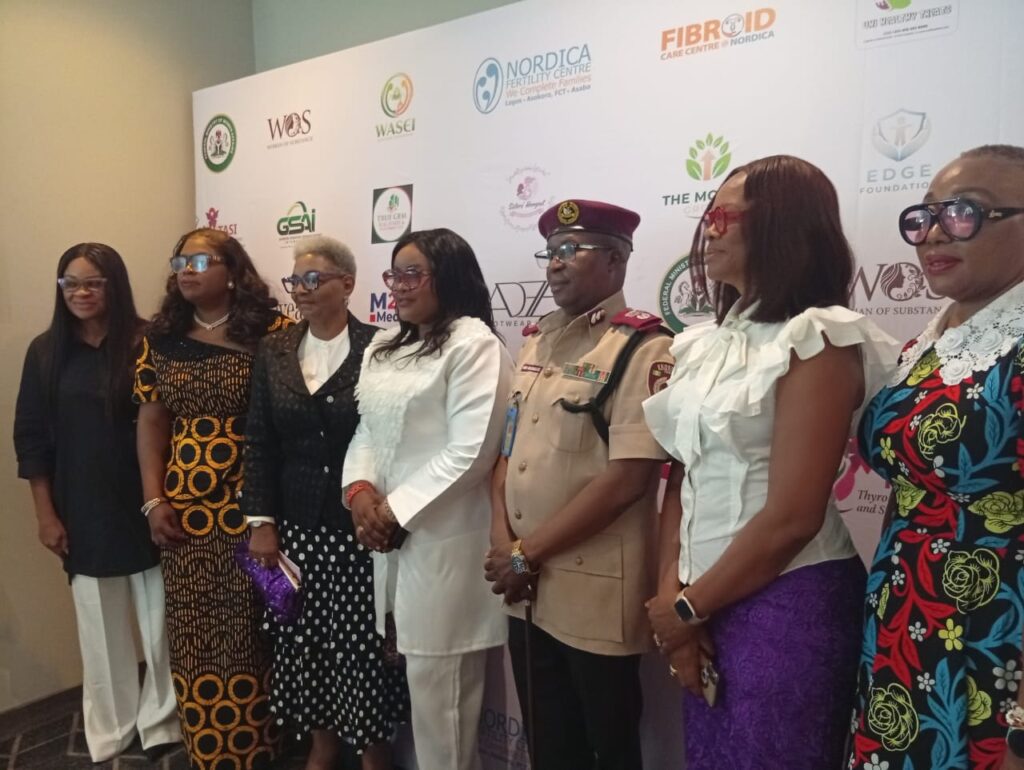
In celebration of the 2026 International Women’s Day (IWD), the Woman of Substance has urged the government at all levels to give Nigerian women more opportunities to showcase their skills and talents.
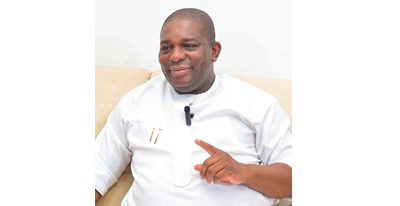
Speaking at the 2026 Woman of Substance Conference and Awards, the Founder of the Group, Chief Ify Onyegbule, said that when a woman is giving opportunity, she gains confidence.
She said: “When you give her support, she gains strength, and when women gain, I tell you, families thrive, businesses grow, and communities transform.
“Over the years, we have interviewed over 1000 professional Nigerian women telling their stories, celebrating their journeys and projecting their excellence to the world. But we didn’t stop at telling stories.
“We moved into advocacy and empowerment, reaching women where it mattered most, especially widows across communities in Nigeria. That was through our Widows Mind Outreach because when a woman is supported in her most vulnerable moment, I tell you, she just doesn’t survive, she rises, and I can attest to this with the kind of support that I got from people when I lost my own husband in 2018.
“Through the Women of Substance magazine, we projected women’s businesses, we amplified their voices, and we ensured that their work was seen. Today we continue that mission by covering women-focused events and publishing stories that inspire action and, of course, change.
“Everything we have done proves one powerful truth: that when women are supported, the impact truly multiplies, and you will hear some of that today in this room. Today I stand before you not just to celebrate but to invite you into this mission. We need women who will stand with women.
“We need men who will also stand with women. We need partners who believe in long-term impact. We need supporters who understand that giving is not a loss, it’s actually an investment. So if you believe in empowering women, if you believe in restoring dignity to widows, if you believe in building platforms where women thrive, then this is your moment to give to gain.”
One of the guest speakers at the event and the Executive Director of the Gender Strategy Advancement International, Dr Adaora Onyechere Sydney-Jack, said the cost of gender exclusion in Nigeria is very high. She said the representation of women in policymaking is very low, and if women are not adequately represented, how do the policies that men make get to the communities?
She said: “So let’s look at the data, and I like to speak to facts and evidence, because that’s where you draw your reference from. And I’m saying this because we’re at a time in Nigeria’s existence where we’re talking about the representative capacities of women. And as we speak, we have over 14 states in Nigeria that do not have a single woman in the state assembly.
“We’re still talking about a National Assembly that has only four women in the Senate, out of 109. In the House of Representatives, where you have 360 people, only 16 are women.
“How are we looking at the voices of the girl-child, health policies, social welfare, education, governance at the community level, when women are not represented in policy making at the parliament. And that’s just talking about politics.
“What about the military? What about the civil service? I mean, the biggest space where women’s ecosystem speaks loudest is in the private sector, in the banking sector, where you have a million voices of women in the banking halls, as MDs.
“How can we look at that strategy when we’re thinking policy reforms, policy implementation and development? And that’s where I’m coming from when I’m thinking of exclusion. Now, women constitute approximately 49 to 50 per cent of Nigeria’s population. And yet they occupy less than seven per cent of offices in the policy-making of the country.
“Across Africa, women-led start-ups receive less than three per cent of venture capital funding. There’s wide evidence that women are the ones who reinvest. Women are the ones who pay up and pay back loans. Up to 90 per cent of their income goes into their families and communities, compared to 30 to 40 per cent of men.
“But we’re talking about exclusion now. Now, globally, the failure to close the gender gap in economic participation costs the world economy an estimated $28 billion in lost GDP annually. So we’re saying that you’re leaving the women out, who are also the burden bearers of the community.
“In Nigeria, women only own roughly 40 per cent of small and medium enterprises, yet face disproportionate barriers to credit, land ownership, and procurement contracts. Now, these are not soft statistics. These are structural inefficiencies. And inefficiency at scale for a lot of people is economic sabotage.
“And this is not a woman’s issue. It is now an economic emergency. And I say this because gender inclusion, having explained this, is not a favour. It’s a growth engine. When women are included, GDP rises, government improves, corruption declines, peace negotiations last longer, and health and education outcomes improve across generations. So there’s a legacy. There’s continuity.”
At the end of the conference, many Nigerian women who have distinguished themselves in their field received the award of excellence.