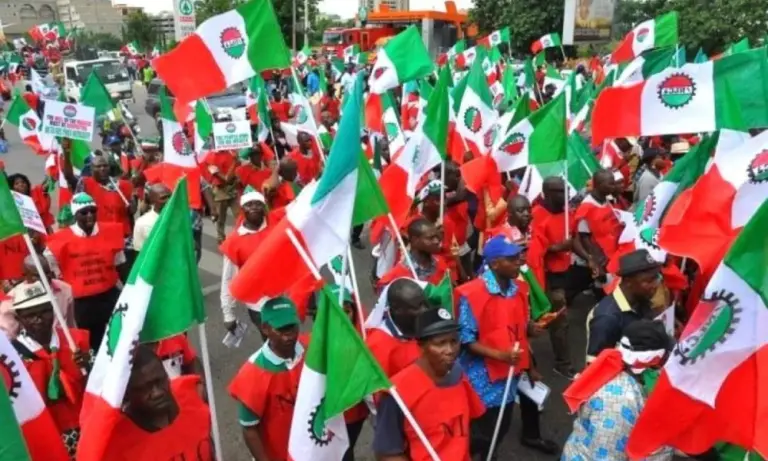



There seems to be a growing controversy between licensed agents operating at the nation’s seaports and the Nigerian Shippers’ Council, which is the ports’ economic regulator.
While licensed agents have accused the management of the Nigerian Shippers’ Council of fueling the increase in shipping charges by some foreign shipping companies, the NSC has insisted that both the shipping companies and agents must be able to shift ground to arrive at a mutually beneficial agreement.
On Thursday, the Africa Association of Professional Freight Forwarders and Logistics of Nigeria accused the management of the Nigerian Shippers’ Council of fueling the increase in shipping charges by some foreign shipping companies.
The group described the development as a dangerous and economically destabilising trend within Nigeria’s maritime regulatory space. The President of APFFLON, Frank Ogunojemite, stated this in a statement on Thursday obtained by The PUNCH.
The association said it is deeply alarmed by credible indications that the “Executive Secretary of the NSC may have signaled support or encouragement to shipping companies to increase charges at Nigerian ports, an action APFFLON views as a direct affront to the Federal Government’s cost-reduction reforms under the Renewed Hope Agenda of President Bola Ahmed Tinubu.”
They described the development as deeply disturbing, economically dangerous, and capable of eroding public confidence in the sincerity of ongoing port reforms.
“At a time when the Federal Government is aggressively pursuing policies to reduce the cost of doing business, stabilise inflation, and reposition Nigerian ports for competitiveness, any encouragement for shipping companies to increase charge amounts to economic sabotage,” APFFLON stated.
APFFLON warned that arbitrary charges by shipping companies or so-called operational adjustments would reverse recent gains made toward port cost rationalisation.
The group stressed that arbitrary charges would escalate inflation and worsen the hardship faced by Nigerian citizens. “It will cripple small and medium-scale importers and exporters, undermine Nigeria’s trade competitiveness within the West African sub-region, and send negative signals to both local and foreign investors,” they stated.
APFFLON emphasised that the statutory mandate of the NSC is to “regulate and protect Nigerian shippers against exploitative shipping practices—not to create policy signals that embolden foreign shipping lines to impose additional financial burdens.”
He pointed out that the association considers the development a matter of national economic security. “If not urgently addressed, the ripple effects will extend beyond the ports—impacting manufacturing, agriculture, retail supply chains, and ultimately the purchasing power of ordinary Nigerians,” the group warned.
The association, therefore, called for an immediate clarification from the leadership of the NSC. The group also urged the Federal Ministry of Marine and Blue Economy to urgently intervene, calling on the Presidency to investigate and ensure full alignment of maritime regulators with the Renewed Hope Agenda.
“Nigeria cannot afford regulatory contradictions at a time of economic reform. Every agency must align with the Federal Government’s strategic objective of reducing costs and promoting trade efficiency,” the group stressed.
APFFLON maintained that it remains resolute in defending the interests of freight forwarders, shippers, and the Nigerian economy. “We will not hesitate to escalate legitimate concerns through appropriate institutional channels to safeguard national economic stability,” APFFLON said.
The Head of Department, Shipping and Terminal, at the National Association of Government Approved Freight Forwarders, Nnadi Ugochukwu, corroborated what APFFLON said.
Meanwhile, on Thursday, the Executive Secretary of the NSC, Dr Pius Akutah, urged shipping companies to engage clearing agents in dialogue to resolve the ongoing dispute.
Addressing journalists in Abeokuta on Thursday on the sidelines of the NSC’s management retreat, Akutah said both the shipping companies and clearing agents must be willing to shift ground to reach a mutually beneficial agreement.
He stressed that discussions between the two parties should be guided by a spirit of compromise and mutual understanding.
According to him, the council had previously turned down requests for an increase in charges for two years, noting that the request was not necessarily aimed at profit-making or increasing profit margins.
Akutah emphasised that sustained engagement between stakeholders remains critical to maintaining stability in the maritime sector and ensuring that operational challenges do not disrupt port activities.
“I think that they need to work together more harmoniously to resolve these issues. We have given the approval. It is left for the shipping companies and the freight forwarders to come to a harmonious stand where they can implement this. So, there must be a reason for people to move, shift ground; it should be a give-and-take relationship.
“Whenever there is a stand down and nobody is moving, then there’s a problem. I am not speaking on behalf of the shipping companies, nor am I speaking on behalf of the freight forwarders, but I think they need to work together more harmoniously to resolve these issues,” Akutah said.