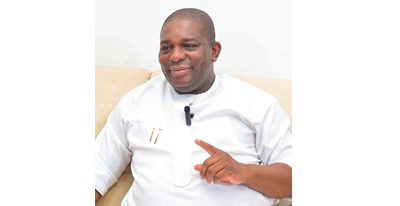




The President of the National Association of Resident Doctors (NARD), University College Hospital (UCH), Ibadan chapter, Dr. Uthman Adedeji, has criticized the hospital’s power rationing arrangement, which has led to a five-day strike.
He called on the Federal Government and well-meaning Nigerians to intervene urgently to save patients’ lives, improve doctors’ working conditions, and enhance medical students’ learning.
The Council of UCH Union Leaders, comprising 11 unions, commenced the strike on Monday over the hospital’s unacceptable electricity supply, which is limited to three hours during the day and three hours at night. Dr. Adedeji explained that doctors have had to use phone torches to perform surgeries, especially during emergencies.
Speaking in Ibadan on Thursday, he said,
“UCH needs help. The doctors, nurses, and all other staff working here need help. The patients need help too. We are calling on the Federal Government, eminent Nigerians, and the top management of this hospital to intervene. I recall last year when the Minister of Power visited us. He promised solar fans, which we are still expecting. If provided, that would significantly improve the situation.”
“This rationing is not helping the institution, the patients, or the students. We need a reliable electricity supply. We call on the Federal Government to address this urgently,” he added.
Dr. Adedeji acknowledged that the hospital management has done its part but noted that other institutions facing similar challenges have managed to circumvent the power supply problem. “We urge the management, government, and well-meaning Nigerians to come to our aid. We want to work, receive proper training, and live decently. Some resident doctors in the quarters have to bathe in a bowl to reuse water for other needs. Without electricity, there is no water. The living conditions are deplorable.”
He emphasized that the problem did not start recently. “This issue began in 2024 when we experienced total darkness for 102 days. No doctor went on strike then because we believed it was a problem to tackle together. We worked in the dark, using phone torches to perform surgeries, while cooperating with management and IBEDC to resolve outstanding debts. Suddenly, the management decided to stagger electricity supply without informing us, providing three, four, or eight hours at will, to the detriment of everyone, including patients. Emergency situations do not wait, and this is unacceptable.”