



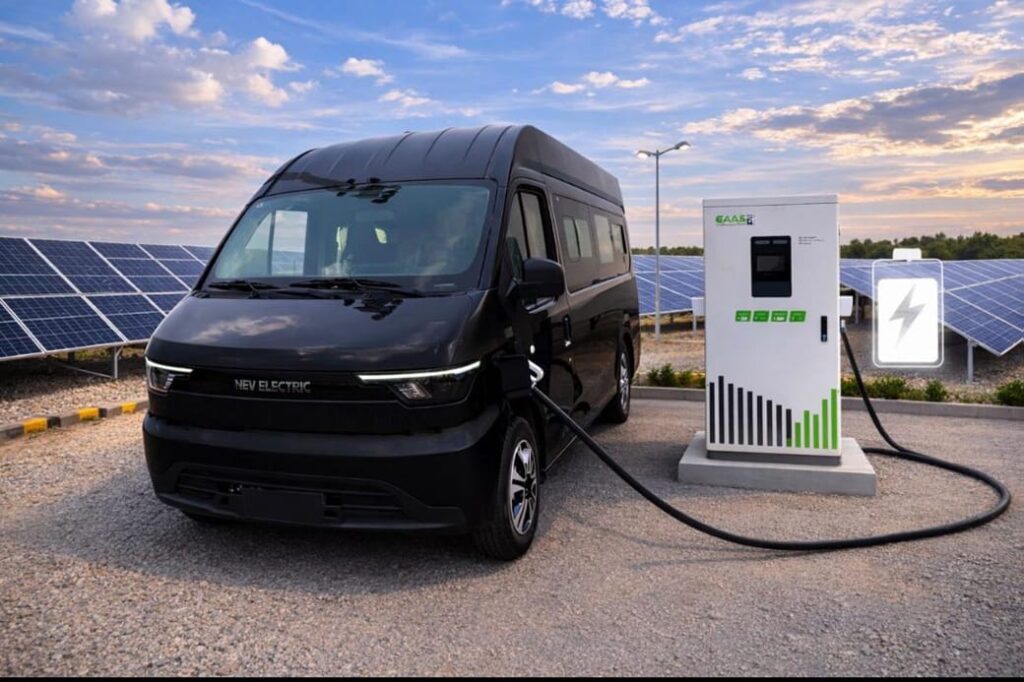
Nigeria’s electric mobility sector has received a boost with the unveiling of the NEV T3, a next-generation electric mobility van designed specifically for African cities.
NEV Electric Motors, one of Nigeria’s leading electric vehicle manufacturers, launched the NEV T3, marking another step in its mission to develop locally engineered electric mobility solutions.
The NEV T3 builds on the success of the company’s first electric mobility vehicle, the NEV T6, which has already demonstrated the practicality of electric transport in Nigerian cities.
Speaking at the launch, Founder and CEO Mosope Olaosebikan said the NEV T3 is engineered specifically for the realities of African cities—efficient, reliable, and sustainable.
The NEV T6 has already transported thousands of passengers across urban routes, helping operators significantly reduce fuel costs while eliminating tailpipe emissions.
“The success of the NEV T6 proved that electric mobility can work in Africa. With the NEV T3, we are introducing a new-generation vehicle engineered specifically for the realities of African cities,” Olaosebikan said.
Olaosebikan noted that the company’s long-term goal is to accelerate the adoption of sustainable transportation across Africa by developing electric vehicles and supporting infrastructure designed specifically for the continent’s mobility needs.
“As Africa’s cities grow, we must build transportation systems that are cleaner, more efficient, and more affordable,” he said. “Electric mobility will play a central role in that future.”
He noted that NEV Electric Motors is also rapidly deploying electric vehicle charging infrastructure across Nigeria to support the growing adoption of electric mobility.
According to him, the company has begun establishing charging stations in key urban locations and transport corridors as part of a broader strategy to build a reliable nationwide charging network.
He noted that the combination of locally manufactured electric vehicles and expanding charging infrastructure would be critical in accelerating Nigeria’s transition away from petrol-powered transportation.
Olaosebikan further said that electric vehicles offer significantly lower operating costs compared with conventional vehicles while also helping cities reduce air pollution and greenhouse gas emissions.
He explained that the NEV T3 electric mobility van was designed to serve multiple applications, including passenger transport, corporate mobility, and urban logistics.
The CEO said that the vehicle offers an efficient electric drivetrain that reduces maintenance requirements and eliminates fuel expenses while producing zero tailpipe emissions.
The launch of the NEV T3 reflects broader momentum within Nigeria’s emerging electric vehicle industry, as both government and private-sector players explore cleaner transportation solutions.