
Nigeria’s economic reforms under President Bola Tinubu have strengthened key financial indicators, but labour unions and small-business operators say ordinary Nigerians have yet to see these gains translated into meaningful improvements.
The Nigeria Labour Congress and leaders in the micro, small, and medium enterprise sector say high prices and operating costs continue to bite, overshadowing gains in foreign exchange stability, inflation moderation, and investor confidence.
On paper, the economy shows signs of stabilisation. The naira has strengthened to around N1,360 per dollar, up from lows near N1,800 during periods of currency volatility in 2023. Gross external reserves reached $50.45bn in mid-February, the highest in 13 years, giving the country over nine months of import cover.
The Nigerian Exchange market capitalisation has surpassed N100tn, supported by foreign portfolio inflows that reached $1.97bn in 2025, the strongest in nearly two decades. Inflation slowed to 15.10 per cent in January 2026 from above 27 per cent in 2024, while credit to the private sector expanded to N74.41tn in October.
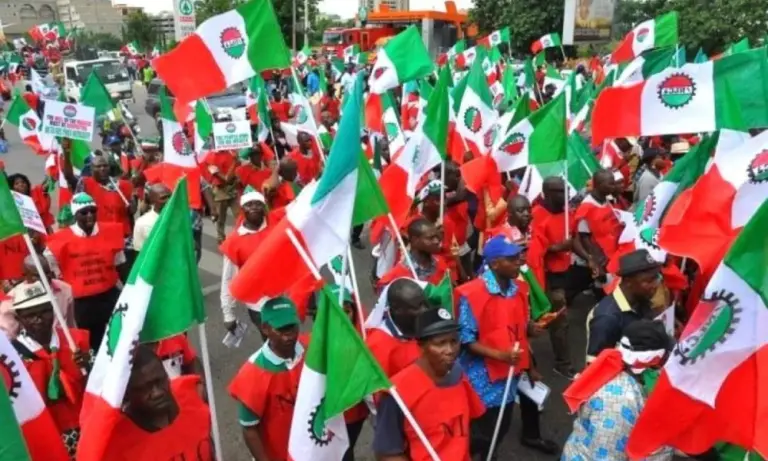
“Numbers are supposed to reflect reality. If the reality of the people is different from the numbers, then something is wrong with the numbers,” Assistant Secretary-General of the NLC, Onyeka Christopher, told The PUNCH.
“The price of everything has spiked. Rent has spiked. Everywhere, rent has spiked. Any economic indices that do not measure the impact of policies on people’s lives cannot tell the true story.”
Since taking office in May 2023, Tinubu’s administration has pursued reforms aimed at correcting long-standing structural distortions in Nigeria’s economy.
Upon assuming office, he announced the unification of the foreign exchange market in 2024, moving from multiple exchange windows to a market-driven, willing-buyer, willing-seller system. The shift was intended to improve transparency, attract investment, and eliminate bottlenecks that previously stifled growth.
The administration also rolled back fuel subsidies, introduced tighter fiscal discipline, streamlined revenue collection, and invested in infrastructure and food security programmes. Policymakers, including the World Bank, say these steps have stabilised the naira, improved reserves, and bolstered investor confidence after years of erratic economic performance.
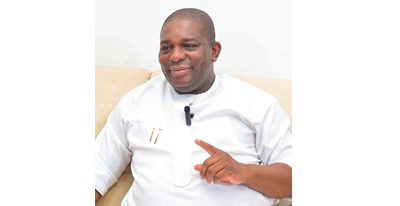
The Vice-Chairman of the National Association of Small and Medium Enterprises, South-West, Solomon Aderoju, said businesses are still feeling the strain of high operating costs despite improving financial conditions.
“If I comment as a banker, I would say there have been improvements. Financial indicators show changes. Foreign reserves are rising, and inflation growth is slowing,” he told our reporter.
“But speaking about SMEs, people have not really felt the impact. Operating costs remain high, and transportation expenses have not reduced. The price of cement has even gone up from about N10,000 to N11,000. Some call it a money illusion, an improvement on paper without real impact yet.”
According to Aderoju, many small businesses are struggling to translate better credit conditions and monetary stability into lower costs or higher profits.
While macroeconomic indicators point to stabilisation, prices for food, housing, transportation, and construction materials remain elevated. Analysts note that declining inflation does not necessarily equate to falling prices; rather, it reflects a slower rate of increase.
The NLC official said currency devaluation and subsidy removals have compounded hardship for workers, underlining the disconnect between official data and lived experience.
“Economic reform that does not revive an economy, that does not create jobs or improve welfare for citizens, is not economic reform,” he said. “Any policy that only manipulates numbers while the poor continue to suffer is not genuine reform.”
Labour leaders have repeatedly called for policies that directly increase purchasing power and reduce household expenditure pressures, insisting that macroeconomic gains alone are insufficient.
Former Director-General of the Lagos Chamber of Commerce and Industry, Dr Muda Yusuf, described the reforms as painful but necessary to prevent deeper economic deterioration.
“The process of surgery may be painful, but if you do not do the surgery, the patient may probably die,” Yusuf said. “For a long time, we have not seen this level of stability. Investors’ confidence has improved, and macroeconomic conditions are better.”
He warned that, absent the reforms, the Nigerian economy might have teetered on the brink of collapse. Economists describe Nigeria’s current situation as a typical transmission lag, where stabilisation precedes broad welfare improvements. Currency stability and lower inflation affect real prices over time, depending on productivity growth, infrastructure efficiency, and market competition.
High borrowing costs, logistics constraints, and energy expenses continue to prevent widespread price reductions. They also note that businesses remain cautious about reducing prices after periods of volatility, preferring to wait until stability proves durable.
Former Chief Economist at Zenith Bank, Marcel Okeke, said that while headline figures appear positive, the underlying impact on living standards remains limited.
“For propaganda purposes, yes, the figures are doing well,” Okeke told our correspondent. “But if you assess the economy through living standards, improvement is not significant. Foreign portfolio inflows attracted by high interest rates do not necessarily translate into jobs or industrial expansion.”
Okeke also questioned adjustments to the methodology used in calculating inflation, suggesting that the reported moderation may not fully reflect price pressures faced by households.
Government officials argue that stabilisation is a prerequisite for sustainable growth. Improved macroeconomic indicators, they say, create conditions for private-sector expansion, increased investment, and eventually lower prices and higher employment.
In November, the Governor of the Central Bank of Nigeria, Cardoso, highlighted efforts to support smaller businesses, stressing that the financial sector remains central to broader economic recovery.
“MSMEs remain central to our efforts. Last year alone, microfinance lending expanded by over 14 per cent, and new digital-credit products reached more than 1.2 million small enterprises, evidence of the sector’s growing depth and capacity,” he said.
“We are improving access to credit, supporting microfinance institutions, and expanding financial products tailored to smaller enterprises. Stability remains the bedrock upon which investment flourishes, resources are allocated efficiently, and purchasing power is protected,” he added. “In 2026, the bank will deepen engagement with stakeholders, strengthen collaboration with other regulators and international partners, and foster responsible innovation across the financial system.”
Yusuf acknowledged that while financial indicators are improving, the welfare impact remains gradual.
“We have not made that much progress yet in terms of welfare. That remains a major challenge,” he said. “Price moderation has been uneven, and government coordination across federal, state, and local levels is essential to ensure citizens feel the benefits.”