


…Tinubu’s Economic Reforms, A Tough Pill That’s Working, Says Ex-CBN Deputy Governor
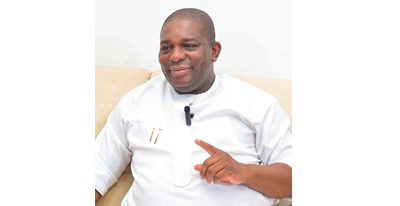
A former Deputy Governor of the Central Bank of Nigeria (CBN), Tunde Lemo, has described President Bola Ahmed Tinubu’s economic reforms as timely and necessary, despite the initial hardship experienced by Nigerians.
Lemo made this known during an interview on a TVC programme on Monday, while addressing the impact of the administration’s removal of subsidies and the current state of the economy.
According to him, while many Nigerians believed that only the petroleum subsidy was removed, the government also eliminated what he described as a subsidy on foreign exchange.
He explained that the dual removal of subsidy at both the petroleum product and the foreign exchange levels fundamentally rejigged the Nigerian economy.
“It was tough at the beginning,” Lemo admitted, “but we now have a new price discovery and a new equilibrium.”
He noted that the reforms have led to more optimal allocation of resources, particularly in the foreign exchange market, where stability is gradually being restored.
Lemo stated that Nigeria is currently experiencing not only exchange rate stability but also a stable outlook, adding that based on existing cash flow trends, the Naira is unlikely to witness serious depreciation except in the event of unforeseen external shocks such as geopolitical crises.
He further explained that prior to the reforms, a significant portion of Nigeria’s foreign exchange earnings were spent on importing petroleum products.
However, with increased local refining and production of white products, the country no longer channels most of its forex earnings into fuel imports.
According to him, this development has contributed significantly to foreign exchange stability.
The former CBN Deputy Governor also observed that exchange rate stability has encouraged companies to look inward, leading to growth in non-oil exports.
He said Nigeria previously lost competitiveness when its currency was overvalued in real and effective terms, but the introduction of a market-determined exchange rate and greater transparency by the Central Bank have now created the conditions for sustainable non-oil export growth.
Lemo expressed optimism that the current stability is sustainable, provided there is effective coordination between fiscal and monetary authorities going forward.
Addressing concerns that the reforms appear to favour macroeconomic indicators more than ordinary Nigerians, Lemo acknowledged that vulnerable citizens are still feeling the effects of the changes.
He noted recent improvements in food prices but emphasised the need for targeted interventions to cushion the impact on the most vulnerable.
He recommended conditional cash transfers as a key strategy to support disadvantaged Nigerians, pointing out that the government now has the technological capability to identify beneficiaries through unique identification systems.
He also commended the introduction of student loan schemes, describing them as “low-hanging fruit” that can quickly impact young Nigerians.
Beyond cash transfers, Lemo stressed the importance of increasing capacity utilisation in manufacturing to drive job creation and reduce unemployment, noting that economic growth must ultimately trickle down to citizens.
He emphasised the need to sustain infrastructure development, particularly improving road networks that link farm gates to markets. According to him, while progress has been made in intercity roads, more attention should be given to last-mile connectivity to ensure agricultural produce reaches markets efficiently.
He also highlighted the importance of safety and security in encouraging citizens to return to agriculture, stating that relatively high agricultural prices can incentivise increased production beyond subsistence farming.
Lemo explained that higher farm output creates export linkages, as exporters are now sourcing products directly from farm gates, thereby expanding opportunities for farmers and boosting rural incomes.
On the issue of increased federal allocations to states following subsidy removal and improved forex earnings, Lemo urged state governments to refocus their priorities.
While acknowledging that states need to do more to support federal reforms and address social challenges, he cautioned against the assumption that they now have excessive financial resources.
He described the perception of significantly increased state revenue as “money illusion,” explaining that although nominal allocations may have risen — for example from ₦10 billion to ₦50 billion — inflation means that the purchasing power of the funds may be equivalent to previous levels.
Nonetheless, he maintained that state governments must concentrate more on pro-poor policies, including healthcare access, provision of essential medicines, improved rural schools, and broader social development indices, rather than prioritising grandiose projects.
Lemo concluded that while the reforms have been difficult, they have repositioned the Nigerian economy for greater stability and sustainable growth, provided that authorities maintain discipline, coordination, and focus on inclusive development.