
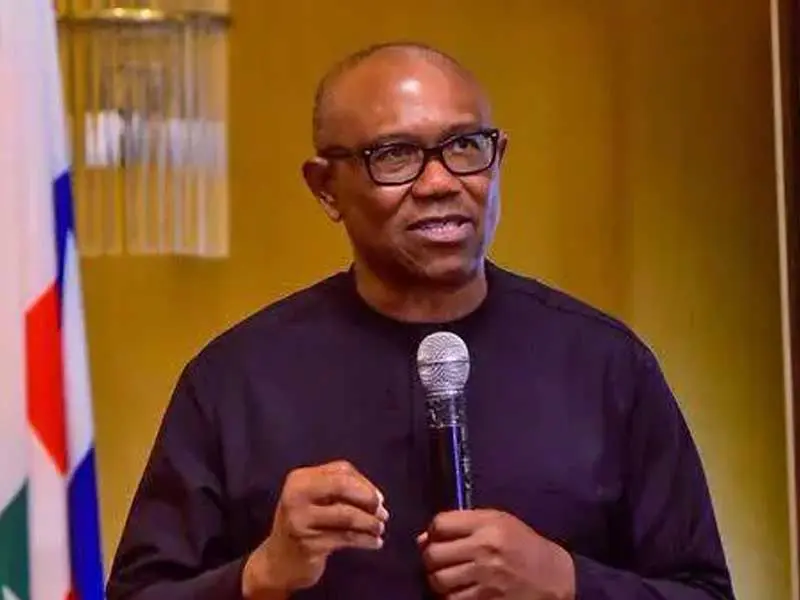
Former governor of Anambra State and African Democratic Party (ADC) presidential hopeful, Peter Obi, has criticised the latest collapse of the national grid, describing it as a troubling reflection of the country’s worsening power crisis.
Saturday Telegraph had earlier reported that the national grid collapsed on Friday after power generation fell sharply from over 4,500 megawatts to as low as 24 megawatts by about 1:30 pm, plunging homes and businesses across the country into darkness.
According to the statement issued by the transmission companies, all 23 power generation plants connected to the grid were affected, resulting in zero electricity allocation to the nation’s 11 distribution companies.
Reacting to the development in a post on his official X handle, Obi said the incident followed a familiar pattern, recalling that the first grid collapse of 2025 also occurred in January and was followed by several others throughout the year.
READ ALSO:
Titled “2026: The Collapse Continues,” the 2023 Presidential candidate of the Labour Party (LP) lamented Nigeria’s continued poor electricity access, noting that the country has ranked lowest globally in that regard for three consecutive years.
Obi compared Nigeria’s power generation capacity with that of other African countries, describing the contrast as alarming.
He wrote, “In January 2025, we witnessed the first grid collapse of that year, which was followed by several other collapses. Now in January 2026, the national shame has commenced with yesterday’s collapse,” he said.
“It is utterly disappointing that for three consecutive years—from 2023 to 2025—our nation has been ranked as having the least access to electricity globally, with nearly 100 million citizens left without power,” he said.
“When we compare our situation to other African nations, the disparity is stark. South Africa, with its population of about 64 million, generates and distributes over 40,000 megawatts.
“Egypt, with about 115 million, also generates over 40,000 megawatts. Algeria, with around 48 million, generates and distributes over 50,000 megawatts.
“Meanwhile, Nigeria, the giant of Africa and its most populous nation with over 240 million people, produces a mere 5,000 megawatts—an absurdly low figure that severely hampers our productivity,” Obi said.
He attributed the persistent power challenges to leadership failures, stressing that the electricity sector required capable and committed management.
“This power crisis is a direct result of continuous leadership failures. The power sector is critical and requires competent and committed leadership to thrive,” he said.
Looking ahead to the 2027 general elections, Obi urged Nigerians to make leadership choices based on competence and empathy.
“As we look towards 2027, Nigeria must prioritise competence and empathy in its leadership. It is time to elect individuals with the capacity and dedication necessary to initiate a significant turnaround for our nation. Anything less is unacceptable,” he said.









