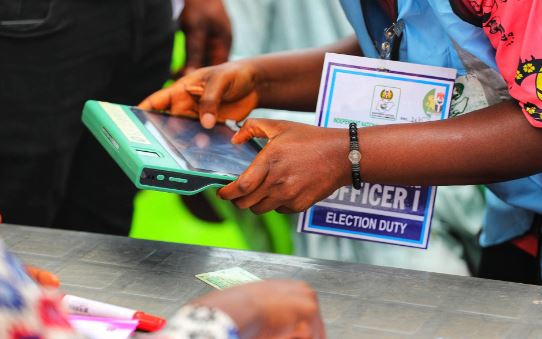
The Governor of the Central Bank of Nigeria and Members of the Monetary Policy Committee have warned that rising political and election-related spending ahead of the 2027 general elections could undermine the country’s disinflation gains and trigger fresh inflationary pressures.
The warnings were contained in the personal statements of MPC members released by the apex bank and obtained by The PUNCH on Thursday. The MPC, at its 304th meeting held on February 23 and 24, 2026, reduced the Monetary Policy Rate by 50 basis points from 27 per cent to 26.5 per cent, while retaining other key monetary parameters.
CBN Governor, Olayemi Cardoso, had earlier warned in the MPC communiqué that election-related fiscal spending could threaten the inflation outlook despite the current moderation in prices.
According to the communiqué signed by Cardoso, “The outlook indicates that the current momentum of domestic disinflation will continue in the near term. This is premised on the lagged impact of previous monetary policy tightening, sustained stability in the foreign exchange market and improved food supply. However, increased fiscal releases including election-related spending could pose upside risk to the outlook.”
Also, in his personal statement, he noted “Growing fiscal pressures, from reduced government fiscal headroom and the approaching 2027 election cycle, warrant particular attention given the well-established link between pre-election fiscal expansion and inflation.”
CBN Deputy Governor for Economic Policy, Dr Muhammad Abdullahi, also highlighted election-related spending as a major risk to the inflation outlook. He said, “As political activities intensify ahead of the 2027 elections, increased fiscal injections and consumption spending could elevate demand-side inflation.”
Abdullahi added that “the fiscal deficit has already increased significantly, and election-related spending is likely to exacerbate this trend in 2026 and early 2027.” According to him, stronger fiscal-monetary coordination would be needed to manage the liquidity impact of rising government spending.
Similarly, the CBN Deputy Governor for Operations, Emem Usoro, warned that the pre-election environment could worsen liquidity conditions and inflation expectations. Usoro stated, “Crucially, the pre-election environment increases the risk of liquidity surges, higher FX demand and a drift in inflation expectations.”
She added that the risks justified maintaining tight liquidity conditions despite the moderate rate cut. According to her, “These considerations support small, cautious adjustments and the retention of strong liquidity and prudential buffers.”
Also raising concerns was the newly appointed Deputy Governor, Lamido Yuguda, who said increased fiscal releases and election spending could disrupt the disinflation trend.
Yuguda, who was a former Director General of the Securities and Exchange Commission, noted, “The 75 per cent CRR on non-TSA public deposits remains critical, particularly given the potential for increased fiscal releases as implementation of Executive Order 9 advances.”
He further warned that, “Potential increases in fiscal spending associated with the electoral cycle could generate demand pressures and disrupt the disinflation trajectory.”
A member of the MPC, Dr Aloysius Ordu, warned that political spending tied to the elections could put pressure on foreign exchange demand and test the resilience of the economy. He said, “Domestically, rising political spending and FX demand pressures associated with the 2027 elections will test the resilience of the economy.”
Ordu added that although reforms such as Executive Order 9 were expected to improve fiscal transparency and strengthen reserves, high debt servicing costs and political-cycle spending remained major concerns for macroeconomic management.
Another MPC member, Bandele Amoo, also expressed concern over excess liquidity from fiscal injections and early political activities ahead of the elections. He said, “My primary concern is the persistence of excess liquidity from fiscal injections, which could undermine disinflation gains and exchange rate stability.”
Amoo further noted that “fiscal spending pressures linked to the 2026 budget cycle, and early political activities ahead of the 2027 elections may heighten risks.”
Another committee member, Professor Murtala Sagagi, said the main domestic risks to inflation included fiscal slippages and election-related spending. He said, “Upside risks to the inflation outlook warrant monitoring, particularly increased fiscal releases including election-related spending and any pass-through from global oil price volatility to domestic fuel prices.”
Sagagi added that “the primary domestic risks are fiscal slippage and the possibility of election-related spending which are medium-term in nature.” He urged stronger fiscal discipline and closer coordination between monetary and fiscal authorities.
The next meeting of the Monetary Policy Committee is scheduled to hold on Tuesday, May 19 and Wednesday, May 20, 2026. This would be about four days after the National Bureau of Statistics is expected to release the country’s Consumer Price Index report for April 2026 on May 15.
Nigeria’s inflation rate rose to 15.38 per cent in March 2026, marking a reversal in the recent easing trend, as increases in food, transport, and accommodation costs pushed prices higher. The PUNCH observed that this was the first time the headline inflation rate had increased since March 2025.
In its Inflation Forecast report for April 2026, the Financial Market Dealers Association projected that Nigeria’s headline inflation would rise to 16.42 per cent year-on-year in April 2026, as sustained pressure from food prices, higher energy costs and elevated global commodity prices continue to shape the domestic price environment.