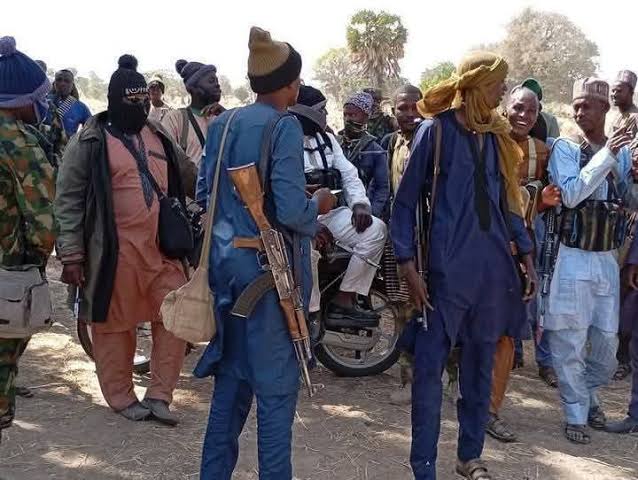
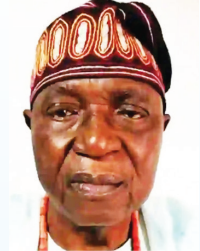


A former Director of Legal Services at the Defence Headquarters (DHQ) in Abuja, Maj-Gen. Yusuf Shalangwa (Rtd), has blamed the proliferation of small arms and light weapons in the country on possible weakness of agencies of government responsible for border security.
The retired two-star general further identified the subsisting ECOWAS protocol on free movement of member-states’ citizens as another likely causative factor.
Speaking in an exclusive interview with Saturday Telegraph, the senior lawyer, who is known for his extensive knowledge of military and civil laws, made a strong case for synergy among the military, intelligence and security agencies, in a bid to address the challenges of insecurity in the country.
This was as he urged governments at all levels to empower relevant agencies of government responsible for national security and law enforcement, while keeping faith with the primary responsibility of security and welfare of citizens.
He said: “I have been a legal officer in the military for more than three decades. So, my opinion will always come from the legal angle.
“Some of the reasons (small arms and light weapons find their way into Nigeria) in my opinion are not far-fetched.
“We don’t really have strong institutions, or our institutions are not strong. When I say institutions, I’m referring to government agencies that are responsible for our (border) security – in one way or the other.
“For example, the issue of small arms and other arms that infiltrate into the country, you look at it from the point of the security of our borders”.
He emphasised that: “There are agencies that are responsible for that: the customs, and the immigration; they are there.
“So, are they playing their own roles? If they are not playing their roles, for one reason or the other, the problem will be there.
“And, we are part of ECOWAS, and free movement of goods and property or materials are there in their protocol or policy.
“That, directly or indirectly, contributes, though the policy does not allow importation or movement of illegal materials.
“That is why I was talking about customs, immigration, and so on because it is human beings that move the items, so customs, and immigration are very important.
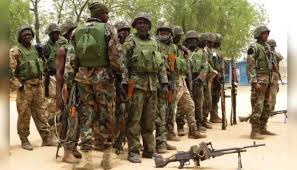
“Talking about the Military, their primary role is the defence of the country from external attacks or aggression.”
According to Shalangwa, the issue of crossing the borders, as well as “importation” is not really the primary role of the armed forces.
He continued: “When I say that the Defence is the Army, Navy, and the Air Force, their own is, if they declare war; they come in. If they are directed by the President and the Commander-in-Chief to aid the civil authority, where they are overwhelmed; then, they come in.
“The armed forces need to work in synergy with these other agencies that I mentioned.
“We need to emphasise the use of technology as a multiplier effect for our Armed Forces, since we cannot be everywhere. Technology will assist them to monitor our borders (to know) how things enter.
“But, it has to be in synergy with the other agencies that I mentioned, and particularly our intelligence/security agencies: the DSS, the Defence Intelligence Agency, and the National Intelligence Agency.”