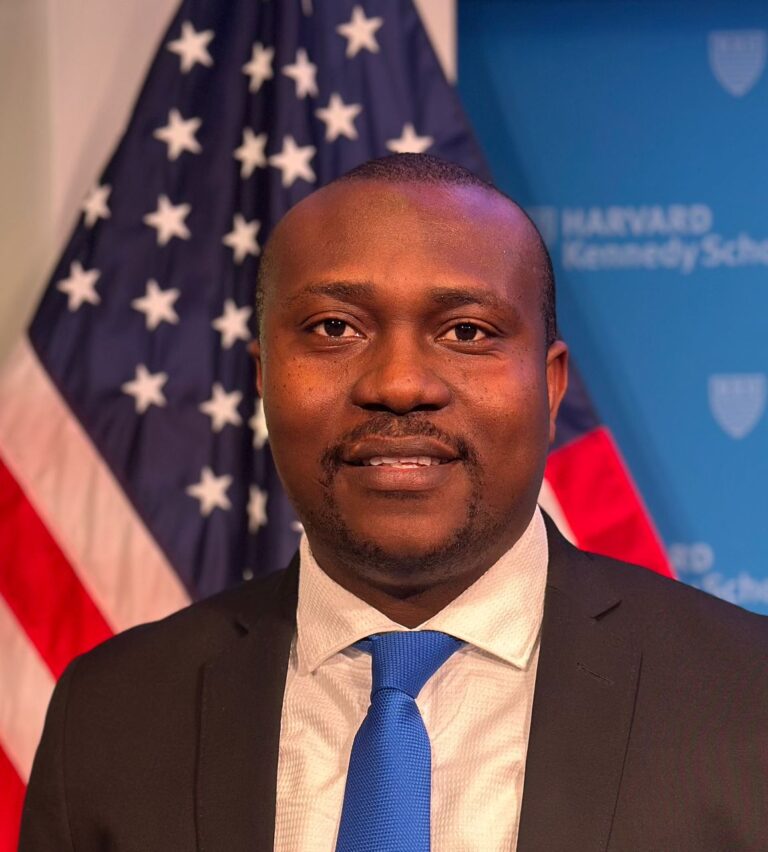


The Chief Executive Officer and Co-founder of Identy.io, Jesús Aragón, explains why passwords and SMS tokens are failing, and why biometrics is emerging as the most reliable identity verification method in this interview with OKECHUKWU NNODIM
Briefly tell us about Identy.io
Identy.io is a US-based company, but we operate globally. Our teams are deployed across the United States and Latin America, from Mexico to Brazil. Africa is very important to us. We already have teams in East Africa and West Africa, and Nigeria is a key base for our operations in West Africa. We also maintain facilities in Europe and India, and we serve customers around the world across several industries, particularly government, banking, and telecommunications. Our focus is identy technology. Everything we offer is developed internally. We do not license third-party technology for resale. We build our systems ourselves and hold multiple patents worldwide. We are very excited about the opportunities in the identity space. Over the next decade, identity systems will be redesigned globally, and we want to play a central role in that transformation.
Why is Nigeria critical to Africa’s digital identity evolution?
Nigeria is a reference point for the continent. It is the most populous country in Africa, which makes it extremely important. We believe it is essential for us to operate here. Another key factor is mobile penetration. Over 90 per cent of Nigerians have access to mobile phones, and many people own more than one device. Our vision is simple. If everyone already has a phone, then that phone should become the starting point for identity verification. Nigeria’s population scale, its digital adoption, and its influence in Africa make it a strategic country for identity innovation.
Identity fraud is costing Nigeria billions and affecting the economy. How would you address this challenge?
Most identity systems today rely on passwords or SMS tokens. Those methods no longer work well because they do not truly verify who a person is. Someone can steal your token or intercept your SMS. Passwords are also weak. Many people still use simple combinations such as “1234.” That means these systems verify access, but not identity. The strongest method to verify identity is biometrics. Your face and your fingerprints are unique to you. When biometrics are implemented correctly, they become the most reliable way to confirm identity.
We have seen organisations deploy biometric verification and reduce fraud almost immediately. In some cases, fraud dropped to nearly zero the next day. Of course, attackers eventually try to find weaknesses again, but the baseline fraud level never returns to where it was before. However, once biometrics are deployed, attackers attempt new methods. Some try presentation attacks, such as printing a photo of someone’s face or showing a picture on a screen to trick the system. However, those techniques are becoming outdated. Today, the bigger threat comes from digital attacks. People use emulators, cloned apps, or virtual cameras to inject fake images into verification systems.
These tools can scale quickly. Someone can obtain them on dark web marketplaces and run large numbers of automated attacks. Then there is the growing challenge of deepfakes. The quality of deepfake technology has improved dramatically. Artificial intelligence can now generate extremely convincing synthetic faces and videos. To defend against this, we must use AI to detect AI. It becomes a continuous race. Every solution must evolve constantly because new attack methods appear all the time. Our goal is simply to stay a small step ahead.
Explain how identity is now a tool for inclusion
Fraud prevention is a major motivation, but identity verification has a larger purpose. It is also about inclusion. In many parts of Africa, people still struggle to obtain formal identity credentials. Without identity, they cannot access financial services, government programmes, or digital platforms. Mobile technology offers a solution. Since most people already have phones, identity enrollment and verification can begin on the device they already carry. This reduces the need to travel long distances to government offices or registration centres. Identity verification through mobile devices can support many applications, including SIM registration and telecom compliance. fraud prevention in banking, access to government services, remote identity verification for public programmes, and secure digital authentication for everyday transactions.
Many countries require telecom providers to verify users when issuing SIM cards. Mobile-based biometrics can simplify this process while strengthening compliance. Our approach is to perform biometric capture directly on a smartphone. That means organisations do not need additional hardware such as fingerprint scanners. A phone can capture facial recognition data or fingerprints directly. This allows identity verification to happen almost anywhere. Enrollment remains the most important step. Identity must be verified properly during the first registration process. After that, future authentications can be done securely using the biometric data stored or verified through the system. Another important point is privacy. Identity data must be protected. Biometric information is highly sensitive, and companies must treat it responsibly
Think about how many processes today still require physical travel. Someone may spend two days moving from one office to another just to complete paperwork such as birth registration or identity confirmation. With mobile-based identity systems, that process can be done remotely. Our differentiator as a company is simple. We perform biometric capture directly on the mobile phone. There is no need to carry additional hardware such as fingerprint scanners or large equipment kits. The phone’s camera can capture fingerprints and other biometric data directly. This approach opens the door to many applications. Consider how often people verify their identity in a single day. It may happen ten times or more. Most systems still rely on passwords. People forget those passwords and constantly reset them. That process is inefficient. A more effective approach is to use biometrics on the device that the user controls. The phone belongs to the user. It is private. Verification can happen on the user’s device or through an authorised agent’s phone when necessary.
With this technology, won’t there be a need to visit certain locations to enrol, capture, or otherwise?
Some cases may still require a person to visit a specific location or connect to a central database for verification. Other situations allow biometric data to remain securely stored on the device itself. The most important stage is the initial enrollment. Enrollment must be done correctly. If enrollment is flawed, the entire verification process becomes unreliable. During the first enrollment process, systems can connect to trusted databases or technologies such as NFC-based identity documents. Once that initial verification is completed, future authentications become faster and more secure. When identity verification begins on the phone, the entire process becomes more private. The user controls the environment where verification happens.
Privacy is a core concern for us. Biometric data is sensitive information. For years, people have uploaded their faces freely across the internet. Social media platforms have collected billions of facial images. That data now makes it easier for attackers to create deepfakes. Because of this, we believe identity verification must rely on multiple factors. Facial recognition alone is not enough. For example, fingerprints and palm recognition provide stronger protection because those biometric elements are not publicly available online. No one can easily download your fingerprints from the internet. This is why we believe the future of identity verification is multi-factor biometrics.
For multi-factor identity verification, different levels of risk require different verification methods. For a low-risk transaction, a facial scan may be sufficient. For a higher-risk transaction, a fingerprint may be required. For a very high-risk transaction, such as transferring large amounts of money, the system may request multiple biometric checks at the same time. Identity security is not about choosing between face recognition, fingerprints, or palm recognition. It is about combining them intelligently depending on the situation.
Many government agencies and private businesses in Nigeria want to understand how identity systems will impact the economy. How does this technology create economic value?
The first benefit is efficiency. People should not lose two or three days simply trying to complete a basic administrative task. I can share a personal example. I recently bought a car in Spain. During the registration process, I was asked to send several documents. Instead of traveling to an office and spending half a day on paperwork, I simply sent a picture of my driver’s license through WhatsApp. That situation should not exist. Sensitive identity data should never be exchanged in that way. A proper digital identity system allows secure document verification electronically. For example, digital identity wallets now being developed in Europe allow people to share verified credentials such as passports or driver’s licenses remotely. With biometric verification, a person can prove that they are the one performing the transaction without physically traveling anywhere.
Fraud is another major factor. When fraud occurs, it creates enormous operational costs for institutions. If someone steals money from your bank account, you may spend days or weeks trying to recover it. Banks must investigate the transaction, review security logs, and determine responsibility. Biometric verification significantly reduces these disputes. If a system records a verified face or fingerprint during a transaction, it becomes much easier to confirm who actually authorised it. That level of certainty reduces investigation costs, improves trust in digital services, and protects both institutions and consumers.
Also, identity systems must balance security with usability. If biometric verification takes too long or requires complicated actions, people will refuse to use it. Even my father should be able to complete the process easily. A well-designed system must verify identity quickly and securely without making the user struggle through complicated instructions. For example, older systems often require users to smile, blink, turn their heads, or perform multiple gestures.
Those methods are becoming outdated. Today, deepfake technology can replicate those gestures easily. That means gesture-based verification is no longer reliable. Instead, we focus on passive liveness detection. The user simply places their face inside an on-screen frame. The system analyses the biometric signals automatically without requiring complex movements. This approach improves both security and user experience.
What are the key elements of your company’s long-term commitment to Nigeria and expansion across Africa?
Africa represents a major opportunity for innovation in digital identity. Many regions on the continent moved directly from limited infrastructure to widespread mobile adoption. In other words, many people went from having no phone at all to having a smartphone. That shift creates a unique environment where mobile-based identity systems can grow rapidly. For us, Nigeria is central to that vision. The country’s population, digital adoption, and influence across the region make it a critical hub for identity innovation in Africa. For foreign companies, entering a market like Nigeria can be difficult. The key is working with the right partners. That is why we hire local professionals and build relationships within the country.
Our commitment is long-term. We want to work closely with government institutions to develop mobile-based identity services. At the same time, identity systems require strong infrastructure. Nigeria is expected to grow significantly. The population today is already more than two hundred million people, and projections suggest it could reach five hundred million in the future. That means infrastructure must be designed to support hundreds of millions of connected devices and identities. Planning for that scale takes time. It requires collaboration with public institutions and the private sector. Government processes often move slowly, but identity systems are built for decades, not for short cycles.
The public sector may focus on national identity programmes, while the private sector faces different challenges. Banks deal with fraud. Telecommunications companies must verify customer identities due to regulations. Each sector has its own needs, but all of them rely on strong identity systems.
Many technological breakthroughs happen in advanced urban centres. How can people in rural communities benefit from this system?
This question matters to me personally. People should not spend several days traveling just to obtain an identity document, a birth certificate, or a passport. Mobile technology can change that. Government agents or private service providers can travel to rural areas with a simple mobile device. They can capture biometric data directly from the phone without requiring specialised scanners or equipment. In many cases, people can even complete these processes themselves through mobile applications. If a government agency provides an app, individuals can access services or manage their accounts without traveling anywhere.
The challenge for us is making our technology work on almost any phone. Our market is not the newest premium smartphone. Our focus is on the affordable devices that most people use every day. If technology only works on high-end phones, then the majority of the population is excluded. Our goal is the opposite. Our technology must serve the 99 per cent of people who rely on entry-level devices. That is how digital identity becomes truly inclusive.
Do you truly believe the Nigerian population will benefit directly from this technology?
Absolutely. In fact, we are already seeing those benefits. Government institutions, banks, and telecommunications companies are using our technology today. It supports identity enrollment, access to government services, and SIM registration processes. For telecommunications companies, mobile-based biometrics makes it easier to register customers without requiring heavy equipment. Agents can complete identity verification directly through their phones. Banks also benefit significantly. Fraud is one of their biggest challenges. When biometric verification is introduced, fraud levels drop dramatically. In many cases, the reduction happens almost immediately after deployment. Of course, fraud does not disappear completely. Criminals always search for new weaknesses. But once strong biometric systems are introduced, the scale of fraud changes dramatically.
As a global company, we also learn from different regions. Latin America, for example, experiences similar fraud challenges. The lessons we learn there help us strengthen our systems in Africa. Likewise, the insights we gain in Africa improve our solutions elsewhere. The next major transformation will involve redesigning how identity verification works. Artificial intelligence is already changing many industries, but identity verification will also undergo a major transformation. Every day, we verify our identity many times through passwords and other weak systems. Those methods must evolve into something more secure and more convenient. For our company, the starting point is the mobile phone. We do not sell hardware scanners or large equipment. Our focus is on software that works directly on the devices people already own.
Our operations in Africa are organised around regional hubs. Nigeria plays a key role in West Africa, while East Africa is supported by teams in Kenya. We also work with partners in countries such as Ghana, Tanzania, Uganda, Zambia, and South Africa. Digital identity transformation is not unique to Africa. Europe is developing digital identity wallets. Latin America faces similar fraud challenges. The United States is also improving identity verification systems. Identity affects many areas of society, including immigration and border control. Governments must verify who enters their countries and ensure that identities are legitimate. These systems protect both national security and public services. Because of that, identity verification will remain a major global priority for many years.