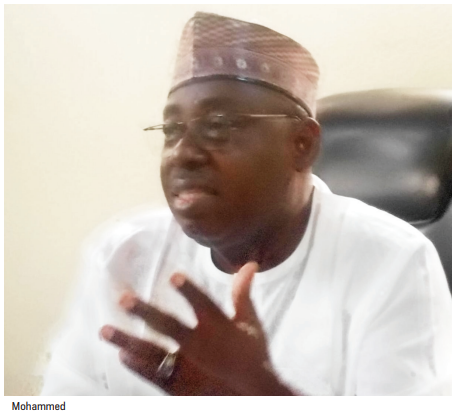

Hon. Bala Yunusa Mohammed is the Acting National Chairman of the New Nigeria Peoples Party (NNPP). In this interview with some journalists, he speaks on various issues concerning the 2027 general elections. He, however, says that NNPP is still open for coalition arrangements with other political parties. JOHNCHUKS ONUANYIM reports
Chairman, the 2027 election is around the corner. How prepared is the NNPP to participate in the election. Thank you very much. I want to state clearly that the NNPP is a nationwide political party in Nigeria with a strong followership across the country. You will recall that the Independent National Electoral Commission (INEC) recently released the timetable for party membership registration, and we have concluded ours successfully.
We met the threshold required by INEC and have registered members across the 36 states and the FCT. So, I can confidently say that we are prepared. Yes, we have faced major challenges, particularly the defection of some of our key political actors from the NNPP to the ADC and now the NDC.
Nevertheless, we remain strong and ready for the 2027 general elections. We have already commenced the sale of nomination forms for aspirants seeking to contest from the presidential level down to the State Houses of Assembly. Our party remains open to all interested aspirants who wish to contest under the NNPP platform.
Talking about the submission of your membership register to INEC, your party appears factionalised. Which faction did INEC recognise — your faction, the other faction, or both?
As far as I am concerned, the NNPP is not factionalised. INEC has recognised our leadership since the 2023 general elections, and we remain the bonafide leadership of the party.
Even at the recent INEC retreat in Lagos, which concluded today, our leadership was officially invited. Most of INEC’s interactions have been with the NNPP identified by the academic cap and book logo with the red-white-red colours. If you check the INEC website, you will see our party there.
You will not see the other faction because we are the recognised leadership. In addition, we submitted our membership register to INEC. Anyone whose name is not on that register is not a member of the NNPP. INEC has the soft copy of our membership register, and Nigerians can verify that we have members across the 36 states and the FCT.
What has been the response from party members, especially with INEC’s timeline ending by May 30? The response has been encouraging; despite the challenges we currently face. A number of our loyal party members and aspirants have moved to the NDC, and that has affected us to some extent. However, we still have committed members who are willing to contest under the NNPP platform.
We have received significant interest from aspirants for the Senate, House of Representatives, and State Houses of Assembly. We are also expecting more governorship and presidential aspirants to purchase forms. Our forms are still on sale, and the process will close on the 19th or 20th of this month. So, the door remains open to anyone interested in contesting on our platform.
Does the NNPP intend to form an alliance with the APC, NDC, ADC, or any other political party?
You may recall that about two weeks ago, we attended a meeting in Ibadan where representatives of about 12 political parties met to discuss possible collaboration and strategies to challenge the ruling party.
Discussions are ongoing, and political alliances are part of democratic politics?
There appears to be crisis in many opposition parties, including the NNPP, Labour Party, ADC, and SDP. What do you think is responsible for these crises. As you rightly observed, many opposition parties are experiencing internal crises.
The only party that appears not to have open crises is the ruling party, although they also have their own internal issues which they are trying to manage quietly.
This situation suggests that there are deliberate efforts to weaken opposition parties in order to create a one-party state in Nigeria. There are attempts to put obstacles in the way of opposition parties so they cannot effectively compete in the political space.
However, despite these challenges, opposition parties are surviving, and by the grace of God, many of them will field candidates to contest against the ruling party in 2027.
How many aspirants have purchased nomination forms from the NNPP so far?
Someone is handling that aspect on my behalf and can provide the exact figures. But I know that aspirants for the House of Representatives, State Houses of Assembly, Senate, and governorship positions have already purchased forms.
As I mentioned earlier, the forms are still on sale, and we expect more aspirants before sales close on Tuesday. Kano used to be a stronghold of the NNPP under Senator Rabiu Musa Kwankwaso.
With his exit and the governor’s defection to the APC, can the party still maintain its influence in Kano. The reality is that many of our candidates, loyalists, and party members moved with him. At the moment, we are still consulting and reviewing the situation to determine whether we will field candidates in Kano or not.
We do not want to create confusion among our members because many of those who moved to the ADC or NDC still identify strongly with the NNPP, having built their political structures from the party. So, it is still a work in progress, and whatever decision is eventually reached will guide our next steps.
With the options of consensus and direct primaries provided in the Electoral Act, which method is the NNPP likely to adopt?
Direct primaries are more expensive than consensus arrangements. As I mentioned earlier, the party has been affected by defections, so we are managing both financial and organisational challenges.
However, one major strength of the NNPP is that most of our party executives across the states are still intact. For now, we are leaning towards consensus arrangements. But where there are multiple aspirants for a position and consensus cannot be reached, we will conduct primaries in line with the Electoral Act.
What is your message to the ruling APC, especially with accusations that it is responsible for the crises in opposition parties?
Our position is not different from that of other opposition parties because we are also facing similar challenges. I want to call on the ruling APC to ensure free and fair elections in Nigeria.
If elections are truly free and credible, Nigerians will freely choose the leaders they want rather than having candidates imposed on them.
What we are seeing today in the ruling party is largely imposition. People are not being allowed to freely choose their leaders?
We are also concerned about aspects of the Electoral Act that restrict political movement. If someone is dissatisfied in one party after the registration process, that person should have the freedom to move to another party and contest elections. Democracy should guarantee the right of Nigerians to vote and be voted for without unnecessary restrictions.
Do you see this as a sign of desperation by the ruling party?
Yes, I see it as desperation because if such restrictions were not in place, many aspirants who lost out during party primaries would move to other political parties to pursue their ambitions.
Finally, how would you rate the APC government over the last three years?
We are all living in Nigeria, and we can see the realities around us. The economy is biting hard, especially at the grassroots level. Nigerians are suffering.
In the last three years, many critical sectors have continued to struggle — employment, healthcare, security, and the economy generally. Kidnappings and insecurity have become widespread across the country, from Sokoto to Port Harcourt.
The cost of living is extremely high, and fuel prices have become unbearable for ordinary Nigerians. There are also concerns about aspects of the new tax laws which many Nigerians fear could worsen economic hardship when fully implemented.
These are serious issues confronting the country. Nigerians deserve better governance, improved security, economic relief, and leadership that prioritises the welfare of the people. By the grace of God, I believe the opposition will come together and provide Nigerians with a credible alternative in 2027.