


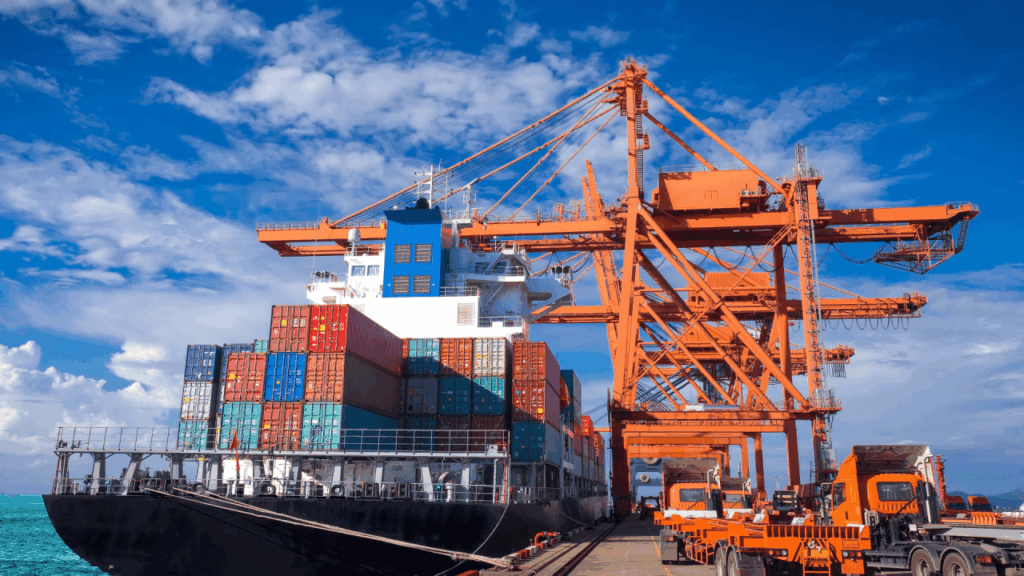
As Nigeria gradually gains ground in the export of petroleum products, a minimum of 15 vessels departed in the last two months of 2025 to Spain, United States, Cameroon and other destinations with 602,000 tonnes of Jet A1 worth N577 billion ($398 million).
Findings revealed that demand for the fuel in Spain and United States was on the increase. In December, Nigerian Ports Authority (NPA)’s shipping position revealed that the Atlantic Sunflower loaded 40,000 tonnes; CL Toni Morrison, 37, 000 tonnes; Pinarello, 25,000 tonnes; UM Balwa, 38, 000 tonnes; Elandra Redwood, 40,000 tonnes; Initiator, 40,000 tonnes and Odyssean, 40,000 tonnes. Within the period, another vessel, Pinarello, was position to load 25, 000 tonnes of the fuel as CL Toni Morrison headed to Houston, United States. Also, the shipping data revealed that eight of the vessels had left in November with 342 million litres (342,000 tonnes).
It also noted that Pacific Blue offloaded its consignment at the port of Baton Rouge, United States as Doric Pioneer berthed at Lome Anchorage, Togo with 44,000 tonnes of the fuel.
Also, Atlantic Sunflower berthed at Lome Port to offload its products, while Ardmore Seavantage is at North East Atlantic Ocean en route to the port of Portland, United Kingdom. Recall that in July 2025, the shipping data indicated that 488,000 tonnes of the fuel left the country, while 527,000 tonnes tonnes in June. The export increased by 62 per cent from 186,000 tonnes in May to 488, 000 tonnes in July.
The shipping data also revealed that 13 vessels left the Dangote Jetty in Lagos July and 12 vessels in June to various destinations as Grace lifted 44,000 tonnes; MT Amif, 19,000 tonnes; Elandra Palm, 40,000 tonnes and STI Meraux, 37,000 tonnes, Torm Alexandra, 44000 tonnes; Binta Saleh, 44,000 tonnes; Al Khtam, 44,000 tonnes and MT Hellas Fighter, 44,000 tonnes. In June, 341,000 tonnes left the country and 186,000 tonnes in May to various destinations as the International Air Transport Association (IATA) and the International Civil Aviation Organisation (ICAO) have championed the adoption of Sustainable Aviation Fuel (SAF) in order to achieve net-zero CO2 emissions by 2050.
In an effort to meet environmental targets, the African Civil Aviation Commission (AFCAC) called on Dangote Refinery to lead the charge in SAF production, noting that Africa, home to one of the fastest-growing aviation markets, must position itself at the forefront of sustainable aviation fuel development.
With Dangote Refinery’s advanced infrastructure and capacity, AFCAC saw it as a potential key player in reshaping the continent’s aviation fuel landscape, making SAF production a priority for future-proofing the industry.
Meanwhile, NGO Climate Catalyst and the SASHA Coalition has stressed the need for robust due diligence to ensure investments in aviation biofuels and e-fuels are both environmentally sustainable and financially sound.