
President Bola Tinubu’s recent list of ambassadorial nominees has raised much dust. BIYI ADEGOROYE traces historical underpinning of appointment of such top government representatives in foreign countries, extolling the values of character, competence and adherence to national interest.
The release of the 68-man ambassadorial nominees’ list has sparked not a little controversy in the last one week. Since the recall of former Ambassadors in September 2023, not a few Nigerians have looked forward impatiently to the appointment of new ones.
Expectedly, the crop of Nigeria’s representatives in any country will catch great attention for many reasons – Nigeria’s current image in the international arena and the status of the country as the most populous black nation whose citizens are found in all parts of the globe.
Of equal importance is the geo-political and economic relevance of Nigeria in the international arena, especially with the current disturbing level of insecurity in the country. The nominees have a herculean task ahead of them, as potential drivers of President Bola Tinubu’s foreign policy 4Ds approach – Diaspora.
Development, Demography, Democracy and Global Impact. Besides representing President Tinubu and the sending state Nigeria in the receiving state, the ambassadors and high commissioners must promote Nigeria’s concentric circle ….. and excel in such vital areas as economic and cultural diplomacy, serving Nigeria’s national interest at all times.
Nigeria’s historical milestone in the appointment of ambassadors dated back to 1958, when the country’s first set of ambassadors, then referred to as the 12 apostles, were appointed by the office of the British Prime Minister. Top on the list was Phillip Asiodu and Ambassador Akinfelure, who were later joined by additional envoys at independence in 1960. Since then, pedigree, calibre, competence and temperament of the nominees were top requirements.
That was expected because they were adroit statesmen, highly competent in statecraft. Their selection was in tandem with GrekoRoman era painstaking process where only Princes and nobles who had served in the King’s place, Generals, aristocrats and noblemen were accorded the rare privilege to represent their respective Kings and later Presidents abroad.
But through the years, merit, professionalism, political representation, inclusivity, diversity, specialized expertise, character patronage and prestige have become vital parts of the prerequisites. Skill and cognate experience in diplomatic protocols were never compromised.
It is for this reason the inclusion of 34 career ambassadors in the President Tinubu’s lists elicited much excitement. This is more so because as professionals who are grounded in the diplomatic scholarship and praxis, they would be in familiar terrain to sustain cohesion and mutually rewarding relations in the diplomatic community.
Known for being round peg in round hole, they are versed in what the celebrated British Diplomat, Earnest Satow, described as the use of tact and intelligence in the conduct of state affairs in the international arena. However, in modern democracy, other considerations like ability to play politics in the international arena and geographical spread of appointment in the sending state became part of the deal.
Career ambassadors like, Maimuna Ibrahim; Enpeji Monica Okochukwu, Bauchi: Ambassador Mohammed Mahmoud Lele, Bayelsa: Endoni Sindup, Ambassador Ahmed Mohammed Monguno, Ambassador Jen Adams Ni Okun Michael, Ambassador Clark Omeru Alexandra, Chima J. Leoma Davies, Oduma Yvonne Ehinose, Wasa Shogun Ige, and Ambassador Adeyemi Adebayo Emmanuel. Similarly, the appointment of Ambassador Onaga Ogechukwu Kingsley; Ambassador Magaji Umar; Ambassador Mohammed Saidu Dahiru, Ambassador Abdul Salam Abus Zayat, Ambassador Shehu, Ambassador Aminu Nasu, Abubakar Musa Musa, Ambassador Haidara Mohammed Idris, Ambassador Bako Adamu Umar, Ambassador Sulu Gambari, Ambassador Romata Mohammed Omobolanle and Ambassador Shaga John Shama were received with aplomb.
There were also no prevarification that Salau Hamza Mohammed Ambassador Ibrahim Dan Lamy, Adjola Ibrahim Mopolola, Ruben Abimbola Samuel, Ambassador Akonde Wahab Adekola, Ambassador Ariwani Adedokun Esther, Ambassador Gedagi Joseph John, Ambassador Luther Obomode Ayo katata, Danladi Yakubu Yaku and Bidu Dogondagi. This has been attributed to their antecedents and competence.
Controvercies over poltical appointees
Not so can be said about the political appointees, who form the bulk of the appointment. Apart from the trio of Ayodele Oke, a retired NIA chief whose competence is incontrovertible, Amin Mohammed Dalhatu and Retired Colonel Lateef Kayode Are;s antecedents in their respective security career speak for them.
Hence, Nigerians were not baffled that these top individuals have been cleared for posting to France, UK and the United States of America.
Nigerians have expected that the over three years into President Tinubu’s administration should have provided ample time to choose more on the basis of mystery of statecraft than political patronage.
Recall that the then President Olusegun Obasanjo, in a bid to deliver headhunted statesmen like Christopher Kolade as the High Commissioner to the United Kingdom, while Prof Geoge Obiozor was his counterpart to the United States during the same period.
But not so could be said of the Muhammadu Buhari era, as he was said to be compensatory in style, exhibiting penchant for old and less energetic men.
He appointed Justice George Oguntade, a retired Justice of the Supreme Court, and an octogenarian retired judge, Sylvanus Nsofor, as High Commissioner to the United Kingdom and United States respectively. The latter died at 85 in Maryland.
An ambassador nominee added a comic angle to the whole exercise during a Senate Committee of Foreign Affairs screening of Buhari’s when he betrayed poor computer usage. Unperturbed, he didn’t see that as a minus but boldly the desire to hire people to manipulate it!
Character and morality
It has also been argued that some of the nominees lack the character and temperament required of such noble office. One wife beater and intemperate nominee featured on the list, along with a conflict-ridden public figure with chameleonic disposition who has rubbished the character of the President in the international sphere.
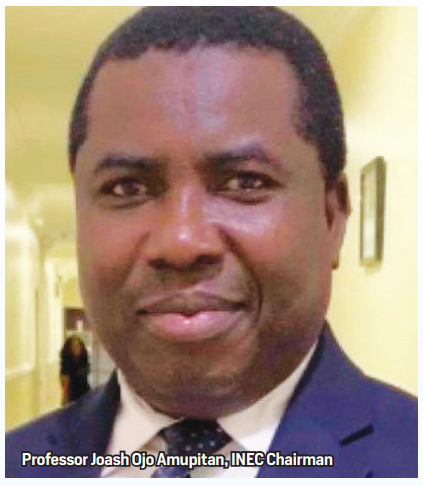
But of all these, the appointment of former INEC Chairman, Prof. Mahmood Yakubu, is one that drew much angst among many Nigerians, including the opposition.
Former Vice President Alhaji Atiku Abubakar, said Yakubu’s nomination is morally indefensible. To him, the nomination sends the wrong message to the current leadership of the commission “that partisan, compromised, or poorly executed elections may ultimately be rewarded.”
He said the nomination raised serious concerns, adding that it may appear “a quid pro quo rather than a recognition of merit.” “Let me state without ambiguity: under no circumstance would I, as President of the Federal Republic of Nigeria, nominate the immediate past INEC Chairman for an ambassadorial position.
This is not the path to strengthening our democracy or restoring public trust in our institutions,” he said. Similarly, an APC chieftain, Otunba. (Dr) Abdulfalil Abayomi Odunowo, said the list did not take adequate care of those who worked for the party, sending a dangerous signal ahead of the 2027 elections. Odunowo said: “The truth is simple: no political party survives on structures alone it survives on trust.
And when a ruling party consistently fails to reward loyalty, commitment, and sacrifice, it creates the very conditions that weaken its own base.” International Relations scholar, Prof Tunde Adeniran, however, said the President’s choice was in tandem with his foreign policy objectives.
“What the President wants to achieve externally determines who he appoints and sends out, because they are representatives of the country. Those are the calculations that go into such appointments. Besides their backgrounds, there is room for training and orientations of the people he is sending out,” he said.
Observers and experts have something in common: The Senate should do a painstaking screening of the nominees and drop anyone with baggage in order to give the country the best required at this point in time.