

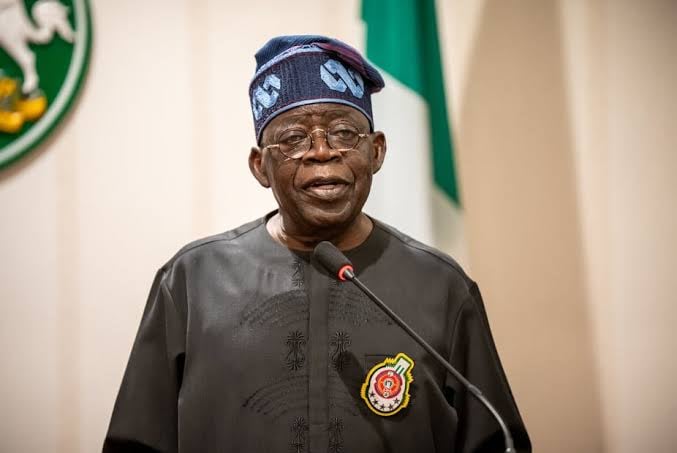
President Bola Tinubu has asked the National Assembly to consider and pass the Appropriation, Repeal and Re-enactment Bill 2 of 2024, involving a total proposed expenditure of N43.56tn for the 2025 fiscal year.
The request was conveyed in separate letters to the Senate and the House of Representatives on Wednesday. In the Senate, the letter was read at plenary by the Senate President, Godswill Akpabio.
A corresponding letter titled “Transmission of the Appropriation (Repeal and Re-enactment) Bill, 2024–2025”, with Reference No: PRES/134-1/17/HR/ARRENB, dated December 16, 2025, was addressed to the Speaker of the House, Abbas Tajudeen.
In the letter, Tinubu said the bill was submitted in line with established constitutional and legislative appropriation processes, explaining that it seeks “authorisation for the issuance of N43,561,041,744,507 from the Consolidated Revenue Fund of the Federation for the year ending December 31, 2025.”
The President detailed the proposed expenditure to include N1tn for statutory transfers, N8.2tn for debt servicing, N11.2tn for recurrent non-debt expenditure, and N22.2tn for capital expenditure and development fund contribution.
The letter to the House specified the breakdown as “N1.74tn for Statutory Transfers, N8.27tn for debt service, N4.11tn for recurrent (non-debt) expenditure, and N22.28tn for capital expenditure/development fund contribution.”
According to the President, the proposed legislation is aimed at “ending the practice of running multiple budgets, while ensuring improved capital performance for both the 2024 and 2025 capital budgets.”
He stated, “This bill is to bring an end to the practice of running multiple budgets concurrently, while at the same time ensuring reasonable – indeed unprecedentedly high – capital performance rates on the 2024 and 2025 capital budgets.”
Tinubu said the bill would also provide “a transparent and constitutionally grounded appropriation framework for consolidating critical and time-sensitive expenditures undertaken in response to emergency situations.”
He added, “It further provides, through a transparent and constitutionally grounded appropriation mechanism, for the orderly consolidation and appropriation of critical, time-sensitive expenditures necessarily undertaken in response to emergency exigencies (advancing the collective well-being of Nigerians and safeguarding national security) – while reinforcing fiscal discipline, accountability, and prudent public financial management.”
“The bill would advance the collective well-being of Nigerians, safeguard national security, and reinforce fiscal discipline, accountability, and broader public financial management,” the President noted.
He added that the proposal strengthens implementation discipline by ensuring that appropriated funds are released and applied strictly for the purposes specified in the schedules.
The letter to the House elaborated, “The House of Representatives may wish to note that the bill also strengthens implementation discipline and accountability by, among other provisions: requiring that appropriated funds are released and applied strictly for the purposes specified in the Schedules; providing that virement may only be effected with prior approval of the National Assembly; setting out conditions for corrigenda where genuine errors may hinder implementation; requiring separate recording of excess revenue and limiting its expenditure to an Act or approval of the National Assembly; and mandating due-process compliance and periodic reporting on releases and agency revenues/assistance.”
Tinubu urged both chambers to give the bill expedited consideration. In the Senate, responding, Akpabio said the President’s letter had been referred to the Senate Secretariat to take the necessary legislative steps.
In the House of Representatives, after the letter was read at plenary, the Deputy Speaker, Benjamin Kalu, who presided over the session, ruled that the communication be taken as First Reading and directed the Majority Leader, Prof Julius Ihonvbere, to move that the bill be scheduled for Second Reading.
The move, however, drew objections from several lawmakers, who insisted that copies of the President’s letter and the bill should first be circulated to members for proper study before further legislative action.
Despite the protests, the Deputy Speaker proceeded with the process and, following the secondment of the motion, referred the bill to the House Committee on Appropriations for further legislative consideration. Tinubu’s request comes amid ongoing concerns over Nigeria’s practice of running multiple budgets simultaneously.
In recent years, delays in budget passage, late releases of funds, and frequent supplementary appropriations have resulted in overlapping fiscal cycles, with capital components of previous budgets extending well into subsequent years.
This situation has often complicated budget implementation, weakened legislative oversight, and blurred fiscal accountability, as ministries, departments, and agencies continue to draw from different appropriation laws concurrently.
The Tinubu administration has argued that the repeal and re-enactment of the 2024 budget into the 2025 fiscal year is intended to streamline public finance management, improve capital project execution, and align budget timelines with actual revenue and expenditure realities.
The proposal, if approved by the National Assembly, would mark a significant departure from Nigeria’s traditional annual budgeting framework and is likely to generate further debate among lawmakers and fiscal policy experts.