
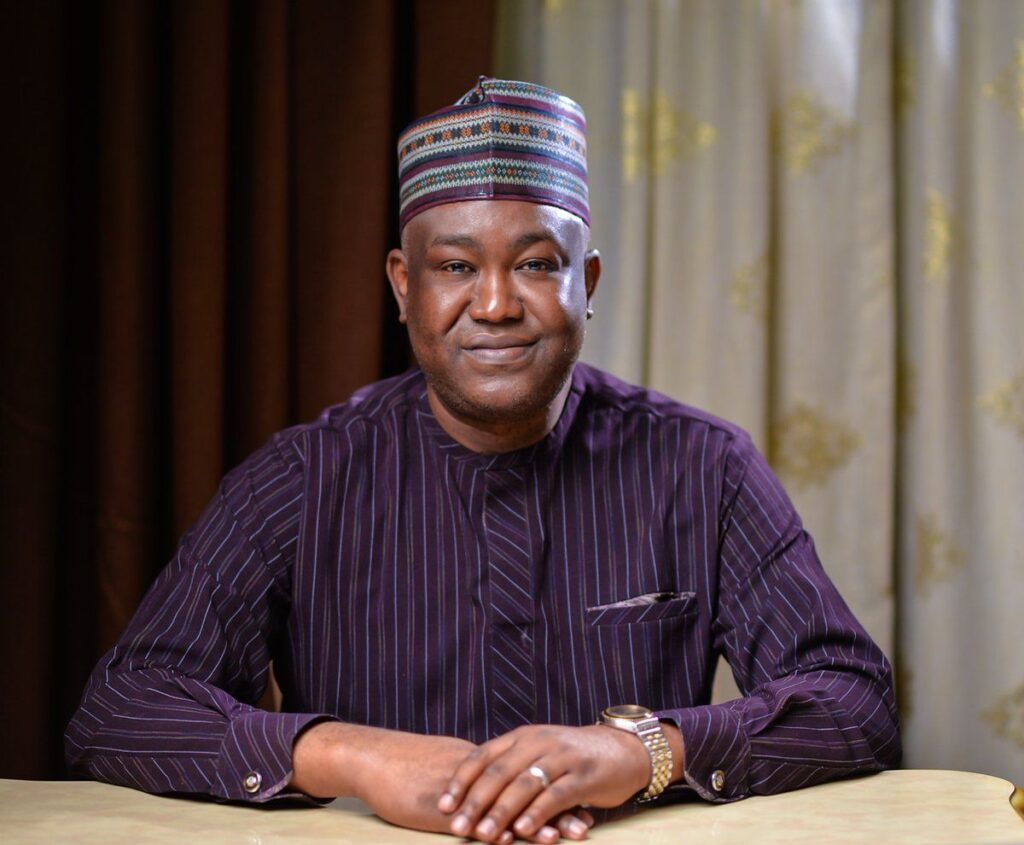
A prominent member of the People’s Democratic Party (PDP), Gbenga Olawepo-Hashim, has said President Bola Tinubu is fully aware that it will be difficult for the All Progressives Congress (APC) to secure 20 per cent of votes in a credible, free and fair election.
Olawepo-Hashim, who spoke on Channels Television’s Sunday Politics programme, argued that the ruling party’s alleged reluctance to embrace full electoral transparency suggests underlying concerns about its popularity.
According to him, the PDP remains the most viable and competitive political party in Nigeria despite internal challenges and defections that have rocked the party in recent times.
“If the APC could boast of about 32 governors, then they should be happy to organise free and fair elections. They should be happy to transmit results from the polling units to the IReV. Why are they afraid if PDP is dead?”
“If the opposition is dead and buried, why are they afraid of free and fair elections? The APC is afraid.
“All the propagandists can celebrate President Tinubu as a strategist, but he is certainly not a fool. He has done the polls, and he knows that in a free and fair election, the APC cannot score 20 per cent of the vote.
READ ALSO:
“PDP is the most competitive, and that is why there are so many efforts to destroy the PDP. Those who believe it is destroyed – that is their own delusion,” he said.
Speaking further, he maintained that internal tensions within the APC could also weaken the party ahead of the 2027 elections.
“Even in their party, they know those who are waiting to bite them from the back. They have more issues than the PDP,” he added.
The PDP chieftain attributed political defections to what he described as elite opportunism rather than genuine grassroots support.
“The Nigerian political elite is very greedy. They want to stay where the pie is. But the grassroots are more honest. When governors jump, the grassroots do not necessarily follow,” he stated.
Olawepo-Hashim warned against celebrating the weakening of opposition parties in Nigeria’s democratic structure.
“Anybody celebrating the collapse of multi-party democracy should have their heads knocked.
“What the PDP needs is a joint NEC and convention, not factions,” he noted, adding that the party is witnessing ‘huge digital registration’, which, according to him, shows it is far from finished.
His comments come amid intensifying political manoeuvres and alignments ahead of the 2027 general elections, with both ruling and opposition parties strategising for what is expected to be a highly contested race.
In the February 2023 presidential election, Tinubu, under the APC, was declared the winner by INEC.
He scored 8.79 million votes (36.61%), ahead of Atiku Abubakar (PDP) with 6.98 million (29.07%), Peter Obi (Labour Party) with 6.10 million (25.40%), and Rabiu Kwankwaso (NNPP) with 1.49 million (6.23%).
Tinubu also met the constitutional requirement by winning at least 25% of the votes in 30 states. Tinubu, Atiku, and Obi each won 12 states, while Kwankwaso won only Kano State.
As of March 2026, preparations for the 2027 election have begun. Tinubu has been endorsed by APC leaders to run again, while opposition politicians are discussing forming a coalition to challenge him.
Peter Obi and Rabiu Kwankwaso have held talks on working together, while Atiku Abubakar remains a key opposition figure.
There is also speculation that former President Goodluck Jonathan may run. Other names mentioned include Rotimi Amaechi and Seyi Makinde.
Some opposition groups are considering using the African Democratic Congress (ADC) as a common platform.
Since 2023, the APC has gained strength, now controlling 31 of 36 states due to several defections from the PDP and other parties. Many governors and lawmakers have switched to the APC.








