
On Tuesday, 25th, November, 2025, I travelled to Ilorin to receive a Distinguished Alumnus Award from the University that shaped my early adulthood, the University of Ilorin. It was a proud moment, one that filled me with gratitude.
Yet beneath that pride flowed a deep current of emotion I had not anticipated. It has been 40 years since I first journeyed to Ilorin as a hopeful undergraduate in 1985. Back then, the road from my hometown, Ode Irele, Ondo State, like a passage into a bigger world — through Ile-Ife, Osogbo, ErinIle, Offa, Ijagbo, Ajase-Ipo, Omupo, Idofian to Ilorin.
Those towns were alive in ways words can barely capture now. They buzzed with the hum of factories, the confidence of industry, the belief that tomorrow would be better than today. Osogbo Rolling Mills roared with purpose.
Osogbo Tools Industries forged metal and hope in equal measure. Erin-Ile Paper Mills and Kwara Paper Converter fed schools, offices, and dreams. Ijagbo Brewery brewed the beloved, “Noble Beer,” a symbol of local pride. Okin Biscuit in Offa perfumed the air with that unmistakable aroma children loved. These were not just factories.
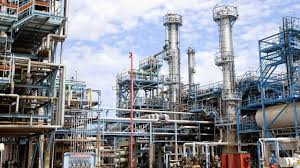
They were the heartbeat of communities, evidence that Nigeria could build, produce, and prosper. But as I retraced that route this week, my heart grew heavy. Those same giants now stand wounded. Silent. Gates eaten by rust, roofs caving in, walls claimed by weeds.
Places that once hired thousands now echo with emptiness. It is not only the structures that broke, something within our national spirit cracked as well.
I felt a sadness I could not shake. How did industries that once symbolised our promise come to such a tragic end? How did a country with so much potential allow the lifeblood of its manufacturing sector to drain away? The corridor I travelled is no longer a belt of hope.
It is a cemetery of abandoned dreams and a reminder of what Nigeria could have become. Yet in the midst of this grief, one place lifted my spirit — the University of Ilorin. In contrast to the decay around it, the University has flourished.
The campus is more beautiful, the structures stronger, the administration more focused. The growth is real, visible, and reassuring. It reminded me that progress is still possible, that institutions can evolve, and that dedication still matters.
Receiving the Distinguished Alumnus Award was deeply moving. I felt the weight of the honour and the warmth of being remembered by the institution that helped set my life on its course. But as I held the plaque, my joy mingled with a sharper emotion and a sense of urgency. The decline along the Osogbo –Ilorin corridor is not just an economic failure.
It is a national heartbreak. If Nigeria truly hopes for growth, dignity, and stability, we must rescue our industrial soul. Beyond economics, the silence of these abandoned factories carries a more dangerous consequence — insecurity.
Where industries die, despair often takes root. Idle hands, once productively engaged, become vulnerable to crime, extremism, and social unrest. Many of the security challenges confronting Nigeria today are the consequences of bad governance, forgotten towns, closed factories, and broken promises.
This is why Nigeria’s security conversation must move beyond bullets and boots alone. A truly secure nation is one that offers its citizens opportunity, purpose, and hope. Reviving industrial corridors like the Osogbo –Ilorin axis is not merely an economic imperative; it is a non-kinetic security strategy. Jobs are not just sources of income. They are instruments of peace.
Non-kinetic approaches to insecurity demand that we invest deliberately in education, industry, infrastructure, and social cohesion. They require us to see development as a security asset and unemployment as a security threat. When young people have factories to work in, skills to sell and futures to believe in, the appeal of violence fades.
The contrast between the decay of once thriving industries and the steady growth of the University of Ilorin offers a powerful lesson. Institutions flourish where leadership is consistent, planning is deliberate, and commitment is sustained. Nigeria must apply these same principles to its industrial revival.
My journey to Ilorin, therefore, was not just personal. It was symbolic. It reminded me that while we have lost much, we are not beyond redemption. The ruins along the road should not only provoke nostalgia; they should provoke resolve.
If Nigeria is serious about peace, unity, and progress, we must rebuild the physical and human infrastructure that once made communities productive and proud. Security achieved through development lasts longer than security imposed by force.
Nigeria needs a deliberate national industrial revival strategy anchored on regional value chains, not isolated projects. Industrial corridors such as the Osogbo –Ilorin axis should be designated as priority recovery zones, supported by targeted tax incentives, affordable power, infrastructure, and access to long-term financing for manufacturers.
Public–private partnerships must move from announcements to execution, with clear timelines, accountability mechanisms, and performance benchmarks. Equally critical is the alignment of education and skills development with industrial needs.
Technical colleges, polytechnics, and universities must be integrated into local production ecosystems, ensuring that graduates are employable and industries are working. Nigeria does not lack plans; it lacks disciplined implementation.
The ruins of our industrial past are evidence of what neglect costs us. The opportunity before us is to turn policy into productivity and productivity into peace.
A government that rebuilds industry does more than grow GDP — it stabilises society, restores dignity, and secures the nation.
Hon. Abayomi Sheba, Ph.D. is an Abuja based Attorney. He was a member of the Fourth National Assembly and Former Ag. Executive Chairman of the Federal Character Commission, Abuja.