- How governors weaponize impeachment, forceful resignation to tame their deputies
FELIX NWANERI writes on the ease with which governors discard their deputies through impeachment or forceful resignation, recurring developments, which have made the position of a deputy governor less attractive
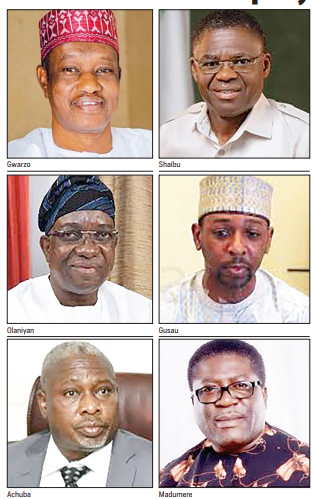
The move by members of Kano State House of Assembly to impeach the deputy governor of the state, Aminu Gwarzo, has again brought to the fore the way deputy governors are easily discarded by governors. The legislators, who initiated the process during plenary last week, accused the deputy governor of gross misconduct, abuse of office, breach of public trust and financial malfeasance.


The majority leader of the Assembly, Lawan Dala, read the notice of impeachment against the deputy governor. He alleged that the deputy governor, while serving as Commissioner for Local Government, “willfully participated in diversion of funds allocated to local government administrations for purposes other than those for which they were appropriated.”
Dala particularly stated that between June 2023 and January 2024, Gwarzo received a kickback of N1.5 million from each of the 44 local governments monthly, amounting to N66 million per month for seven months, totalling N462 million for personal or improper benefit. The majority leader also claimed that between February 2024 and July 2024, the deputy governor “received cash returns under the guise of executing certain special assignments, amounting to N3.255 million from each local government monthly, totalling N726 million for personal or improper benefit.”
He also alleged that the deputy governor abused his office by using his position as Commissioner for Local Government to facilitate the release of funds to confer undue advantage, through payments of N10 million by each of the 44 councils to a pharmaceutical company. The majority leader, who disclosed that the impeachment notice was signed by 38 members of the House, urged the Speaker, Jibril Falgore, to transmit the notice to the deputy governor.
Following the presentation, Speaker Falgore directed that the deputy governor be formally served a twoweek notice in line with constitutional provisions governing impeachment procedures. Gwarzo fell out with his principal, Governor Abba Yusuf, when he declined to defect with him from the New Nigeria Peoples Party (NNPP) to the All Progressives Congress (APC) on January 26.
The duo, who are staunch members of the Kwankwasiya Movement led by a former governor of Kano State, Senator Rabiu Kwankwaso, had before Yusuf’s defection to the APC enjoyed a good political partnership.
Both contested the 2019 governorship election in 2019 on the platform of the Peoples Democratic Party (PDP), which the lost to the candidates of the APC. They paired again in the 2023 This, perhaps, informed why the Kwankwasiya Movement insisted that the impeachment move against Gwarzo could deepen political divisions and undermine the mandate of the people. Spokesperson of the group, Dr. Habibu Saleh, who stated this, cautioned political actors in the state against actions that could be perceived as politically motivated.
His words; “The people of Kano are closely watching the unfolding events, and there is growing concern that the impeachment move may be driven more by political considerations than by genuine constitutional necessity. “While the constitution provides mechanisms for legislative oversight, impeachment remains one of the most serious powers available to lawmakers and should not be deployed for political convenience. “Impeachment must never be reduced to a tool for settling political disagreements or rearranging political alignments. It must be guided strictly by justice, fairness and the interest of the people.”
Saleh reminded the lawmakers that the mandate that brought the present administration to power was the result of the collective efforts of thousands of Kwankwasiyya supporters across Kano. He said: “The victory that produced this government was not the achievement of any single individual. It was the product of the sacrifices, loyalty and unity of Kwankwasiyya faithful across the 44 Local Government Areas of Kano State. “Any action that appears to target key figures within the administration risks sending the wrong message to supporters who worked tirelessly to secure electoral victory.
“Those in power must remember the collective struggle that made their success possible. Political authority should never be used in a way that creates the impression of abandoning the alliances and loyalties that built the movement,” he said. The NNPP, on its part, said the party is not surprised by “the desperate antics” of the Kano assembly, describing the move “the dying kick of a political class that has lost its soul.”
NNPP’s National Publicity Secretary, Ladipo Johnson, in statement on behalf of the party’s leadership said the deputy governor “is being persecuted” for refusing to join the “bandwagon of those who have betrayed the sacred mandate given by the people of Kano.”
According to Johnson, “they are not hunting a man; they are hunting the mandate of the people of Kano. We see this so-called impeachment process for what it is. It is a transparent attempt to pave the way for the complete APC takeover of a mandate they could not win at the polls or through the courts. It is a political execution disguised as a constitutional process.”
Impeachment as a legislative tool
Impeachment proceeding is seen as a serious legislative business because of its appreciation as a technique for the function of the Principle of Checks and Balances. For instance, the constitution provides for a detailed and elaborate procedure to be followed before the president or governor of a state can be impeached. This procedure is sequential and must be duly followed. It is a chain of events, which must not be broken at any stage. However, that is not the case in the removal of a deputy governor.
The procedure is so simple that an occupant of the position could be ousted within the blink of an eye. While sections 143 of the 1999 Constitution (as amended), spells out how a president could be removed from office, Section 188 provides for how a governor or deputy governor of a state can also be removed from office. Section 188 (sub-section 1 and 2) states:
“The Governor or Deputy Governor of a state may be removed from office in accordance with the provisions this section whenever a notice of any allegation in writing signed by not less than one-third of the members of the House of Assembly stating that the holder of such office is guilty of gross misconduct in the performance of the functions of his office, detailed particulars of which shall be specified.”
To avoid ambiguity, sub-section 11 of the section defined “gross misconduct” as “a grave violation or breach of the provisions of this Constitution or a misconduct of such nature as amounts in the opinion in the House of Assembly to gross misconduct.” It is this section that most state Houses of Assembly have relied on in impeaching deputy governors at will since 1999, when Nigeria returned to civil rule although the courts later nullified some the impeachments.
Plight of deputy governors
Section 187(1) of the constitution provides that “In any election to which the foregoing provisions of this part of this chapter relate, a candidate for the office of governor of a state shall not be deemed to have been validly nominated for such office unless he nominates another candidate as his associate for his running for the office of governor, who is to occupy the office of deputy governor; and that candidate shall be deemed to have been duly elected to the office of deputy governor if the candidate who nominated him is duly elected as governor in AC.
Despite this constitutional provision, the job of a deputy a governor is no doubt the most frustrating for most politicians because occupants of such position are hardly celebrated.
They are not only silent, but act only at the wish of their bosses, most often, not according to what is prescribed for them by the constitution. In most cases, governors only assign some duties to their deputies, when they deem it fit.
This explains why deputy governors been seen many as mere “spare tires” over the years. Besides under-utilization, outgoing governors hardly factor their deputies in their succession plans. In the present dispensation (Fourth Republic), only three out-going governors could be said to have endorsed their deputies to succeed them.
They are Sani Yerima, Rabiu Kwankwaso and Mohammed Badaru Yerima, as governor of Zamfara State between 1999 and 2007, endorsed and worked for the emergence of his then deputy, Aliyu Shinkafi, as his successor. Kwankwaso, on his part, made sure that Abdullahi Ganduje, who served as his deputy (2007 and 2007/2011and 2015) succeeded him, while Badaru, who served as governor of Taraba State between 2015 and 2023, ensured that his then deputy, Umar Namadi, succeeded him.
While there is no doubt that underutilization of deputy governors by their principals is usually responsible for the frosty relationship between them, the consequence of this development is the governors’ use of the instrumentality of impeachment via the state Houses of Assembly to sack their deputies at will.
Catalogue of impeachments, forced resignations
Perhaps, the ease with which the governors booth their deputies out of office, explains the long list of deputy governors, who have been relieved of their positions through impeachment in the present dispensation (Fourth Republic).
They are Iyiola Omisore (Osun 2002), Abiodun Aluko (Ekiti, 2005), Chris Ekpenyong (Akwa Ibom, 2005), Femi Pedro (Lagos, 2007), Garba Gahdi (Bauchi, 2009), Peremobewei Ebebi (Bayelsa, 2010), Sani Danladi (Taraba 2012), Jude Agbaso (Imo, 2013), Sundayy Onyebuchi (Enugu, 2014), Ali Olanusi (Ondo, 2015), Eze Madumere (Imo, 2018), Simon Achuba (Kogi, 2019), Mahdi Gusau (Zamfara, 2022), Rauf Olaniyan (Oyo, 2022) and Philip Shaibu (Edo, 2024).
However, there were deputy governors, who resigned from their positions after falling out with their principals to avoid impeachment. They include Kofo Bucknor-Akerele (Lagos, 2002), Ibrahim Kwatalo (Jigawa 2002), Enyinnaya Abaribe (Abia, 2003), Biodun Olujimmi (Ekiti, 2006), Aliyu Wamakko (Sokoto, 2006), Suleiman Argungu (Kebbi, 2012), Nuhu Gidado (Bauchi, 2015) and Hafiz Abubakar (Kano, 2018)
Iyiola Omisore –Osun
Omisore served as deputy governor of Osun State under Governor Adebisi Akande from May 29, 1999 to November 12, 2002, when he was impeached by members of the Osun State House of Assembly. He was removed from office by the lawmakers over breach of oath of office and conflict of interest with the state government. He was accused of divulging official secret of the State Executive Council as well as dragging the state government to court.
Chris Ekpenyong –Akwa Ibom
Ekpenyong served as deputy governor of Akwa Ibom State under Governor Victor Attah from 1999 to 2005, when he was impeached by members of the state House of Assembly. He was, however, hurriedly returned to the position, following the intervention of then President Olusegun Obasanjo. Ekpenyong was however forced to resign afterwards.
Abiodun Aluko –Ekiti
Aluko, was impeached as deputy governor of Ekiti State by members of the state House of Assembly on September 22, 2005, after a long-drawn face-off with then Governor Ayodele Fayose. Aluko was found guilty of 16 impeachable offences raised against him by the lawmakers, 22 of who voted for his removal.
Femi Pedro –Lagos
Pedro, who served as deputy to the then governor of Lagos State, Bola Tinubu (now president) between 2003 and 2007, was impeached by members of the Lagos State House of Assembly towards the end of his tenure (May 10, 2007) for gross misconduct. Pedro fell out with Tinubu over the former’s decision to back his then Chief of Staff, Babatunde Fashola, as his successor.
But, determined to contest the election, Pedro defected to Labour Party (LP). He lost to Fashola and was served with an impeachment notice. He promptly sent in his resignation letter, but the lawmakers rejected the letter and went ahead to impeach him. Pedro was however pardoned by the Lagos State House of Assembly in 2015 after he reconciled with Tinubu.
Garba Gahdi –Bauchi
Gahdi was impeached by members of Bauchi State House of Assembly on August 13, 2009, over his refusal to defect to the Peoples Democratic Party (PDP) with then Governor Isa Yuguda. The duo were elected on the platform of the defunct All Nigeria Peoples Party (ANPP) before Yuguda dumped the party for the PDP. Gahdi’s decision to remain in ANPP pitted him against his principal and 17 members of the state Assembly who decamped with Yuguda.
Peremobowei Ebebi –Bayelsa
Ebebi served as deputy governor of Bayelsa State during the administration of Timipre Sylva. He was impeached in September 2010 as deputy governor by members of the Bayelsa State House of Assembly after 10 impeachable offences bordering on misconduct and abuse of office were brought against him and he was found guilty of nine.
Sani Danladi –Taraba
Danladi was inaugurated as deputy governor of Taraba State in 2011, a position he held until October 2012, when he was impeached. He was removed from office by 20 out of the 24 members of the Taraba State House of Assembly, who voted in favour of the adoption of the report submitted by a judicial panel that investigated allegations leveled against him.
Jude Agbaso –Imo
Agbaso, who was inaugurated as deputy governor of Imo State alongside then Governor Rochas Okorocha on May 29, 2011, on the platform of the All Progressives Grand Alliance (APGA) was impeached by members of the state House of Assembly on March 28, 2013.
He was impeached after he was indicted of having demanded and received the sum of N458 million as gratification from one of the contractors in the state, Messrs JPROS International Nigeria Ltd. But he insisted in his defence that his ordeal was political. He cited an agreement between his elder brother, Martin and Okorocha on the 2015 governorship election as the main reason why the then governor moved against him.
Ali Olanusi –Ondo
After his first tenure as deputy governor of Ondo State between 2009 and 2012, Olanusi was re-elected alongside his principal, Olusegun Mimiko, on the platform of Labour Party (LP) in October 2012. He, however, defected to All Progressives Congress (APC) in March 2015, having previously defected with Mimiko from Labour Party to the Peoples Democratic Party (PDP) in October 2014.
The consequence of Olanusi’s action was his impeachment by members of the state Assembly in April 2015. Some of the allegations levelled against him include financial misappropriation, absenteeism from official duties and causing disaffection in the state cabinet.
Eze Madumere –Imo
Madumere, who served as deputy governor of Imo State between 2015 and 2018, was impeached by members of the state House of Assembly for gross misconduct and dereliction of duty.
His impeachment was after he fell out with his principal and benefactor, then Governor Rochas Okorocha. He was accused of absconding from his office for more than three months without permission, rebuff of official duties assigned to him and refusal to attend State Executive Council meetings. Although Madumere denied any wrongdoing to warrant his impeachment and described the allegations levelled against him as embarrassing and an old ploy of calling a dog a bad name to hang it, the lawmakers went ahead and impeached him.
Simon Achuba –Kogi
Achuba, who served as deputy governor during Yahaya Bello’s first term in office as governor of Kogi State was impeached by members of the Kogi State House of Assembly on October 18, 2019.
His impeachment followed the submission of a report of the committee set up by to investigate allegation of gross misconduct against him. Achuba had before then raised the alarm of an alleged threat to his life and accused his principal of intolerance of contrary views. He also criticised the administration for nonperformance, claiming that was the reason for the rift between him and Governor Bello.
Sunday Onyebuchi –Enugu
He was in office as deputy governor Enugu State from May 2011 till August 2014, when was impeached. Then Governor Sullivan Chime, publicly accused Onyebuchi of gross misconduct, which prompted an investigation by members of the House of Assembly. Among the grounds on which the lawmakers impeached Onyebuchi was operation of a commercial poultry at his official residence and disobeying of Governor Chime.
Rauf Olaniyan –Oyo
Olaniyan served as deputy governor of Oyo State during Govern Seyi Makinde’s first term in office from May 29, 2019 to July 18, 2022, when he was impeached by members of the state House of Assembly. His impeachment followed allegations of gross misconduct, abuse of office and financial recklessness, among others. This was after his defection from the Peoples Democratic Party (PDP) to the All Progressives Congress (APC).
Mahdi Gusau –Zamfara
Gusau served as deputy governor of Zamfara State from 2019 until his impeachment in 2022 after members of the state House of Assembly received the report of an investigative panel constituted by the state Chief Judge to probe his activities. Among allegations levelled against him Gusau were abuse of office, criminal self-enrichment using public funds and failure to discharge official duties. Gusau had before then parted ways with Governor Bello Matawalle after he refused to defect to the All Progressives Congress (APC) with him. They had taken their offices on the platform of the Peoples Democratic Party (PDP) after the Supreme Court disqualified candidates of the APC, who were declared winners in the 2019 elections.
Philip Shaibu –Edo
Shaibu served as deputy governor of Edo State from 2016 until his impeachment in 2024.
His impeachment followed the adoption of the report of a seven-man committee set up by the then Chief Judge of Edo State, Justice Daniel Okungbowa, to investigate allegations of misconduct against him. While the panel was unable to establish the case of perjury levelled against Shaibu, it found him guilty of disclosure of government secrets. Consequently, 18 out of 19 members present at plenary voted for his impeachment while one abstained from the head count and voting process.
Shaibu fell out with his principal over his governorship ambition and his impeachment marked an end to their longdrawn political battle that was charactised by intrigues, claims and counter-claims. Following Shaibu’s ouster, Obaseki picked 37-year-old Omobayo Godwins, who was immediately cleared by the state Assembly and inaugurated as deputy of Edo State.
Kofo Bucknor-Akerele –Lagos
Bucknor-Akerele, who was elected as deputy governor of Lagos State in 1999, resigned her position in 2002, over frosty relationship between her and then Governor Bola Tinubu (now president).
Despite her resignation, the state House of Assembly commenced an impeachment process against her based on an endorsement of 36 out of its 40 members. The lawmakers rejected Bucknor-Akerele’s letter of resignation forwarded to the House and asked her to follow the normal channel by forwarding the letter to the governor.
Ibrahim Kwatalo –Jigawa
Kwatalo resigned as deputy governor of Jigawa State in 2002. His resignation was after 30 months of estranged relationship with his principal, Governor Saminu Turaki.
At a press conference to announce his resignation, Kwatalo said he had no moral rights to continue in office after the failed political relationship between him and Turaki. Some years after, he advised deputy governors embroiled in protracted conflicts with their governors on matters of state policy to resign. He said it was inconceivable for any deputy to continue to be insubordinate to his governor and expect to remain functional in office.
Enyinnaya Abaribe –Abia
Abaribe was in office as deputy governor of Abia State from May 29, 1099 to 29 March 7, 2003, when he resigned. He was, however, impeached by members of the state House of Assembly seven days after his resignation by a vote of 18 to six over allegations of gross misconduct.
Biodun Olujimi – Ekiti
Olujimi resigned as deputy governor of Ekiti State in October 2006. Her resignation was over the feud between then Governor Ayo Fayose and President Olusegun Obasanjo, who at the time, was said to have perfected his plan to get members of the state House of Assembly to impeach Fayose.
Aliyu Wamako –Sokoto
Wamako, who presently represents Sokoto North Senatorial District at the National Assembly resigned as deputy governor of Sokoto State on March 8, 2006, over what he said was a move to avoid instability and stagnation in the affairs of the state.
Suleiman Argungu –Kebbi
Argungu resigned as deputy governor of Kebbi State in February 2007 over soured political relationship between him and the then governor of the state, Adamu Aliero. Aliero had at that time formally quit the All Nigeria Peoples Party (ANPP) following an alleged merger between the party and Peoples Democratic Party (PDP) in the state, but Argungu insisted that he was ready to leave the ANPP for the PDP with the governor.
Nuhu Gidado –Bauchi
Gidado resigned as deputy governor of Bauchi State on May 23, 2016. In his resignation letter submitted to then Governor Mohammed Abubakar, Gidado cited waning enthusiasm for the job as reason for calling it quits.
Although he stated then that he had earlier reiterated his commitment to serve for a single term, those familiar with Bauchi politics at the time said that it was beyond that as there was no doubt that he was no longer comfortable with doing nothing as deputy governor.
Gidado was said to have fallen out with then Governor Mohammed Abubakar at the time, but kept hanging on with the hope that they will resolve their differences. When this did not materialize, he was confined to only showing up at work just to spend his day reading newspapers or wait to be told what to do by the governor.
Hafiz Abubakar –Kano
The professor of Nutrition Science was inaugurated as deputy governor of Kano State alongside then Governor Abdullahi Ganduge on May 29, 2015, but he resigned his position on August 4, 2018. He cited internal differences and humiliation by the governor as reasons for leaving office.
His resignation letter read in part: “I regret to write and notify you of my decision to resign my position as Deputy Governor of Kano State with effect from Saturday 4th August, 2018. Abubabakar, thereafter, joined the Peoples Democratic Party (PDP) from which he later defected to the Peoples Redemption Party (PDP) upon his inability to secure the party’s governorship ticket for the 2019 elections.
The way out
While the Kano State deputy governor is likely to join the ranks of deputy governors impeached at the behest of their principals who spoke on the issue, founding National Chairman of All Progressives Grand Alliance (APGA), Chief Chekwas Okorie, who spoke with New Telegraph on the issue, blamed Nigeria’s leadership recruitment process for the ease with which deputy governors are removed from office by governors.
His words: “This is what you see in a situation, where a governor has total control over nomination of members of the state Assembly members and equally funds the legislature because the Assembly is a mere appendage of the executive and a rubber stamp of the governor. “In some Houses of Assembly, you have 80 to 90 per cent of members belonging to the ruling party in the state.
In some states, you have 100 per cent of members belonging to a particular party. “If we have an electoral process in which the peoples’ votes count, it becomes nearly impossible for one party to control a state Assembly in such a manner that a governor can gather them under one roof and give a directive on who they should impeach or not.
“It will be the governor, who would be mindful of his action to avoid doing something that would warrant the lawmakers to impeach him. But as it stands, it is unthinkable to believe that any state Assembly has the capacity to impeach a governor, while that of a deputy governor is a piece of cake. “So, the National Assembly should look at assigning unambiguous responsibilities to deputy governors in the constitution. That will serve as a check to these governors, who are behaving as emperors.”