

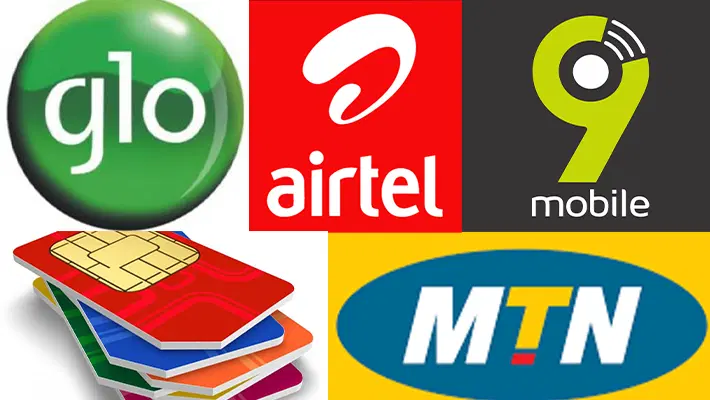
By mid-2025, staying connected in Nigeria had become significantly more expensive and far more lucrative for telecom operators. Driven by sweeping tariff hikes, surging data consumption and Nigeria’s deepening dependence on mobile connectivity, MTN Nigeria and Airtel Nigeria extracted a combined N2.54 trillion from subscribers in just the first half of 2025, according to their financial disclosures.
With revenues from Globacom and 9mobile excluded, analysts say total industry-wide consumer spending comfortably crossed N5 trillion by year-end, marking one of the most dramatic revenue expansions in the sector’s history. The figures underline how higher prices, rather than improved service alone, have become the central engine of telecom growth even as complaints about network quality continue to trail the industry.
MTN leads the charge MTN Nigeria accounted for the lion’s share of the earnings surge, posting N2.12 trillion in H1 2025 revenue, up sharply yearon-year. Of that figure, N887 billion came from voice services, while N1.23 trillion was generated from data, reflecting Nigeria’s accelerating shift to internet-based communication.
Airtel Nigeria followed with N412.43 billion, converted from its dollar earnings, buoyed by revised pricing and higher average revenue per user (ARPU). Behind the headline numbers lies a behavioural shift among consumers. MTN disclosed that average monthly data usage climbed to 13.2GB per subscriber, one of the highest levels ever recorded in Nigeria.
Call durations, however, declined as subscribers rationed voice usage in response to higher tariffs. “This is a classic price-led revenue expansion,” said Telecoms analyst, Tunde Ajayi of Broadview Consulting. “Operators raised tariffs at a moment when connectivity had become nonnegotiable.
Consumers adjusted behaviour, but they didn’t disconnect.” Five years of escalating bills The 2025 spike capped a steady, multi-year rise in telecom spending: 2020: N2.3–2.4 trillion, boosted by lockdown-driven demand. 2021: N2.6 trillion as economic activity resumed. 2022: N3.1 trillion amid inflation and rising network costs.
2023: N3.8 trillion, driven by broadband expansion. 2024: N4.5 trillion following sharper tariff reviews. By comparison, 2025 spending likely exceeded N5 trillion, according to industry estimates, making telecoms one of Nigeria’s most cash-generative sectors despite broader economic strain.
Tariffs, not traffic, enabled heavy lifting The decisive accelerant was pricing. Average call rates jumped from about N6.40 per minute to roughly N9.60, while data bundles were comprehensively repriced. Operators insist the increases were unavoidable.
Rising diesel prices, unstable grid power, foreign exchange volatility and ballooning capital expenditure needs, they argued, left little room to hold prices. “Telecoms is no longer a low-cost utility business,” said Gbenga Adebayo, Chairman of the Association of Licensed Telecom Operators of Nigeria (ALTON).
“Energy, security, FX exposure and infrastructure costs have all multiplied. Without tariff adjustments, service quality would collapse.” Yet, paradoxically, demand refused to cool. Total data consumption hit an estimated 13.2 million terabytes in 2025, with December alone accounting for 1.38 million terabytes.
Broadband penetration rose to 51.97 per cent, translating to 112.67 million internet subscribers. Quality of Service: A lingering fault line Despite record revenues, service quality remains uneven. Investments in 4G expansion and limited 5G rollouts improved speeds and reduced dropped calls in major urban centres.
But network congestion, fibre vandalism and power outages persisted, particularly in secondary cities and rural communities. The Nigerian Communications Commission (NCC) has repeatedly warned that price increases must be matched with verifiable service improvements, a position echoed by consumer groups.
“Subscribers are paying more, but the experience hasn’t improved at the same pace,” said telecom policy expert, Funke Opeke. “That gap is where regulatory tension is building.” Paying more to stay connected Between 2020 and 2025, Nigerians’ spending on voice and data more than doubled, a transformation that reflects not just digital adoption, but the rising cost of participation in the modern economy.
As operators lobby for further tariff reviews to cushion mounting costs, the central question for regulators and consumers alike is sharpening: how much more can Nigerians pay — and what level of service should that money guarantee? For now, one thing is clear: Nigeria’s telecom boom is no longer just about access. It is increasingly about how much consumers are forced to spend to stay connected.