


Sujimoto Group, a Nigerian conglomerate specializing in construction, real estate, energy, and finance, has proposed a bold N20 trillion fortified border and agro-development initiative aimed at tackling terrorism, banditry, and cross-border crime in Nigeria.
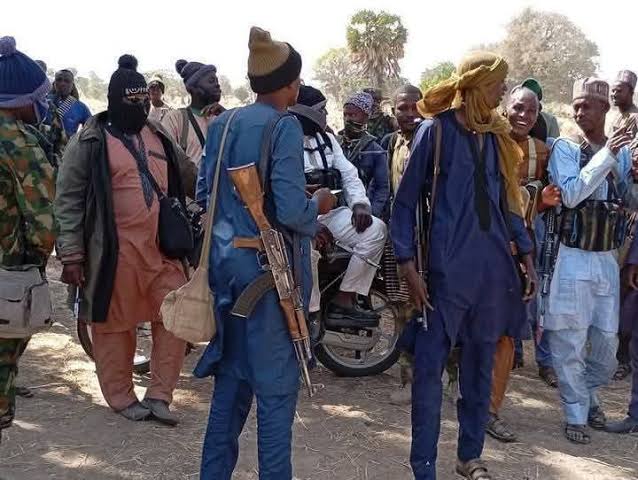
The proposal envisions constructing an extensive fortified frontier along Nigeria’s most porous borders, paired with large-scale agricultural and rural development projects to address the economic drivers of insecurity.
Olasijibomi Ogundele, CEO of Sujimoto Luxury Construction Limited, noted that Nigeria’s insecurity persists despite substantial defence spending and troop deployments.
Citing the 2024 Global Rights report, he said at least 24,816 Nigerians were killed between 2019 and 2024 due to insurgency, banditry, terrorism, and communal violence, with millions displaced.
The company highlighted that Nigeria spent nearly N3 trillion on defence and security in 2023 alone, yet insecurity continues to escalate, costing the economy over N7.17 trillion in lost productivity, abandoned farmlands, and disrupted livelihoods.
Sujimoto stressed that the problem lies not in resources but in strategy, advocating for the integration of national defence with economic development.
“Security treated only as expenditure will never end fear. Security treated as infrastructure becomes an investment that multiplies value,” the firm said.
The plan proposes constructing modern concrete barriers, surveillance towers spaced roughly 50 kilometres apart, high-resolution cameras, drone launch pads, rapid-response security bases, and access roads along key border corridors.
Initial efforts would focus on regions linking Nigeria to Niger and Cameroon, spanning approximately 2,900 kilometres.
Sujimoto noted that its initiative aligns with recent calls by Nigeria’s Chief of Defence Staff, General Christopher Musa, who advocates for fortified, technology-driven border security to curb infiltration and arms trafficking.
Beyond physical barriers, the proposal integrates agro-industrial zones behind the fortified borders, including large-scale farm estates, agro-processing hubs, housing, clinics, markets, and renewable energy infrastructure to generate employment and stabilise border communities.
Dubbed the Sujimoto Farm Estate Vision, the initiative plans to develop between 20,000 and one million hectares of farmland across Nigeria’s six geopolitical zones, transforming previously vulnerable border areas into productive agricultural and industrial corridors.
“Insecurity is not only a military problem; it is an economic and developmental crisis. Where youth lack jobs, dignity, and opportunity, violence thrives. Development creates resilience, while security creates time. Together, they create stability,” the firm said.
Sujimoto emphasized its technical capacity to execute such large-scale projects, citing its track record in high-end construction, including the rapid completion of the LucreziaBySujimoto luxury development in Lagos.
The plan draws inspiration from fortified border systems in countries such as Saudi Arabia, the United States, and Israel, which combine physical barriers with advanced surveillance and rapid-response mechanisms.
The company urged the Federal Government to adopt the proposal as a public-private partnership, framing it as a long-term national investment rather than a conventional security project.
“If Nigeria builds boldly and links security with development, insecurity can become a closed chapter,” Sujimoto said.
“Fortified borders, productive farmlands, and empowered youth can reposition the country as a model for transforming crisis into opportunity.”