
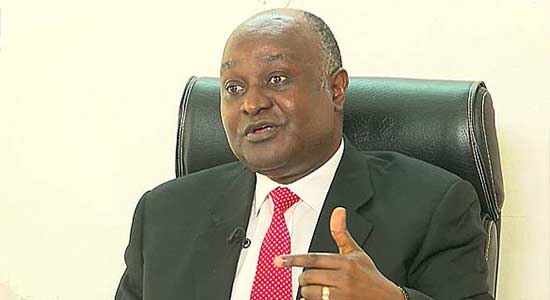
With increased allocations to states, there have been calls for them to do more; however, the former Deputy Governor of the Central Bank of Nigeria, Tunde Lemo, in this interview with a panel of journalists speaks on what he termed ‘money illusion’ and calls for sub-nationals to embark on projects that would have a greater impact on the citizens, among other issues. Oluwakemi Abimbola brings excerpts
How would you assess the government’s economic reforms over the years?
The Nigerian economy has, in the last two and a half years, made significant progress. You will recall that before the present president came into power, we had several issues with the economy, mainly because the exchange rates then were dual: one for the privileged and one for the unprivileged. We had elements of subsidy, both in the foreign exchange rate and for petroleum. The petroleum subsidy meant that there was no serious development in the downstream, and that meant that we were wasting a lot of our foreign imports of white products, so the economy was prostrated. Then, there was the fiscal imbalance. We had a lot of foreign debt. Yet, government revenue was dwindling, and everything you know was within cracks. But what the government did right was the courage that the present president had. You see, sometimes, it’s important for you to do things for the public good, not looking at the mood of the public. He said the oil subsidy was gone from the start; that’s courageous.
What people didn’t realise was that it wasn’t just the oil subsidy; the bigger subsidy, more than the oil subsidy, was the forex subsidy. What that meant was that everybody who had thought that the official rate was N400 to the dollar, which only two per cent of people had access to, but then the other one was N1,400 to N1,700 to the dollar; the two were matched, and, of course, it was as if the world was collapsing, but that was the right thing to do. What have we seen today? A relatively stable foreign exchange system, which was a result of price discovery. Yes, it was a little bit difficult for so many of us because prices had to adjust, but today, what have you seen? You’ve seen that resources now are allocated optimally, and then, of course, the foreign exchange scarcity is no longer there.
The first Christmas I spent without having to queue up or get my driver to fill all the cars in the approach to Christmas was last year.
We’ve also seen the foreign reserves ramping up; as at the last count, they were $50 bn in gross reserves level. We knew where it was even though we didn’t even know the actual fact until the then-acting governor of the Central Bank of Nigeria had to tell the truth. But now we’ve seen it’s gone to a level that it wasn’t in the last five to six years. So, I think the government should be commended for that. And then, we also see a trade surplus because we don’t need to import petroleum products anymore, and we are steadily seeing favourable prices. Inflation has been trending downward.
When this administration began, Ways and Means advances had significantly increased, driving up price levels. Now, headline inflation has fallen to around 15 per cent, and food inflation is near eight per cent. Last year, people were surprised that they bought rice at N60,000 to N70,000 when they had bought it the previous year at N100,000, and it was for so many other things. So, we are beginning to see respite at the end of the day. Yes, we still have challenges in the area of the energy sector that have to be looked into. There’s still a need to ensure that the DisCos and the Gencos are doing enough because I think this economy should not have anything less than 25,000 to 30,000 megawatts before we begin to see the stability that we expect. Given our resources, Nigeria actually should be the production base of not just Africa but all of Europe, and we need adequate power to do that. I’ll give you a simple example. Bangladesh is actually making so much money from garment-making. Who do they make it for? Europe and America. The distance from the capital of Bangladesh to London is about 8,000 kilometres. Lagos to London is just above 4,000 kilometres, which means a shorter distance. We can be doing exactly what they are doing here, and yet what is it that they have there that we don’t have here? Is it cotton and so on and so forth? These are low-hanging fruits that we can begin to take advantage of.
I think the challenge now for the government is, while we are beginning to see the margins of relative stability in the macros, how do they then cascade down to people? We see how poor a segment of our people is. I am in favour of conditional cash transfers for the extremely poor and vulnerable. You cannot remove poverty today if you do not deal decisively with the issue of security of lives and property, because to remove poverty, you need to create economic activities within a one- or two-kilometre radius of where people live. Most people who should be very busy now producing food are not there; they are not on their farms, and this is increasing the poverty level. So, I think we must really sit down and ensure that we deal with the security of life and property. That is how to remove poverty, and we must be very, very deliberate about it. Of course, agriculture is one key area where poverty can be taken away. Then, most of the raw materials being used in the industrial sector can still be produced locally. Let me just give a simple example. Today, several companies use starch to produce. What produces starch? Cassava. But you will be surprised that many of them import their starch. Why? Why not invest in a conversion mechanism that ensures that the cassava that we have in abundance in Nigeria can become starch instead of importing it? When you do the research, you will find so many examples of this.
And then, let’s go back even to things we were doing before that we have to go and redo. For instance, textile companies. When I became a banker in the mid-80s, in the late 80s, we used to learn credit writing through the textile companies that were in Lagos. The entire country then had more than 127 textile companies. All of them are moribund today. How do we bring them back? And the reasons are quite obvious because most of them were Chinese and Indian companies. They came here because we had superior infrastructure. Today, their home countries have superior infrastructure. So, they closed down the factories and went over there. If we can bring this infrastructure back, it then means that we can actually revive the textile industry. There are things we have done before which we can begin to do again. And we then go into so many other areas. I think we need to look into that.
I’m not a fan of saying that unemployment has gone down to five per cent because we changed the basis of computation of unemployment figures. We’ll be deceiving ourselves. Unemployment is very high in Nigeria. Let’s deal with that. But as we do it, some people are extremely vulnerable and close to the lowest rung; conditional cash transfers are for them. As you are doing that, you also integrate them into the normal economy through financial inclusion through banks. Let’s extend that frontier.
With states now receiving more funds and facing pressure to deliver growth, what quick wins would you prioritise as governor to ensure citizens feel the impact of an improved macroeconomy?
Let me remove the myth from the reality. Yes, states are getting more money, but the gap is not as wide as you think. That’s what we call in economics ‘money illusion’. Money is what money can buy. In those days, if they could buy three things, they could barely buy four or five now, let alone ten. But your point is still valid; they have much more funding than before.
I think our government at the subnational level is really not looking at pro-people activities. I don’t want to say a few things so some of my friends in government will not think I’m getting personal. I don’t like white elephant projects. I like projects that influence the people directly. Now, as a governor, why do I have to do N10 to N15 bn worth of things when I can do N3 to N4 bn that will impact the lives of much more people?
On the scale of preference, if I become a governor, I will say, ‘Now, what are the most important things for people in my state to do?’ A lot of them are in rural areas; they are producing food. Food is still expensive, but their problem is how to take the food to the market. So, while I do those bridges and so on and so forth, I want to connect the remotest villages to the state capital and the market. Once I have done that, I’ve taken so much away.
Many of the schools in those villages are now moribund. Good schools are now found in urban and semi-urban areas. How do we revive those schools? Those things look ordinary, but these are things that keep people in the villages, that keep them engaged and so on and so forth.
Teaching hospitals are good; there is a need for cancer diagnostic centres and so on and so forth, but what about those in the villages who have health challenges? Primary health care so that you don’t have to go more than half a kilometre to have health intervention, and there will be drugs there; there will be things like that. I don’t see many of our governors talking more about that, but they are talking about esoteric things that do not impact the lives of ordinary people. I think when I have done all of those things, I can do the other things. It is when I have lifted people above poverty that I can face other grandiose projects, not when they don’t have access to good education, good water, or all those things. When you list out those things, and you begin to rank many of our governors, you find out that the gap is still very wide. For me, I’d like to start with those low-hanging fruits. I’m an economist; I know what to do with industrialisation, and I know what to do with nice and fanciful things, but when millions of my people are down there, how do I ensure that their lives are better will be my priority.
Comparing the current banking recapitalisation with your time in the industry, what key changes stand out?
The French people will say the more it changes, the more it stays the same. I want to commend the governor of the Central Bank for the recapitalisation initiative. It’s a very good and smart thing to do. It’s like restoring those banks to the level that they were before. It is the right thing to do, because over time, inflation has meant that the capital in real and effective terms has become very small, and many of them are big and wide now.
I also like what they have now done, that it is no longer one-size-fits-all, which was the inadequacy of what we did then. I have to be very frank.
Now, if you are an international bank, your minimum capital should be N500 bn; if you are national, N200 bn; if you are regional, it can be lower, and then, if you are a one-product institution, maybe a non-interest bank, it can be smaller. So, when you see that cascade, you then realise that the capital is in relation to the risk that you are undertaking and it is the right thing to do, and that’s one of the things that can help to power the $1tn economy that we are envisaging in the foreseeable future.
Given Ogun State’s industrial clusters, how can the state better leverage them, and what role should the private sector play in reducing poverty alongside government efforts?
Excellent question. Ogun State is in the underbelly of Lagos State. In other words, apart from jumping into the Atlantic or going outside the country, there is no way you will get into that part of Nigeria without crossing Ogun State. And when you talk about land availability, it’s like Lagos State is fast running out of available land, so the next frontier of industrial development is Ogun State. That provides a unique opportunity, a unique opportunity in the sense that as a smart governor, I will set up a joint development commission with Lagos State. It is so smart to do, because all the existing companies in Lagos will be expanding into my state, so there is a need for us to sit down together and do a joint commission.
Two, half of the people who are working in Lagos State reside in Ogun State, and the tax is based on where you reside. I’m not sure that we are taking full advantage of all of those things, so there must be a conversation to ensure that if you live in Ogun State and you work in Lagos State, your personal income tax must be paid into Ogun State. That speaks to enhancement of revenue.
Then, when you look at those industrial clusters, there are about three clusters. The Agbara axis is there, the Ota belt is there, and then the Flower Gate belt, which is the Shagamu-Orile Imo area, is also there. And when you move across the east, there is another opportunity opening up with the new road that Governor Dapo Abiodun has built, which has reduced travel time from Ijebu Ode now to Epe to just 15 minutes. You realise that so much is happening there.
What we’re going to do is ensure we put world-class infrastructure there. The major challenge in most of those places, especially if you go to the Agbara or Ota area, is the road. Put road infrastructure. Two, gas availability. You know, gas for industrial use is even cheaper than electricity. Ensure that you have gas all the way down, plug and pay, and everything is clean. So, all those things will be there.
Besides, it has become important now for us to realise that many more residential areas will be in Ogun State. How do we then ensure that people are ferried here and there? We depend too much on the Lagos-Ibadan Expressway. That’s why even if you borrow money ten times and you do it, you are not going to get the best because that shouldn’t really be the only place where everybody passes. Thank God we have a rail link today between Abeokuta and Lagos. The train goes only twice a day, when it should go every 30 minutes or every hour. When that happens, why should I pay a high rent in Ikeja when I can stay in Abeokuta and then stretch my legs for one hour reading the newspaper, and I’m in my office in Lagos!
So, these are the things that I believe we need to do to ensure free movement of people. Most of the people who tell you they work in Washington D.C. today live either in Virginia or in Maryland. Even Dulles Airport, which we call Washington Airport, is technically in Virginia. So, these are the opportunities I will make available. I will even be smart enough to say that the airport that we are all clapping about, I will encourage the federal government to build a huge pan-African huge airport; I’ll give them land in Ogun State because there’s no more land in the existing one’s area. So, this one becomes a regional whatever, but the international airport that will compete with the Dubai airport and so on and so forth is 40 kilometres away. I will go further down. After all, if you go to Kuala Lumpur today, the international airport is more than 40 kilometres out of the city centre. So these are the plans I have for Ogun State, if God permits. A complete transformation. You will not recognise what you see five years after our acceptance.
On the forex front, the market has shown relative stability, which many attribute to foreign portfolio inflows. In your view, is this stability sustainable, and what measures are needed to maintain it?
Excellent question. Let me correct an impression that the relative stability we’re seeing is driven by foreign portfolio investments. I would say, ‘Not really,’ and I explain myself. FPIs come when you see an opportunity in the capital market. But the stability that we’ve been experiencing is far more extensive, so it couldn’t have been due to FPIs alone.
You will recall that I said that we have had a trade surplus. A trade surplus really means that we’re boosting our non-oil exports, and that is what has partly accounted for the stability. And then we also have foreign direct investments. The Governor of Central Bank, a few days ago, actually said that our diaspora community brings in some $600 m every month. That’s not FPI. It’s our people sending money to their parents and so on and so forth. I know FPI is hot money, definitely, but we also have FDIs, improving factories, funds that many companies are flowing into and all of those things.
Besides, we haven’t reconciled the differences. If we do cash flow analysis, the fact that we are no longer importing white products with subsidised forex and are not under pressure to import to meet domestic demand means a lot of difference. Do you know that about four or five years ago, all the money we were making by exporting crude was approximately the same amount we were using to import? That cash flow benefit is with us today.
Do you know that even the Central Bank is doing something which I love? It was reported in the papers this morning that even the benefit that we are seeing now would have meant that the naira would have appreciated far beyond what we have now. But they, the CBN, also understand the problem with a fast-appreciating currency that is not internationally convertible. Because when you do that, you kill exports. It’s reported that the Central Bank is now going to the market to buy those dollars. And that’s a very smart thing to do. Whoever knows Cardoso should tell him that, yes, that is a smart thing to do. That is very good, so that you have stability. People don’t know that a stable currency over a period of time is better than a currency that is appreciating. When you have a currency that is appreciating, you kill your export, you make people begin to import more, and the propensity to import becomes very high. And then you turn the tables against yourself, and you are cutting off your nose to spite your face. That is very good. Let’s have a stable currency. I don’t want a currency that will fast appreciate a significant amount; otherwise, we will begin to do terrible things. I won’t buy shoes locally now. I will say I want to import it, and then we’ll kill the local industry. Unemployment, again, will rise. So, what I’m saying in essence is that the reserves accretion that we’re seeing is very sustainable, given what we have seen in the market.
Do you think Nigeria can achieve a $1tn economy by 2030?
It also depends on how we go about it. It’s tough. Again, when you talk about a number, I’m not really very keen on numbers. If we do the wrong thing, even if we are growing and the value of the currency goes down, then in dollar terms, our economy will shrink again. So, for me, my counsel is, let’s keep doing the right thing that we are doing now. The fiscal authorities should ensure that they work in sync with the monetary authorities. I give monetary authorities 85 per cent. I give the fiscal authorities 65 per cent. Let them still work on their game. I think the best performance I see now is from the central bank and the monetary authorities. The government is doing well, but to the extent that when you talk about the Nigerian government and fiscal authorities, you’re talking about 37 governments really. The federal government alone is not enough. But we have only one economy. So if only they can be in sync, we will get there. But whether we get there in 2030 or not will depend on so many things that are outside our control. I won’t look into the crystal ball and talk about that. What I will say is let’s keep doing the right thing and continue to do the right thing. Lee Kuan Yew was asked several years back, ‘How come your country was transformed from a third-world country to a first-world country?’ What did you do differently? ‘He laughed; he said no, the simple thing was that we did the right thing consistently.
With at least three borders, how is Ogun State leveraging its position in the African Continental Free Trade Area to maximise trade?
The African Continental Free Trade Area is a very good opportunity to promote trade. One major problem we have in Africa is that we don’t trade enough with ourselves. So AfCFTA is one programme that we are going to ensure that we encourage, and then our people will benefit because we are direct beneficiaries. As you said, there are many borders in Ogun State. So all these opportunities are there. But you know we can’t do it alone, because the border issues are matters for the federal government. So, we are going to work with the Federal Government to ensure that within the ambit of the law, because one quick way would be to encourage smuggling and so on and so forth. No, we are going to document all trades; they will go within the law, but we are going to encourage trades under the aegis of AfCFTA because that is the way to go to ensure that we promote our trades. That is how prosperity can go around the entire sub-region.
Facing a massive youth demographic, how can Nigeria transform this potential into engagement rather than becoming a market for foreign goods?
We cannot be a dumping ground if we ensure that the young population is gainfully employed. We cannot be a dumping ground, which means our production base will widen, and our production capacity will widen. As consumers, we will consume more, but to the extent that we are consuming more as we are producing much more, that’s where things will balance out.
I agree with you that the young population is projected to be among the largest in the world. But so long as those people are put into productive engagement, they will spend from their salaries; they will not spend more than they earn. And what they earn is in terms of what they produce. What they produce also becomes available to the rest of the world. So it’s in and out. This is how trade grows globally. Don’t think that a population will just be there and people will be dumping things on them. They will also be productive. They will also be sending things abroad. And that is really where we’re headed.
As the global economy is getting more and more integrated, how do we ensure that we don’t lose competitiveness? When you talk about infrastructure, it’s about competitiveness. Once we become globally competitive, just imagine what I have said about Bangladesh. About 60 to 70 per cent of the forex earnings of Bangladesh are from garment making, and 90 per cent of that is exported. Just imagine if we do a bit of that and a lot more, which means that our young and boisterous population here will produce a lot more for the rest of the world. And of course, if we earn our legitimate income, why can’t we then import as we are producing? That is the basis of international trade.
Why are you seeking to govern Ogun State, and what do you plan to contribute?
What I’m bringing to the table is accountability. What I’m bringing to the table is a government that is people-focused, that has no other ambition other than to lift people out of poverty. And I believe that I have the ability to do so. I have an incredible record in the public space that I believe should be made available for our people to enjoy.
On subnational governments and national progress, how can we use local development to boost overall national growth?
Nigeria is blessed in the sense that there is no state that does not have a unique endowment in terms of human, material, or natural resources. And those unique endowments are things I believe the subnational should look into. Don’t look over your shoulder and do what the state next door is doing. Look at the peculiarity of your state and harness those resources so that you can lift people out of poverty and you can grow the economy.
When we all do that together, any growth that is below 7.5 per cent to 8.0 per cent for me is suboptimal. Today, we are clapping our hands because I think the latest GDP numbers are about 4.2 per cent, which, of course, is commendable. But for us, with our population increasing at the rate of 3.0 per cent, the net effect of that is only 1.0 per cent. We should be running now, not crawling. Impressive growth of 7.5 per cent to 8.0 per cent. The kind of growth two decades ago that China was recording is the one we should project. And then, if all hands are on deck and every state is developing according to its own pace and according to its own resource endowment, then, of course, we will get there.
The tax debate has been intense. From your perspective as an economist and banker, how do you view the government’s tax reform, and what impact do you expect it to have?
I look at tax reform in two ways. The tax reform is good because, in actual fact, there’s no tax increase. It’s just blocking loopholes for the tax evaders. And the target is the rich and the haves, who are paying little or nothing. And then when you look at the tax reform, it’s also actually relieving the have-nots. So the have-nots are paying less tax, and those who have the capacity should pay more. I like it in the sense that at the end of the day, we have more on the table.
But why I also like it is because when you pay your taxes, you hold those who use your money accountable. Outside the country, you hear about taxpayers’ money. But today, because you spend mostly petrodollars, it’s like, ‘What is my own business?’ If they want to waste money, let them waste money.’ By the time you pay tax and it hits your pocket, you’ll be more interested in political evolution. You’ll be more interested in who governs you. You’ll be more interested in accountability, and you’ll be asking the right questions. So you can ask me a question, look at me straight in the face, Governor, and explain this to us, and I will have no other choice but to explain to your satisfaction.