
At least seven states celebrated their golden jubilee during the week. In this report, SOLA ADEYEMO looks at some of the states created in 1976 and their level of developments
On February 3, 1976, the Military administration of late General Muritala Mohammed created seven states, among them, Oyo, Ogun and Ondo.
Before then, the old Oyo State from which Osun State was created later, was the political capital of the South Western region.
Other states like Bauchi, Sokoto, Niger, Plateau, Benue and Imo come under the same review. While the states came with huge promises, the level of development, observers said, has been far from impressive, especially viewed from their par capita income, security, education and infrastructure.
The data provided by Ugoji Maximillian, speaker, author, gave the revenue capacity of the states as follows. Ogun gets N194.93bn annually, while Oyo receives N65.29bn; IGR per capita: Ogun: N28,692, Oyo: N6,344. Gross FAAC inflows: Ogun: N127.57bn, Oyo: N425.60bn Total revenue: Ogun: N512.84bn, Oyo: N511.26bn.
IGR share of revenue, Ogun: 38%, Oyo: 13% FAAC share of revenue: Ogun: 25% Oyo: 83% Public investment: Health per capita: Ogun: N2,515, Oyo: N1,073 Education per capita: Ogun: N8,574, Oyo: N6,202 Debt exposure: Total debt, Ogun: N508.02bn, Oyo: N170.98bn Total debt per capita: Ogun: N74,773, Oyo: N16,614Debt-to-total revenue ratio: Ogun: 99%, Oyo: 33%..
As regards Bauchi State in the NorthEast, with a population of eight million has a poverty rate of 56–60%, according to National Bureau of Statistics (NBS) Multidimensional Poverty Index. Its IGR is ₦25bn annually while its economy is heavily dependent on FAAC allocations.
Historic reality indicates that despite agriculture, solid minerals and tourism sites like Yankari, Bauchi failed to industrialize.manufacturing contribution to GDP remains minimal. Fifty years later there is no major industrial hub. Youth unemployment remains high while its capital city still lacks modern infrastructure. Development outcome is poor relative to age and potential.
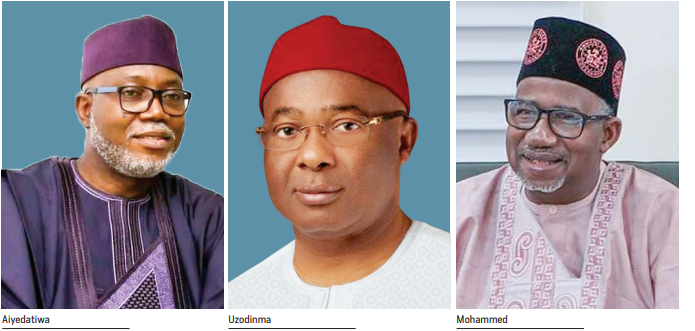
Bauchi Governor, Sen Bala Abdulkadir Mohammed, stated that the attainment of 50 years of existence by the State out of which Gombe State was created in 1996—is a profound cause for joy and thanksgiving to Almighty God. The Governor made the assertion in a statewide broadcast on the occasion of the celebration of 50th anniversary of the creation of Bauchi State on 3rd February, 2026.
The Governor stated, “I speak to you with a heart filled with gratitude, pride, and responsibility as we mark the 50th Anniversary of the creation of our dear State. This Golden Jubilee is a defining moment in our history, one that calls for reflection on our journey, appreciation of our sacrifices, and renewed commitment to our collective future.”
He said: “Despite political, economic, and social challenges, Bauchi State has endured and progressed. Indeed, the survival and steady growth of a geopolitical entity for fifty years is a remarkable achievement worthy of celebration and reflection.”
Benue State, nick-named Food Basket of the Nation has a poverty rate of 50–55 per cent. Its IGR is ₦20–25bn and has one of the lowest per-capita incomes in North-Central Nigeria. Historic irony indicates that Benue produces massive agricultural output but exports raw produce, not processed goods. Fifty years later no large agro-processing industrial cluster.
Salary arrears are common while farmers remain poor. Maximillian said this food basket that used to feed others but starves economically. Borno State in the North-East has a poverty rate said to be above 70%. IGR under ₦15bn.
Economy devastated by Boko Haram insurgency. Historic tragedy: Once a major Sahelian trade route hub linking Nigeria to Chad and Niger. Fifty years later, infrastructures are said to have been destroyed while there is heavy humanitarian dependence due to insecurity while private investment is almost absent.
Security failure reversed decades of development. Insecurity created by Northern leaders who love power more than progress. Imo State in the South-East, one of the states, has a poverty rate of 30–35 per cent, lower than national average but rising. It’s IGR is ₦35–45bn, said to be low for a commercial Igbo state.
The historic contradiction is that it has high literacy, entrepreneurship, diaspora remittances — but weak state planning. Fifty years later there is no strong industrial policy as businesses migrate to Lagos. Insecurity cripples investment. Human capital wasted by governance failure.
But speaking on the issue, Chief Bobo Njemaze, said from the onset the first Governor of the state, Ndubuisi Kanu, laid the foundation for the development of the state with projects and programmes until Chief Sam Mbakwe took over in 1979. Today, he said, Governor Hope Uzodinma is following that tractor even after some states have been created out of the old Imo State.
Under the military rule, General David Jemibewon was the first Administrator who put in place several infrastructural facilities, including the dilapidated gigantic Agbowo Shopping Complex, which is now undergoing renovation.
The very strong overhead bridge that links the Agodi Government House to the Agodi Secretariat was equally built then. Successive civilian and military administrations played their roles and contributed to the growth and otherwise of the state till date.
Between 1979 and 1983, the late Cicero of Esa Oke, Chief Bola Ige (SAN) steered the affairs of the old Oyo as a civilian governor, after which the late Dr. Victor Omololu Olunloyo governed the New Oyo state for just three months (1st October 1983 to 31 December 1983. His tenure was cut short by the military coup led by General Muhammadu Buhari. He was elected under the National Party of Nigeria (NPN).
Gen. Ibrahim Babangida carved out a new state named Osun from it on August 27, 1991 leaving Ibadan, Oyo, Ibarapa, Oyo and Oke-Ogun as the main components of the new Oyo state The Military incursion thwarted the democratic system until Chief Kolapo Olawuyi Ishola also came in as the Governor of Oyo State from January 2, 1992, to November 17, 1993.
He was elected under the Social Democratic Party (SDP) platform during Nigeria’s Third Republic and was removed from office following the military coup by General Sani Abacha. Alhaji Lam Adesina served as the Executive Governor of Oyo State from May 29, 1999, to May 28, 2003.
He was elected under the platform of the Alliance for Democracy (AD) party. The incumbent Olubadan of Ibadan, Oba Rasidi Adewolu Ladoja, wrested power from Lam. Adesina using the deceptive arrangement of the then President Olusegun Obasanjo to oust the AD party from government.
Celebrating the 50 years existence of Oyo state in the 10-day celebrations that shook the state, with past leaders, (living and family representatives of the deceased), Governor Seyi Makinde described himself as a beneficiary of the 50 years existence of the state, having enjoyed the free education system of the civilian governments.
Makinde traced the state’s development to its creation in 1976, paying tribute to early military administrators, including General David Jemibewon, and successive civilian and military governments.
According to Makinde, “Successive administrations, military and civilian alike, laid foundations, built institutions, and advanced public service, education and social development.
What we see today is the result of collective effort across generations,” Makinde said. Offering a personal reflection on the impact of state policy, and describing himself as a beneficiary of Oyo State’s free education programme, the governor said, “I attended secondary school between 1980 and 1985, and the foundation laid during that period shaped who I later became. I am a product of free education in Oyo State. Many of us never imagined how far we would go, but today we stand as living testimonies to the power of opportunity.”
The governor recalled that the state had passed through periods of tension and institutional testing but emerged stronger each time, stressing that “Oyo State has passed through moments of tension, transition and institutional testing.
Each time, we emerged stronger, wiser and more committed to stability and progress,” he said. To him, the present administration was building on that legacy through long-term, system-driven infrastructure projects, particularly in transport and economic development.
“Today, we are building on that legacy by delivering long-term, system-driven infrastructure, transport reforms and economic projects that will be commissioned throughout this anniversary year,” he said.
He announced that the upgraded Ladoja Akintola International Airport at Alakia area of Ibadan would be formally commissioned in the coming months, describing it as a major gateway for the state.
Makinde also said key sections of the Rashidi Ladoja Circular Road would be delivered within the anniversary year, with a clear timeline for the first phase, describing it as “an infrastructure project that will transform mobility, logistics and economic growth across Ibadan and beyond.
Indeed, the first segment of this road will be commissioned before the end of March 2026.” On security, the governor disclosed progress on the acquisition of a surveillance aircraft to enhance monitoring across the state, saying, “in discussions with the Chairman of the Nigeria Governors’ Forum, we reviewed the progress of the surveillance aircraft procured to enhance security. As we speak, the vessel has arrived in Lagos and will soon be delivered.
This will significantly strengthen surveillance across border communities and deep within our state.” In Ondo State, the government honoured Gen Murtala Mohammed who pronounced the creation of the state on February 3, 1976.
Governor Aiyedatiwa said the founding fathers who contributed to the creation of the state would be honoured by the government. Aiyedatiwa said the creation of the state was the culmination of years of prolonged political agitation, intellectual advocacy, and moral persuasion of eminent indigenes of the state comprising Ekiti State.
According to him, the state emerged from the legitimate yearning of a people who believed that governance must be closer to the governed and that identity, equity, and inclusive development are best achieved when a people are granted administrative self-expression.
Some of the founding fathers of the state according to Governor Aiyedatiwa included the first civilian Governor, Chief Michael Adekunle Ajasin, late Chief Ayo Fasanmi, Pa Reuben Fasoranti, and Basorun Seinde Arogbofa. He said the state has been guided by a succession of administrators and governors, military and civilians, each operating within the peculiar constraints and possibilities of their time.
The governor said the government has designed a robust, inclusive, and forward-looking programme framework that reflects the intellectual, cultural, and developmental identity of the state.
Some of the activities he said included statewide interfaith thanksgiving services, acknowledging divine providence in our journey; a golden jubilee lecture series, and a grand anniversary of cultural and historical exhibitions, celebrating the traditions, arts, and heritage.
Pipe dream
State creation is not synonymous with development, says a development expert in Lagos. According to him, while the intention behind the creation of those states were noble years ago, current realities show otherwise. “Some of the states are doing well, while others are far behind.
Many of the states are effectively utilising their human and material resources to get their people out of poverty, but others are not. Some states like Oyo, Ogun and maybe Bauchi states are moving on developmental trajectory others are not.
“Ogun and Oyo are doing well, in terms of industrial development, education and infrastructure, but not so can be said about most of the rest states,” he said.
“To what extent have they improved on their internal revenue? What about the leadership recruitment pattern and even education and infrastructure. Therse are the questions what exploring.”
Looking at the journey so far, a former Editor of The Guardian Newspaper, Mr. Martins Oloja, posited that from the development matrix, namely education, healthcare and human capital development, it is certain that the states have fallen below expectations.
He noted that even the Federal Government missed an opportunity to celebrate because the FCT was created during the same period by the then Head of State, General Olusegun Obasanjo, via the Akinola Aguda Panel. “Nothing can be so monumental as the creation of the FCT, Sadly, the Federal Government even missed the point. It should have celebrated the occasion.
Can you imagine that event the FCT totally forgot the date? It was even during this period that the FCT Minister indicated interest in setting up a committee for the event,” he said.
According to him, the fact that development has eluded the states was indicative of the fact that the various celebrations in the last one week could be compared to celebration of mediocrity.
“Could you believe that Oyo State is thinking about revamping agriculture, an endeavour which formed the brain behind the Cocoa House built by Chief Obafemi Awolowo 50 years ago and they abandoned it?’ Oloja asked.
The respondents argued that successive governments have failed the people, because the level of development is at variance with expectations of the founding fathers. They called on them to put good governance and populace interest ahead of politicking as they move towards diamond jubilee.